newswise - latest
https://www.newswise.com/legacy/rss/latest.rss
American Association of Critical-Care Nurses (AACN)

Newswise — Moral injury remains prevalent among critical care nurses, with newer nurses at the highest risk of developing symptoms, according to new research published in American Journal of Critical Care (AJCC). Moral resilience and a healthy work environment were found to serve as potential buffers against moral injury, providing a combination of personal and environmental protections.
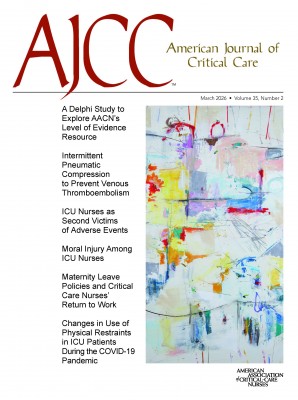
“Moral Injury Among Intensive Care Unit Nurses: Roles of Moral Resilience and a Healthy Work Environment” examined the prevalence of moral injury in a large, diverse sample of critical care nurses and investigated the relationships among moral injury, moral resilience and a healthy work environment.
The online survey was conducted late in the COVID-19 pandemic, and more than half (55.6%) of the 304 critical care nurses who responded met the clinical criteria for moderate to severe moral injury symptoms. Moral resilience and a healthy work environment were inversely associated with moral injury.
In this study, only nurses with 21 or more years of experience and those who engaged with chaplains nearly every day had mean moral injury scores below the threshold for clinically significant symptoms. Younger and less experienced nurses, in both total experience and in an intensive care unit (ICU), had significantly higher moral injury scores than did their more experienced counterparts.
Author Sarah Sumner, PhD, RN, CCRN, OCN, CHPN, is a clinical nurse in the ICU at Providence Saint Joseph Medical Center, Burbank, California, and a graduate of the Wilkes University Passan School of Nursing, Wilkes-Barre, Pennsylvania.
“Moral resilience does not arise in isolation. A healthy work environment creates conditions in which moral resilience can grow,” she said. “Without these supports, individual resilience efforts may falter, especially for early-career ICU nurses who may enter the profession with limited tools to navigate the complex moral and ethical situations that arise regularly in critical care.”
Healthy work environments — characterized by transparency, recognition, collaboration and psychological safety — provide the scaffolding for nurses to reflect, speak up and sustain their moral compass.
Participants were recruited in June and July 2023 from 22 hospitals in Providence Health System, a large, multistate, faith-based health system in the western United States, including community hospitals and academic-affiliated medical centers across urban and rural regions. Eligible participants were registered nurses or nurse leaders with at least one year of experience working in an adult ICU.
More than one-third of respondents (34.4%) reported never receiving ethics education, and nearly two-thirds (69.3%) had never participated in an ethics consultation. Although nurses with prior ethics education or consultation experience had similar moral injury scores to those without, they reported significantly higher moral resilience — suggesting that opportunities for active moral deliberation may help strengthen the capacity to navigate moral and ethical challenges.
A novel contribution of this study is the finding that frequent interactions with hospital chaplains were associated with significantly lower moral injury scores. The findings suggest that, in addition to spiritual support, chaplains may support nurses during times of moral distress and help mitigate moral injury.
To access the article and full-text PDF, visit the AJCC website at www.ajcconline.org.
About the American Journal of Critical Care: The American Journal of Critical Care (AJCC), a bimonthly scientific journal published by the American Association of Critical-Care Nurses, provides leading-edge clinical research that focuses on evidence-based-practice applications. Established in 1992, the award-winning journal includes clinical and research studies, case reports, editorials and commentaries. AJCC enjoys a circulation of more than 134,000 acute and critical care nurses and can be accessed at www.ajcconline.org.
About the American Association of Critical-Care Nurses: For more than 55 years, the American Association of Critical-Care Nurses (AACN) has been dedicated to acute and critical care nursing excellence. The organization’s vision is to create a healthcare system driven by the needs of patients and their families in which acute and critical care nurses make their optimal contribution. AACN is the world’s largest specialty nursing organization, with more than 134,000 members and over 170 chapters in the United States.
American Association of Critical-Care Nurses
27071 Aliso Creek Road, Aliso Viejo, CA 92656; 949-362-2000; www.aacn.org