AI Insight
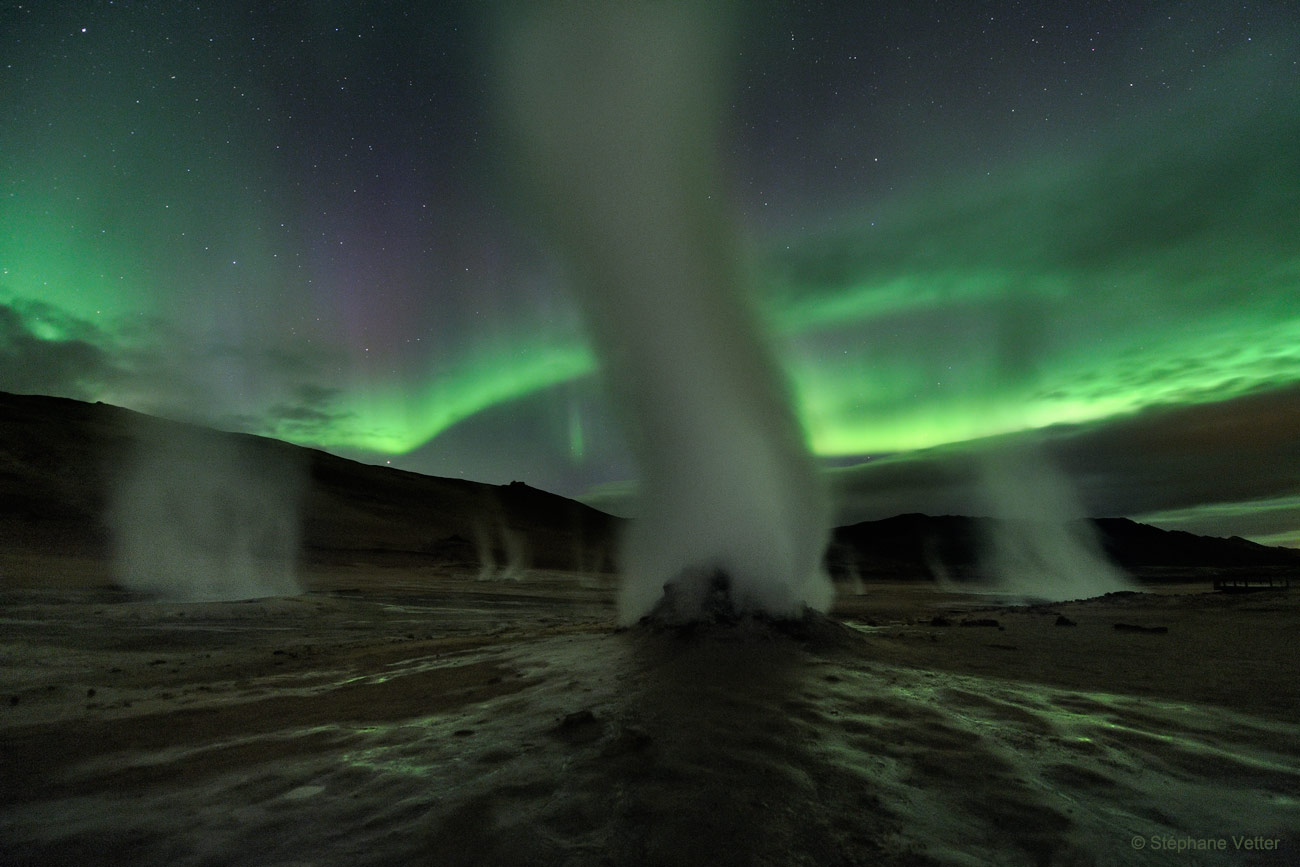
This Astronomy Picture of the Day features a photograph taken at Hverir, Iceland, showing the Aurora Borealis (Northern Lights) above a geothermally active volcanic landscape. The auroral display was caused by energetic particles from solar activity penetrating Earth's upper atmosphere at high latitudes, interacting with atmospheric gases to create the characteristic green glow. The image captures steam venting from fumaroles in the foreground against the auroral backdrop, demonstrating the coincidence of geothermal and space weather phenomena.
Why it matters
This image illustrates the ongoing effects of solar activity on Earth's magnetosphere during the current solar cycle, which remains in an active phase following its recent peak. Understanding auroral activity helps scientists monitor space weather events that can affect satellite communications, power grids, and navigation systems.
Understand the Science
APOD
Astronomy Picture of the Day
Discover the cosmos! Each day a different image or photograph of our fascinating universe is featured, along with a brief explanation written by a professional astronomer.
Night on a Spooky Planet
Explanation: What spooky planet is this? Planet Earth on a dark and stormy night, of course. The ghostly scene was photographed at Hverir, a geothermally active area found along northeastern Iceland’s volcanic landscape. Triggered by solar activity, geomagnetic storms have unleashed energetic particles trapped in Earth’s magnetic field. Penetrating the planet’s upper atmosphere at high latitudes, the particles create auroral displays in the starry night sky. Ghostly towers of steam and gas are venting from local fumaroles to dance against the eerie, greenish northern lights. For now, auroral activity on planet Earth remains in a high state as the Sun is only in early phases of decline from the peak of its solar activity cycle. And soon, other ghostly apparitions may dance in your neighborhood. Happy Halloween!
Tomorrow’s picture: Sunday’s Childe
| Date: | October 31, 2026 |
|---|---|
| Credit & Copyright: | Stéphane Vetter (Nuits sacrées) |
| Authors & editors: | Jerry Bonnell, Cecilia Chirenti, Robert Nemiroff, Keighley Rockcliffe |
| A service of: |
ASD at NASA / GSFC, NASA Science Activation & Michigan Tech. U. |