AI Insight
Arp 78 (NGC 772) is a peculiar spiral galaxy located approximately 100 million light-years away in the constellation Aries, spanning an enormous 200,000 light-years across. The galaxy features an unusually prominent and overdeveloped outer spiral arm, which has been pumped up by gravitational tidal interactions with its smaller companion galaxy NGC 770, visible directly below it in astronomical images. Deep telescopic observations reveal faint star streams connecting the two galaxies, with NGC 770's elliptical structure contrasting with the larger spiral's dust lanes and young blue star clusters.
Why it matters
This system provides astronomers with a clear example of how gravitational interactions between galaxies can dramatically reshape galactic structure, particularly demonstrating how a smaller companion can distort and enhance spiral arm formation in larger galaxies. Studying such peculiar galaxies helps scientists understand galaxy evolution and the role of mergers in cosmic history.
Understand the Science
APOD
Astronomy Picture of the Day
Discover the cosmos! Each day a different image or photograph of our fascinating universe is featured, along with a brief explanation written by a professional astronomer.
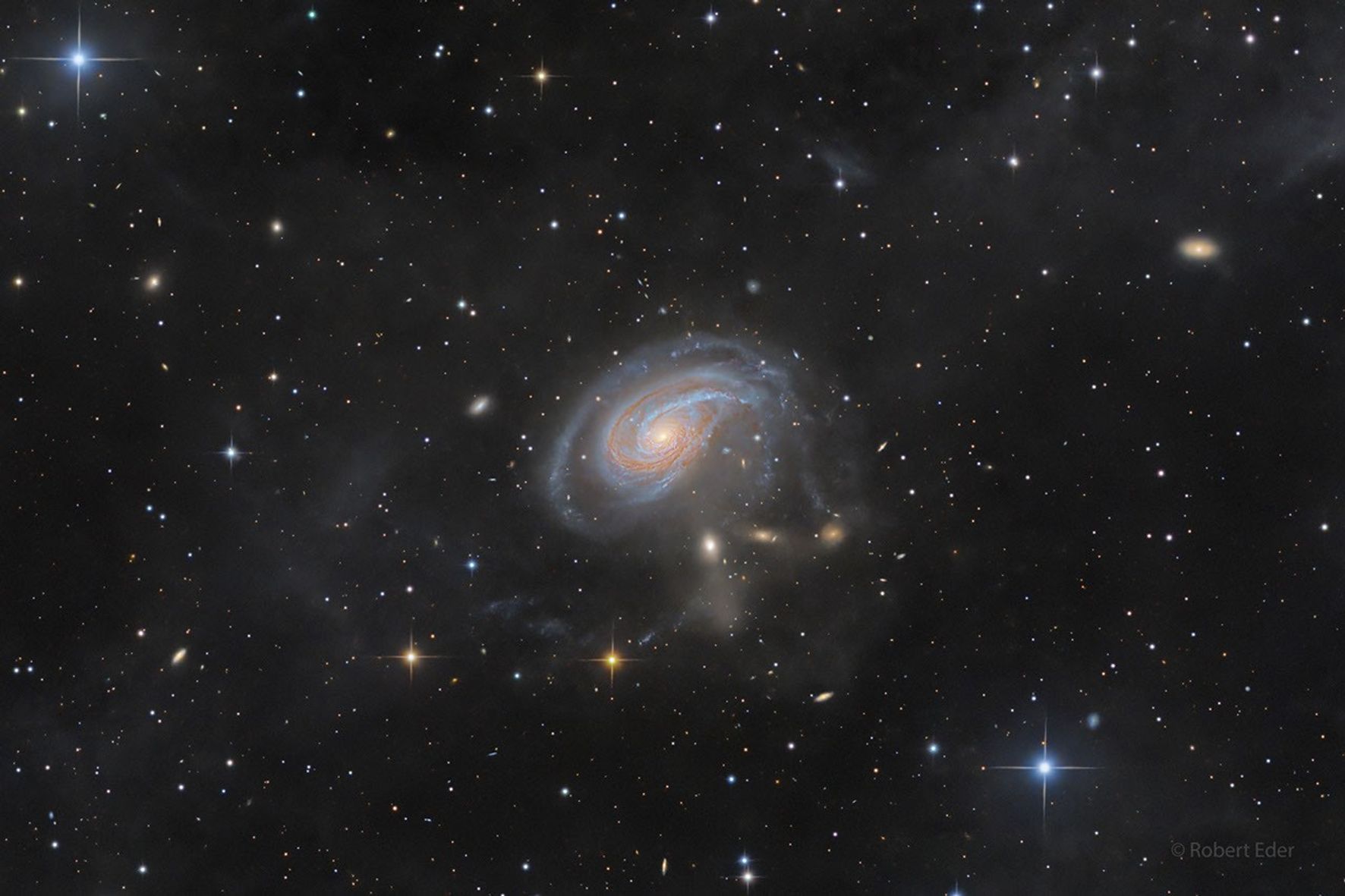
Arp 78: Peculiar Galaxy in Aries
Explanation: Peculiar spiral galaxy Arp 78 is found within the boundaries of the head strong constellation Aries. Some 100 million light-years beyond the stars and nebulae of our Milky Way galaxy, the island universe is an enormous 200,000 light-years across. Also known as NGC 772, it sports a prominent, outer spiral arm in this detailed cosmic portrait. Tracking along sweeping dust lanes and lined with young blue star clusters, Arp 78’s overdeveloped spiral arm is pumped-up by galactic-scale gravitational tides. Interactions with its brightest companion galaxy, the more compact NGC 770 seen directly below the larger spiral, are likely responsible. Embedded in faint star streams revealed in the deep telescopic exposure, NGC 770’s fuzzy, elliptical appearance contrasts nicely with spiky foreground Milky Way stars.
APOD’s email for image submissions has changed. Please see: APOD Submissions.
Tomorrow’s picture: a harvest
| Date | September 30, 2026 |
|---|---|
| Credit & Copyright | Robert Eder |
| Authors & editors: | Jerry Bonnell, Cecilia Chirenti, Robert Nemiroff, Keighley Rockcliffe |
| A service of: |
ASD at NASA / GSFC, NASA Science Activation & Michigan Tech. U. |
Source: APOD: 2026 September 30 – Arp 78: Peculiar Galaxy in Aries