AI Insight
NASA's Artemis II launch in April 2026 created unprecedented disturbances in Earth's ionosphere, producing two massive "holes" stretching 3,100 miles across the American continent that temporarily disrupted GPS signals. Researchers from National Cheng Kung University in Taiwan used ground-based GPS receiver networks to measure changes in ionospheric electron density, finding the disturbances were more significant than any previous rocket launch and up to ten times more intense than SpaceX's Starship launches. The ionospheric disruptions caused positioning errors of several meters, which persisted temporarily after the rocket's passage through the upper atmosphere.
Why it matters
These GPS inaccuracies, while short-lived, could potentially cause autonomous vehicles to change lanes incorrectly and affect drone navigation systems. As rocket launch frequency increases and autonomous navigation systems become more prevalent, understanding and predicting ionospheric disturbances from launches becomes increasingly important for transportation safety and precision positioning applications.
Understand the Science
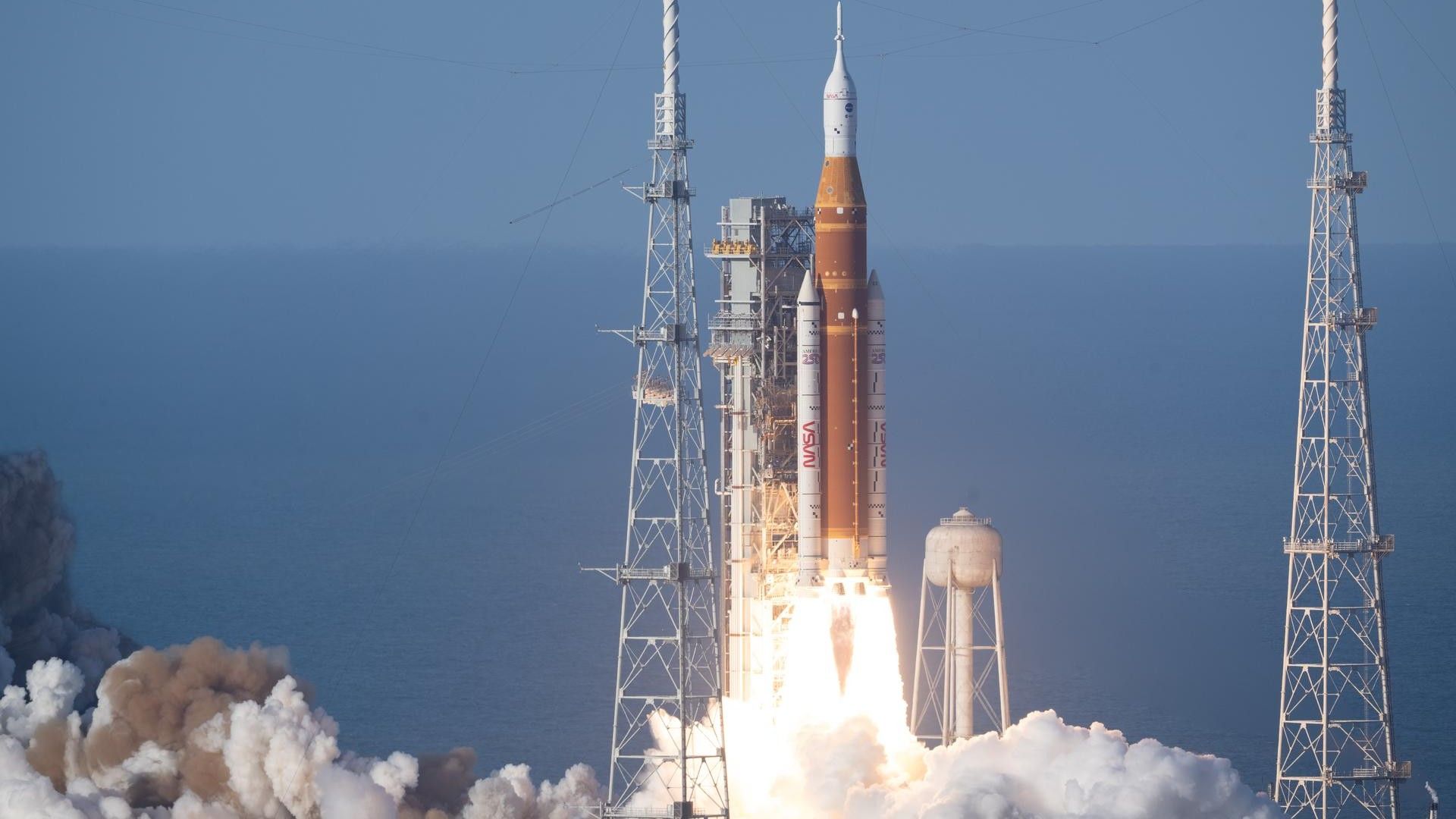
The launch of NASA’s Artemis II mission in April 2026 caused significant disturbances in Earth’s ionosphere that could have triggered temporary, localized errors in GPS positioning, a new study has found.
The study, by a team of researchers from National Cheng Kung University in Taiwan, analyzed data from high-precision networks of fixed, ground-based GPS receivers, used by U.S. scientific institutions to measure the minuscule motions of Earth’s tectonic plates in the lead-up to earthquakes. By measuring how long it takes GPS signals to travel from space to ground stations, the researchers were able to reconstruct how the passage of the Artemis II mission’s Space Launch System (SLS) rocket changed the concentrations of free electrons in the ionosphere — the electrically charged layer of Earth’s atmosphere at altitudes above 30 miles (50 kilometers).
The measurements found that the ionospheric disturbances resulting from the sheer power of the Artemis II launch were more significant than any caused by other rocket launches to date and up to ten times more intense than those observed following the test launches of SpaceX’s Starship, which is twice as powerful as the SLS based on liftoff thrust.
Artemis II saw humans return to the lunar space for the first time in more than fifty years, a mission that NASA hopes will pave the way for lunar landings and eventually the establishment of a sustained human presence on the moon.
During the mission’s launch, ground-based GPS stations detected changes in the ionospheric electron density equivalent to positioning errors of several meters. Such inaccuracies could easily throw self-driving cars off track, potentially causing traffic collisions, according to Charles Lin, an earth science professor at National Cheng Kung University and one of the co-authors of the paper.
“A positioning error of a couple of meters is enough to cause an autonomous car to change lanes,” Lin told Space.com. “It could have a strong impact not only on self-driving cars but also on drone positioning.”
GPS receivers determine their position on Earth’s surface at any single moment by measuring their distance to four different GPS satellites. When concentrations of free electrons in the upper atmosphere change — for example during a solar storm or after a rocket passage — the signal reaches Earth either faster or more slowly, resulting in inaccurate measurements.
Satellites of the U.S. GPS constellation and other Global Navigation Satellite Systems orbit Earth at an altitude of around 12,550 miles (20,200 kilometers), far above the upper edge of the ionosphere, meaning the positioning, navigation and timing signal these satellites transmit must pass through this volatile atmospheric layer to reach Earth.
Severe solar storms can disrupt GPS signals for days by dumping energy into the atmosphere in the form of charged particles from the sun. The impact of rocket launches, triggered by the supersonic flight of the rocket body through the high-altitude air, is much more short-lived. As the rocket soars up, it creates a shock wave, which virtually punches a hole into the ionosphere.
In the aftermath of the Artemis II launch, the researchers observed two such holes — one left behind by the 212-foot-long (65 meters) SSL core stage, and the other caused by two subsequent thruster burns of the rocket’s upper stage. In both cases, these holes stretched across the American continent from East to West like giant 3,100-mile (5,000-kilometer) contrails.
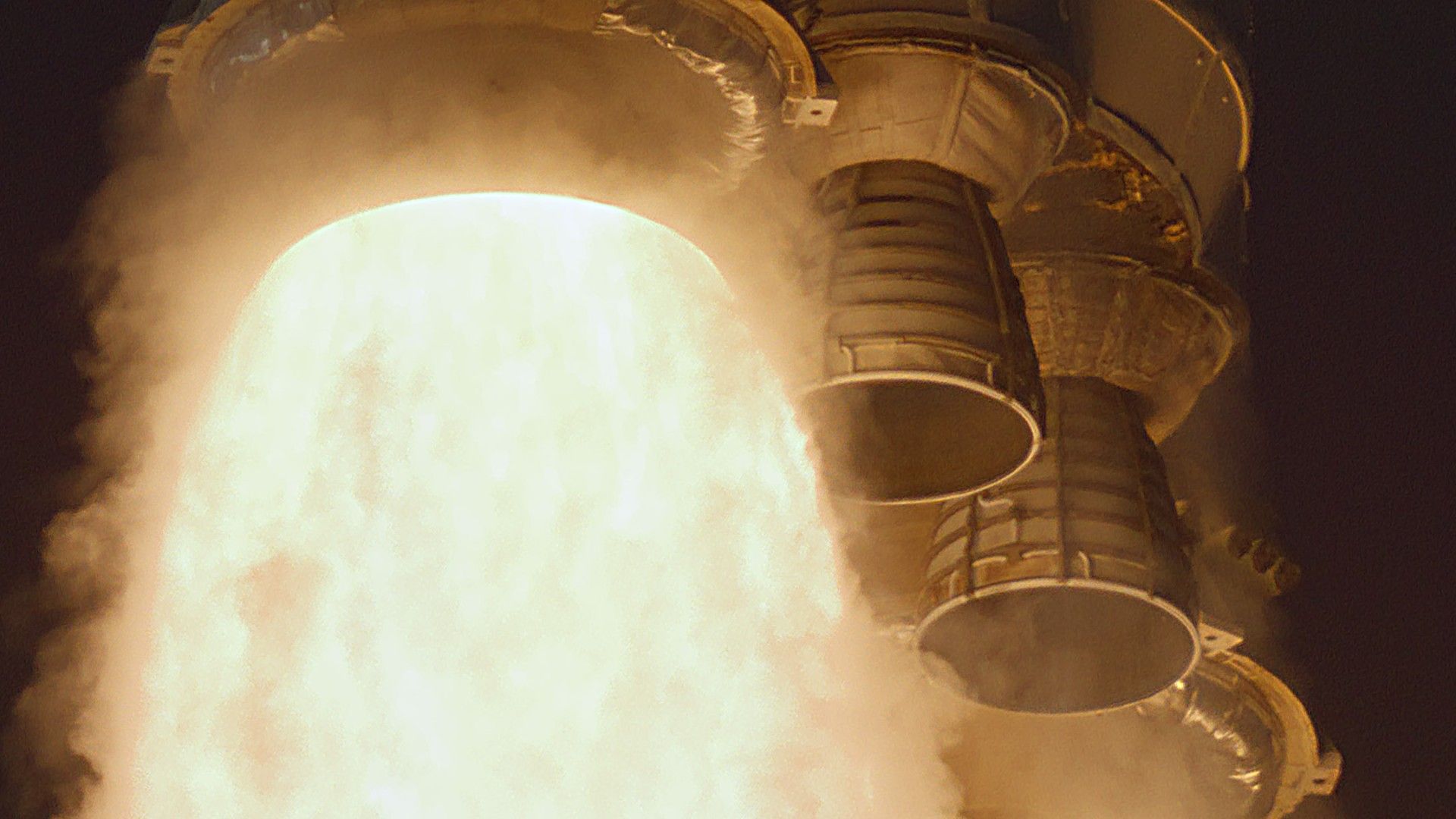
Despite the enormous power of the SLS core stage, the disturbance caused by the second-stage burns directly inside the ionosphere was far more prominent.
Those two burns, at altitudes around 115 miles (185 kilometers), took place more than an hour after lift-off and allowed the Orion capsule to break free from Earth’s gravity and head for the moon.
“Rocket launches from the ground to space produce that kind of effect, but we have never seen this kind of orbital maneuver in an interplanetary mission,” said Lin. “In the future, as we are going to see many more missions going to the moon and to Mars, these space weather effects will become much more significant.”
The study was published as a pre-print online in the journal Geophysical Research Letters.