AI Insight
NASA's Curiosity rover discovered the first sulfur crystals ever observed on Mars after accidentally crushing a rock on May 30, 2024. The rover's robotic arm camera captured close-up images of the crystal fragments several days later. According to a recent Science paper, the sulfur likely formed approximately 3 billion years ago when subsurface magma released fluids or gases that deposited sulfur on the Martian surface.
Why it matters
This discovery provides direct evidence of ancient volcanic activity and subsurface geochemical processes on Mars. Understanding sulfur deposits helps scientists reconstruct Mars' geological history and assess past conditions that may have been conducive to microbial life, as sulfur compounds can serve as energy sources for certain microorganisms.
Understand the Science
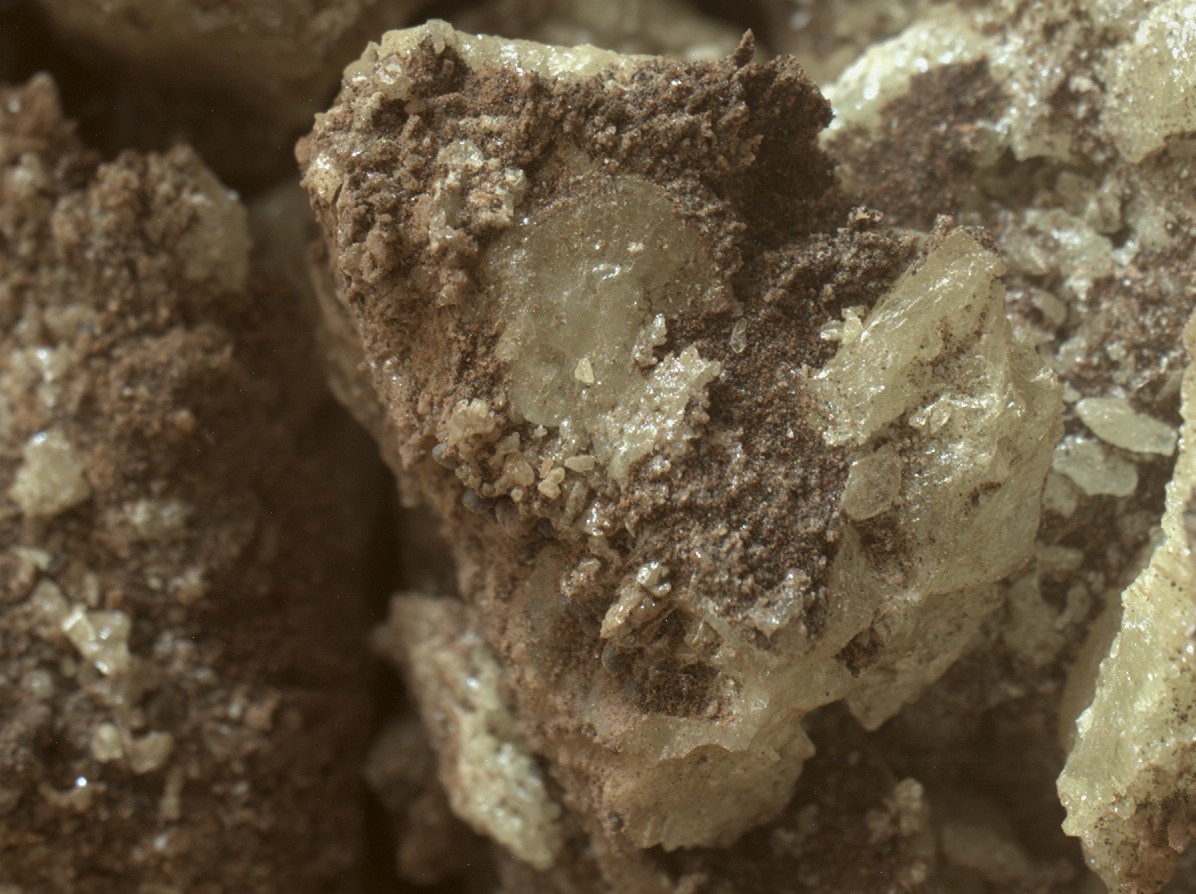
This close-up view shows fragments of sulfur crystals — the first ever seen on the Red Planet. The crystals were found after NASA’s Curiosity Mars rover happened to drive over a rock and crush it on May 30, 2024. Several days later, Curiosity used a camera on the end of its robotic arm to take this image.
A recent paper in Science suggests that the sulfur formed when magma deep below the surface released fluids or gases that deposited sulfur on the Red Planet’s surface about 3 billion years ago.
Image credit: NASA/JPL-Caltech/MSSS