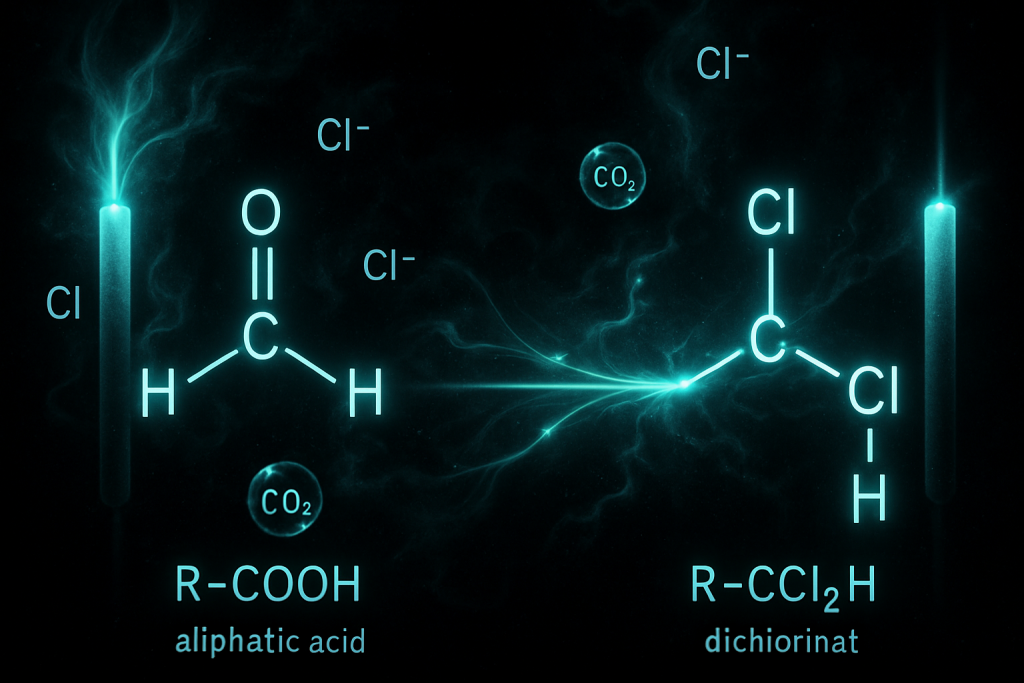
Image generated by AI
AI Insight
This study presents a new method for converting aliphatic carboxylic acids into vicinal dichlorides (compounds with two chlorine atoms on adjacent carbon atoms) using a combined electrochemical and photocatalytic approach. The researchers developed a decarboxylative process that removes the carboxyl group while simultaneously adding two chlorine atoms, providing access to valuable dichlorinated building blocks from readily available starting materials. The method operates under mild conditions and demonstrates broad substrate scope across various aliphatic carboxylic acids.
Why it matters
Vicinal dichlorides are important synthetic intermediates in pharmaceutical and materials chemistry, but traditional methods for their preparation often require harsh conditions or toxic reagents. This electrophotocatalytic approach offers a more sustainable and practical route to these compounds from abundant carboxylic acid feedstocks, potentially improving efficiency in drug discovery and chemical manufacturing.
Understand the Science
Source: Electrophotocatalytic decarboxylative vicinal dichlorination of aliphatic carboxylic acids