AI Insight
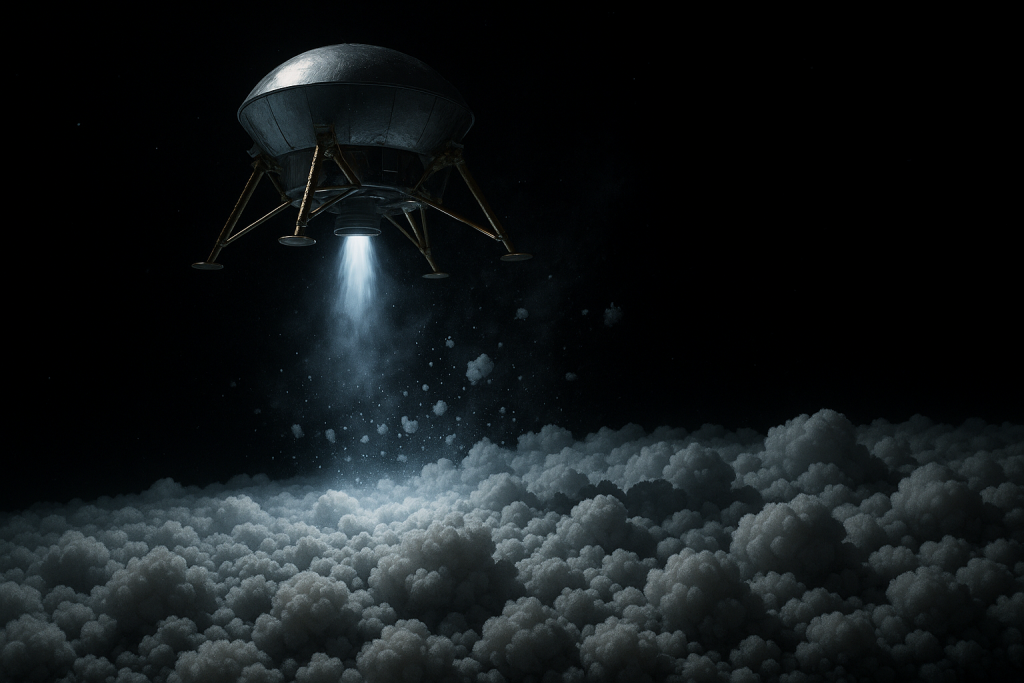
Research suggests that water ejected from cryovolcanoes on icy moons such as Europa and Enceladus may settle and freeze into thick but structurally fragile layers of loosely packed ice. This fluffy ice material, analogous to freshly fallen snow with very low density and poor load-bearing capacity, could accumulate over geological timescales across the surfaces of these moons. If such deposits are widespread, spacecraft attempting to land on these bodies could sink or destabilize upon surface contact, posing a significant engineering challenge for future missions.
Why it matters
Any future lander mission targeting Europa or Enceladus to search for signs of life in their subsurface oceans must account for unpredictable surface bearing strength, which directly affects spacecraft design, landing system architecture, and mission risk assessments.
Understand the Science
Water erupted from cryovolcanoes may freeze into thick but fragile layers on Europa and Enceladus
Source: Fluffy ice could imperil spacecraft landings on ocean moons