AI Insight
Iceberg A-81, a 600-square-mile ice mass that broke off from Antarctica's Brunt Ice Shelf in January 2023, has traveled 1,400 miles northward in just three years, reaching the underwater shelf near South Georgia island by October 2026. This represents unusually rapid movement for an iceberg of this size, as it drifted through the Weddell Sea, past the Antarctic Peninsula, and into the Scotia Sea. NASA's Terra satellite captured the iceberg's journey using its MODIS instrument, documenting this and other recent calving events from the Brunt Ice Shelf.
Why it matters
Satellite monitoring of Antarctic ice movements provides critical data for understanding climate change impacts on polar regions, sea level rise, and global weather patterns. The increased frequency of large iceberg calving events from the Brunt Ice Shelf and the accelerated drift rates of icebergs like A-81 serve as indicators of changing conditions in Antarctic waters and ice shelf stability.
Understand the Science
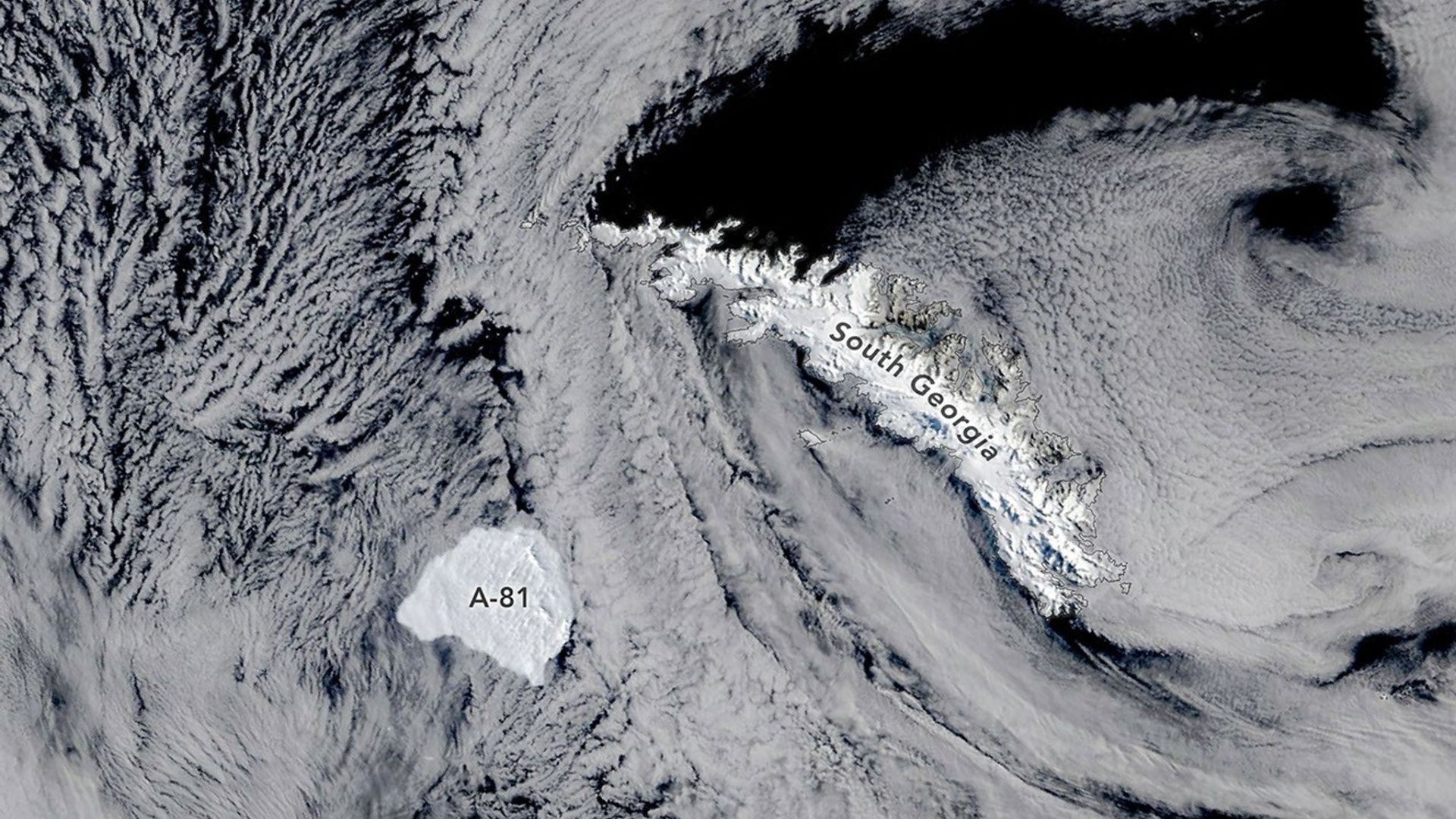
An iceberg has quickly escaped from the Weddell Sea in Antarctica, on its way to an icy new destination.
What is it?
As captured by a satellite in orbit, the Antarctic iceberg A-81 has quite quickly (for an iceberg) parted ways from its icy home, breaking off to drift toward a shallow underwater shelf in Georgia.
The 600-square-mile (1,550-square-kilometer) iceberg first broke off from the Brunt Ice Shelf in January of 2023. Now, generally speaking, giant icebergs don’t travel that fast. But In just three years, this massive iceberg has traveled 1,400 miles (2,300 kilometers) north of the Brunt Ice Shelf. For an iceberg, that’s really fast.
Over this time period, the iceberg drifted through the Weddell Sea in Antarctica’s Southern Ocean before reaching the tip of the Antarctic Peninsula, floating further into the Scotia Sea and then finally now reaching the edge of a remote island in South Georgia.
In this satellite snapshot captured on Oct. 20, 2026, we can see the iceberg in its current location near an underwater shelf off the coast of South Georgia. While it isn’t abnormal for icebergs like A-81 to break off from larger ice shelves, Brunt has recently had multiple large icebergs break off one quickly after the other, according to a statement from NASA.
Why is it incredible?
This image was captured by the MODIS (Moderate Resolution Imaging Spectroradiometer), an instrument on board NASA’s Terra satellite.
Earth-observing satellites like Terra keep a close eye on changes on our home planet. In addition to this image, observations from Terra have showed how the iceberg has traveled over the last few years.
With satellites like Terra, scientists can keep a close eye on these changes in Antarctic ice, which is becoming increasingly important as climate change continues to progress across the globe, affecting everything from Arctic ice to sea levels rising, worsening natural disasters and more.
Source: Satellites watch an escaping Antarctic iceberg | Space photo of the day for Oct. 28, 2026