Image generated by AI
Your cells are constantly pushing and pulling on each other with forces so small they’re measured in piconewtons—yet these mechanical stresses directly control whether you develop cancer, heal a wound, or maintain strong bones. For decades, biologists focused almost exclusively on the chemical signals flowing between cells, overlooking an equally powerful language written in physical forces. This oversight has begun to shift, revealing that mechanics and biology are not separate disciplines but deeply intertwined processes that determine the shape, function, and fate of living organisms.
Mechanobiology—the study of how physical forces influence biological processes—has moved from the margins of science into the mainstream, attracting billions in research funding and spurring collaborations between physicists, engineers, and biologists. Understanding these mechanical forces promises to revolutionize how we treat disease, design artificial tissues, and even predict which tumors will turn deadly. In an era where synthetic biology and regenerative medicine are rapidly advancing, grasping how cells sense and respond to mechanical cues has become essential for innovation.
What Is Biological Physics and Mechanobiology?
Biological physics is an interdisciplinary field that applies the laws of physics to understand how living systems work at every scale, from individual molecules to entire organisms. Mechanobiology, its crucial subset, focuses specifically on how mechanical forces—tension, compression, shear stress, and vibration—regulate biological behavior. Rather than asking only “what chemical signals are being exchanged?” mechanobiologists ask “what forces are acting, and how do cells detect and respond to them?” This shift in perspective has revealed that cells possess sophisticated “molecular sensors” that translate physical deformation into biochemical signals, effectively allowing cells to “feel” their mechanical environment.
The field emerged in its modern form during the 1990s, when researchers like Donald Ingber at Harvard University proposed that cells maintain their structure and function through a system called “tensegrity”—a concept borrowed from architecture and engineering. Ingber’s work demonstrated that cells are not passive bags of chemicals but dynamic structures whose shape and mechanical properties directly influence gene expression and cellular behavior. Since then, the field has exploded, with thousands of papers annually exploring how mechanical cues guide development, maintain tissue homeostasis, and drive disease progression.
The Basic Principle
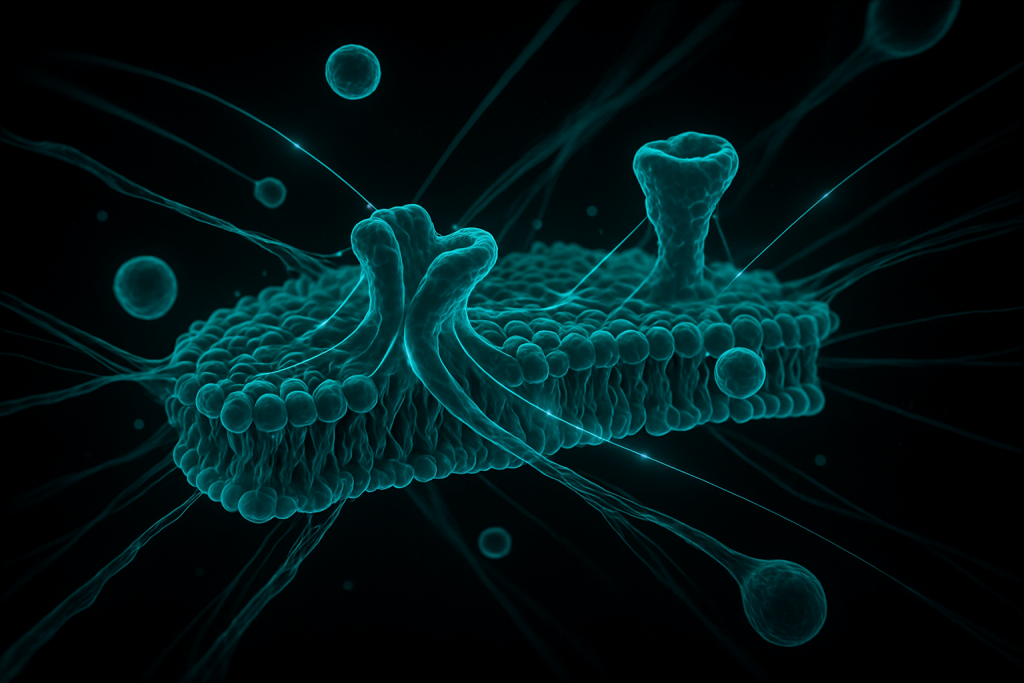
At its core, mechanobiology rests on a deceptively simple principle: cells can sense mechanical forces and convert them into biochemical signals that alter gene expression and cellular behavior. This process, called “mechanotransduction,” involves specialized proteins embedded in the cell membrane and within the cell’s cytoskeleton—a scaffolding system of protein filaments that gives cells their shape and structural integrity. When external forces deform a cell or its surrounding environment, these molecular sensors detect the deformation and trigger a cascade of chemical reactions inside the cell, ultimately reaching the nucleus and changing which genes are turned on or off.
Think of a cell as a sophisticated pressure-sensing device, much like a barometer that responds to atmospheric changes. When you press on a balloon, the rubber stretches and deforms, but the air inside remains unchanged—the balloon’s physical properties adapt to the external force. Similarly, when tissues around a cell experience tension or compression, the cell’s membrane and internal structures deform. But unlike a balloon, the cell doesn’t just passively stretch; instead, its mechanical sensors detect this deformation and send signals inward, activating proteins that change the cell’s behavior. A fibroblast—a cell responsible for producing collagen and maintaining connective tissue—experiences constant mechanical tension from surrounding tissues. When this tension increases, the cell responds by producing more collagen and becoming more contractile, effectively strengthening the tissue. Conversely, when tension decreases (as might happen with immobility), the cell produces less collagen and may even undergo programmed death, weakening the tissue.
The molecular players in this drama are becoming increasingly well characterized. Proteins called integrins act as physical bridges between the cell’s interior and exterior, directly sensing when the surrounding extracellular matrix (the structural material between cells) changes shape or stiffness. When integrins detect changes, they activate downstream signaling proteins like focal adhesion kinase (FAK) and various small GTPases, which relay the mechanical message deeper into the cell. Eventually, these signals reach the nucleus, where transcription factors—proteins that control which genes are expressed—change their activity, leading to altered cell behavior. Recent research has identified dozens of mechanosensitive proteins beyond integrins, each responding to different types of mechanical stimuli, suggesting that cells possess a nuanced “mechanical vocabulary” far richer than scientists initially appreciated.
Why It Matters in the Real World
Understanding mechanobiology has profound implications for medicine and biotechnology. Cancer provides a compelling example: tumors are typically stiffer than surrounding healthy tissue, a change caused partly by excessive collagen deposition and altered cellular mechanics. Recent research shows that this increased stiffness doesn’t just result from cancer but actively promotes it—stiffer environments cause cells to become more aggressive, proliferate faster, and resist drug treatment. By understanding these mechanical drivers of cancer progression, researchers are developing new therapeutic approaches that target tumor stiffness rather than only attacking cancer cells chemically. Similarly, mechanobiology explains why astronauts lose bone mass in zero gravity: without gravitational forces loading their bones, osteocytes (bone-maintaining cells) sense reduced mechanical stress and respond by reducing bone production, leading to rapid deterioration. Conversely, this understanding has led to new exercise protocols and pharmacological interventions that artificially stimulate the mechanical pathways normally activated by weight-bearing activity.
The clinical applications span from orthopedic medicine to cardiovascular health. Osteoporosis, long treated as a simple calcium-deficiency problem, is increasingly understood as a mechanotransduction failure—aging bones lose their ability to sense and respond to mechanical forces, leading to progressive weakness. Researchers are now developing drugs that restore mechanosensing in bone cells, potentially offering new treatment avenues. In cardiovascular medicine, endothelial cells lining blood vessels constantly sense the shear stress of blood flow, a mechanical stimulus that regulates their health and prevents atherosclerosis. Disturbed blood flow in curved regions of arteries creates abnormal shear stress patterns that promote inflammation and plaque formation, explaining why certain vessel locations are hotspots for disease. Understanding this has inspired new approaches to predicting and preventing cardiovascular disease by modeling blood flow mechanics at the vessel level.
Recent Breakthroughs in Biological Physics and Mechanobiology
The past two to three years have witnessed remarkable advances in mechanobiology, accelerated by new technologies for measuring and manipulating forces at cellular scales. In 2022 and 2023, multiple research groups used advanced microscopy and molecular engineering to create increasingly sophisticated “mechanosensors”—fluorescent proteins that glow brighter when stretched, allowing researchers to visualize mechanical forces in living cells with unprecedented precision. These tools revealed that mechanical forces are far more heterogeneous within tissues than previously appreciated; even neighboring cells within the same tissue experience wildly different mechanical environments. Additionally, researchers have begun mapping mechanotransduction networks with greater resolution, identifying hundreds of genes whose expression changes in response to mechanical stimulation, suggesting that mechanical signaling is far more extensive than the handful of canonical pathways long studied. A particularly striking discovery involved the protein YAP, which shuttles between the cytoplasm and nucleus in response to mechanical cues; in soft environments, YAP remains in the cytoplasm and cells differentiate or die, while in stiff environments, YAP enters the nucleus and promotes cell proliferation and stemness—a finding with implications for tissue engineering and cancer prevention.
Current research frontiers include understanding how mechanical forces influence immune function, how cells integrate mechanical signals from multiple directions simultaneously, and how mechanical cues interact with biochemical signals to produce emergent behaviors. Several groups are investigating whether manipulating mechanotransduction could reverse fibrosis—pathological tissue stiffening that occurs in lung disease, liver cirrhosis, and cardiac disease. Others are exploring whether mechanical stimulation could enhance the regenerative capacity of aging tissues or whether reducing mechanical signals in tumors could restore chemotherapy sensitivity. The field is also grappling with fundamental questions: How do tissues “remember” mechanical history, and can cells distinguish between static and dynamic forces? These open questions will likely dominate the next decade of mechanobiology research.
Why Biological Physics and Mechanobiology Matters for the Future
As biotechnology and medicine advance, mechanobiology will become increasingly central to solving major challenges. Regenerative medicine, which aims to grow replacement tissues and organs in the laboratory, has long struggled with a fundamental problem: tissues grown in lab dishes typically lack the mechanical properties of native tissues. A heart valve grown in a bioreactor may have the right cell types and chemical signals but lacks the precise mechanical environment that teaches developing cells how to organize and function properly. By better understanding and controlling mechanical cues during tissue engineering, researchers hope to grow fully functional replacement organs—a development that could revolutionize transplantation medicine. Similarly, in drug development, understanding mechanotransduction could lead to more accurate predictive models of how tissues and organs will respond to new pharmaceuticals, reducing reliance on animal testing and improving drug safety.
The challenges ahead are substantial. Measuring and manipulating forces in intact organisms remains difficult; while scientists can exert precise forces on isolated cells in a dish, controlling mechanical cues in living tissues is far more complex. Additionally, the sheer complexity of mechanotransduction networks—with hundreds of genes and proteins involved—makes it challenging to predict how manipulating one mechanical pathway will affect others. There’s also the fundamental challenge of biological variability: mechanical responses differ between cell types, developmental stages, and disease states, requiring personalized approaches rather than one-size-fits-all solutions. Overcoming these limitations will require continued innovation in measurement technologies, computational modeling, and our conceptual understanding of how physical and chemical information flows through biological systems.
Key Takeaways
- Cells possess sophisticated molecular sensors that detect physical forces in their environment and translate these mechanical cues into biochemical signals, a process called mechanotransduction.
- Mechanical forces regulate fundamental biological processes including cell differentiation, proliferation, death, and gene expression—making mechanics as important as chemistry in controlling cellular behavior.
- Understanding mechanobiology has promising applications in cancer treatment, regenerative medicine, bone health, cardiovascular disease prevention, and treating fibrotic diseases.
- Recent technological advances have revealed that mechanical signaling is far more complex and widespread than previously appreciated, with hundreds of genes responding to mechanical stimuli through multiple interconnected pathways.
- As synthetic biology and tissue engineering advance, mechanobiology will become essential for designing functional replacement tissues and organs, and for predicting how drugs and therapies will affect living systems.
Explore TED Talks on Biological Physics and Mechanobiology:
TED content is used under CC BY-NC-ND 4.0. © TED Conferences, LLC.
Frequently Asked Questions
How do cells sense and respond to mechanical forces measured in piconewtons?
Cells detect mechanical forces through specialized proteins called mechanoreceptors and focal adhesions that are embedded in the cell membrane and cytoskeleton, which then trigger biochemical signaling cascades that alter gene expression and cellular behavior. These mechanotransduction pathways convert physical stress directly into biological responses, allowing cells to adapt their structure and function based on the mechanical environment around them.
Why have biologists historically overlooked mechanical forces compared to chemical signaling between cells?
For decades, the dominant paradigm in biology focused on biochemical pathways and molecular interactions because chemical signals were easier to study with available technologies and fit neatly into established molecular biology frameworks. The tools to measure and manipulate piconewton-scale forces and directly observe their effects on cell behavior only became feasible in recent decades, shifting the scientific perspective.
Can understanding mechanobiology help predict which tumors will become life-threatening?
Yes, because tumor mechanical properties—such as stiffness, contractile forces, and tissue architecture—directly influence cancer progression, metastasis potential, and treatment response in ways that chemical markers alone cannot reveal. By analyzing these physical characteristics, researchers can better predict aggressive tumor behavior and identify which cancers are likely to spread or resist therapy.
How do mechanical forces influence bone strength and wound healing at the cellular level?
Physical forces activate mechanotransduction pathways in bone-forming osteocytes and fibroblasts, triggering them to deposit matrix proteins and remodel tissue in response to mechanical stress and strain. In wound healing, tension and mechanical cues guide cell migration and collagen deposition, while in bone, repeated mechanical loading stimulates cells to strengthen the tissue structure.