AI Insight
NASA's James Webb Space Telescope has captured a mid-infrared image of the Cat's Head Nebula, revealing intricate structures within this distinctively shaped cosmic formation located in the Carina Nebula region. The characteristic feline appearance resulted from intense ultraviolet radiation and stellar winds from massive nearby stars eroding surrounding gas and dust over time, while denser material in the pillar-shaped structure has resisted erosion. The image was released on October 29, 2026, and processed by the Space Telescope Science Institute.
Why it matters
This observation demonstrates the James Webb Space Telescope's capability to image stellar feedback processes that shape nebular structures, helping astronomers understand how massive stars influence their surrounding environments. The detailed mid-infrared imagery provides insight into the differential erosion of interstellar material and the lifecycle of star-forming regions.
Understand the Science
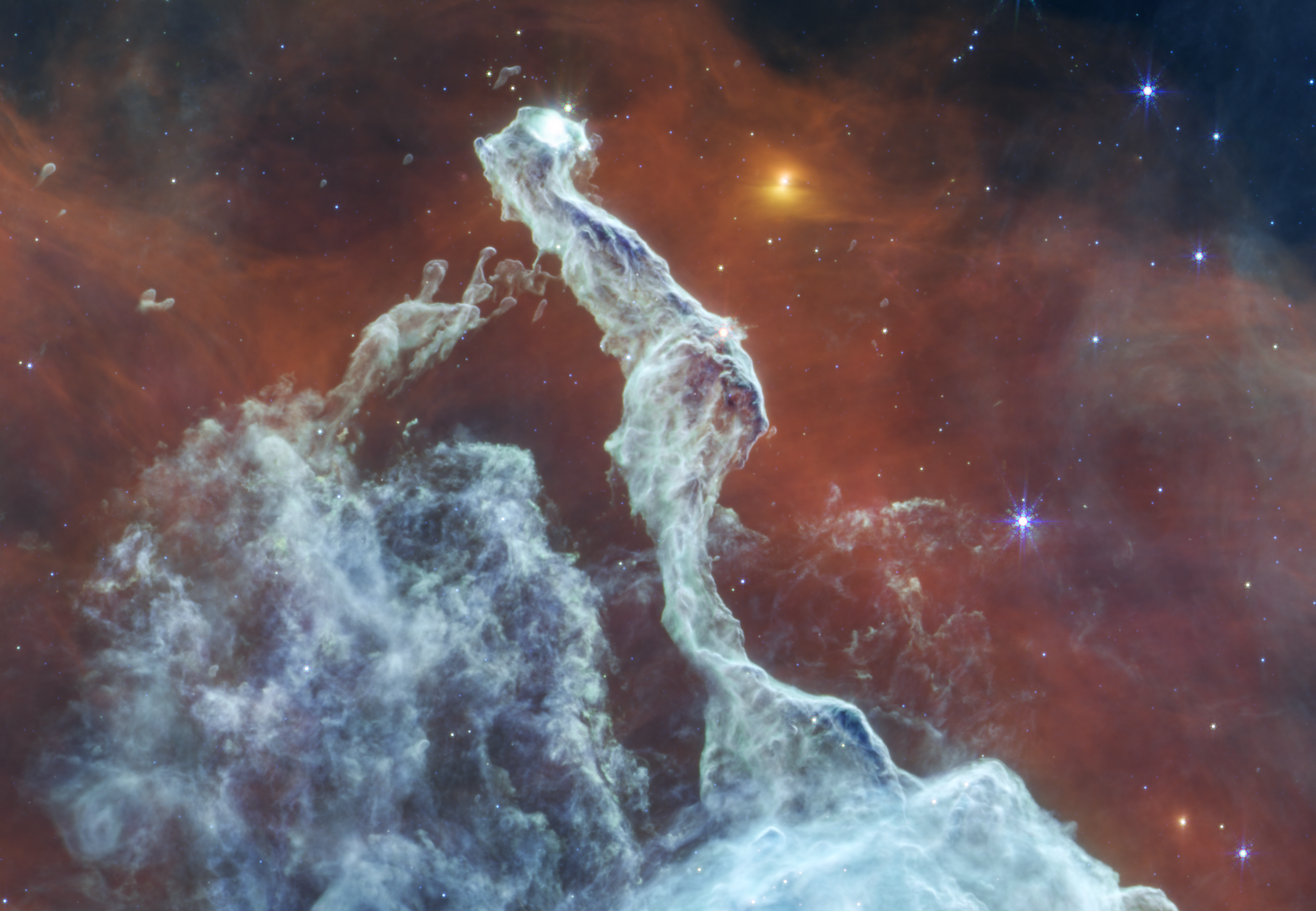
Intricate structures within the Cat’s Head Nebula are illuminated in this mid-infrared view from NASA’s James Webb Space Telescope released on Oct. 29, 2026. The distinctive “cat’s head” shape of the nebula was likely sculpted over time by the intense ultraviolet radiation and winds from massive stars in the Carina Nebula. As this stellar feedback erodes the surrounding gas and dust, denser material within the feline-shaped pillar resists erosion, at least for now.
Image credit: NASA, ESA, CSA, STScI; Image Processing: Joseph DePasquale (STScI)
Source: NASA’s James Webb Space Telescope Captures Eerie Cat’s Head