AI Insight
Jupiter and Mars will appear exceptionally close together in the night sky on November 15, 2024, with their closest apparent separation occurring at 9:04 p.m. EST in the constellation Leo. The two planets will be separated by just over 1 degree—approximately the width of a little finger held at arm's length—with Jupiter appearing as the brighter of the pair alongside the red glow of Mars. This celestial alignment will be visible to observers in the pre-dawn hours of November 16 for U.S. stargazers, and the planets can be viewed together through binoculars or separately through telescopes.
Why it matters
This planetary conjunction provides an accessible observing opportunity for amateur astronomers and the general public to witness a rare celestial event without specialized equipment. The planets will not appear this close again until July 2029, making this a noteworthy astronomical occurrence for sky watchers.
Understand the Science
Jupiter and Mars will shine side by side in a spectacular close approach in the heart of the constellation Leo on Nov. 15. Here’s what you need to know.
Mars and Jupiter reach their closest apparent separation in Earth’s sky at 9:04 p.m. EST on Nov. 15 (0204 GMT on Nov. 16), according to astronomy website In-The-Sky. The planets will be below the horizon for U.S. stargazers at the moment of their closest approach, but observers can catch the pair rising above the eastern horizon around midnight local time, just a few hours later.
Remember: You can discover the exact timings for the rising and setting of the planets above your local horizon using Time and Date’s night sky tracker.
Jupiter will be the brightest of the pair, when it rises a little over 1 degree from the red light of Mars — roughly the width of your little finger held at arm’s length against the night sky. The bright star Regulus will glow close at hand, forming the dot of the backward question mark formation of stars that represents the head of the great Lion in the constellation Leo.
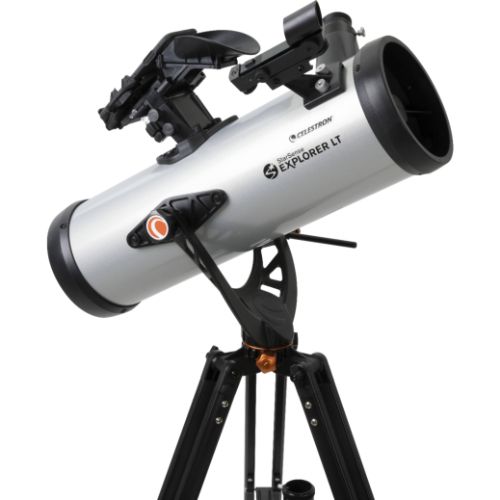
The Celestron StarSense Explorer LT114AZ is a great way to get a closer look at Jupiter, Mars and Saturn. Its 4.5-inch aperture and a high 1000mm focal length delivers good magnification out of the box, plus it’s integrated with the StarSense smartphone app, which makes finding those planets so much easier. Check out our full review for more.
Mars and Jupiter will be close enough to share the field of view of a pair of 10×50 binoculars and will also make for a spectacular sight through the eyepiece of a telescope when viewed separately as they rise away from the horizon.
The gas giant’s iconic Great Red Spot will rotate into view in the predawn hours of Nov. 16, and will be visible through a backyard telescope with an aperture of just 4 inches. Using a light green color filter will help increase the visibility of the vast storm, while an orange filter will help bring out detail in the gas giant’s sweeping cloud belts.
The two planets will appear to gradually drift apart over the coming weeks and won’t appear as close again for another 2.5 years in July 2029, when the two planets appear close together in the constellation Virgo.
Be sure to check out our guide to photographing the night sky, along with our picks of the best cameras and lenses for astrophotography if you’re interested in following the dance of the planets for yourself.
Editor’s Note: If you would like to share your astrophotography with Space.com’s readers, then please send your photo(s), comments, and your name and location to spacephotos@space.com.
Source: Jupiter and Mars are set for a breathtaking close approach later this week: Here's how to see it