AI Insight
On June 17, 2026, observers across the United States and parts of Canada witnessed a daytime lunar occultation of Venus, where the Moon passed directly in front of the planet, temporarily obscuring it from view. This represents the first of three such occultations of Venus occurring in 2026, with subsequent events scheduled for September 14 (visible from Asia, Africa, Europe, and western Russia) and November 7 (visible from southern South America). The phenomenon was documented by NASA from their headquarters in Washington, D.C.
Why it matters
Lunar occultations provide valuable opportunities for public engagement with astronomy and serve as predictable celestial events that can be observed without specialized equipment during daylight hours. These events also help demonstrate orbital mechanics and the relative positions of celestial bodies in our solar system.
Understand the Science
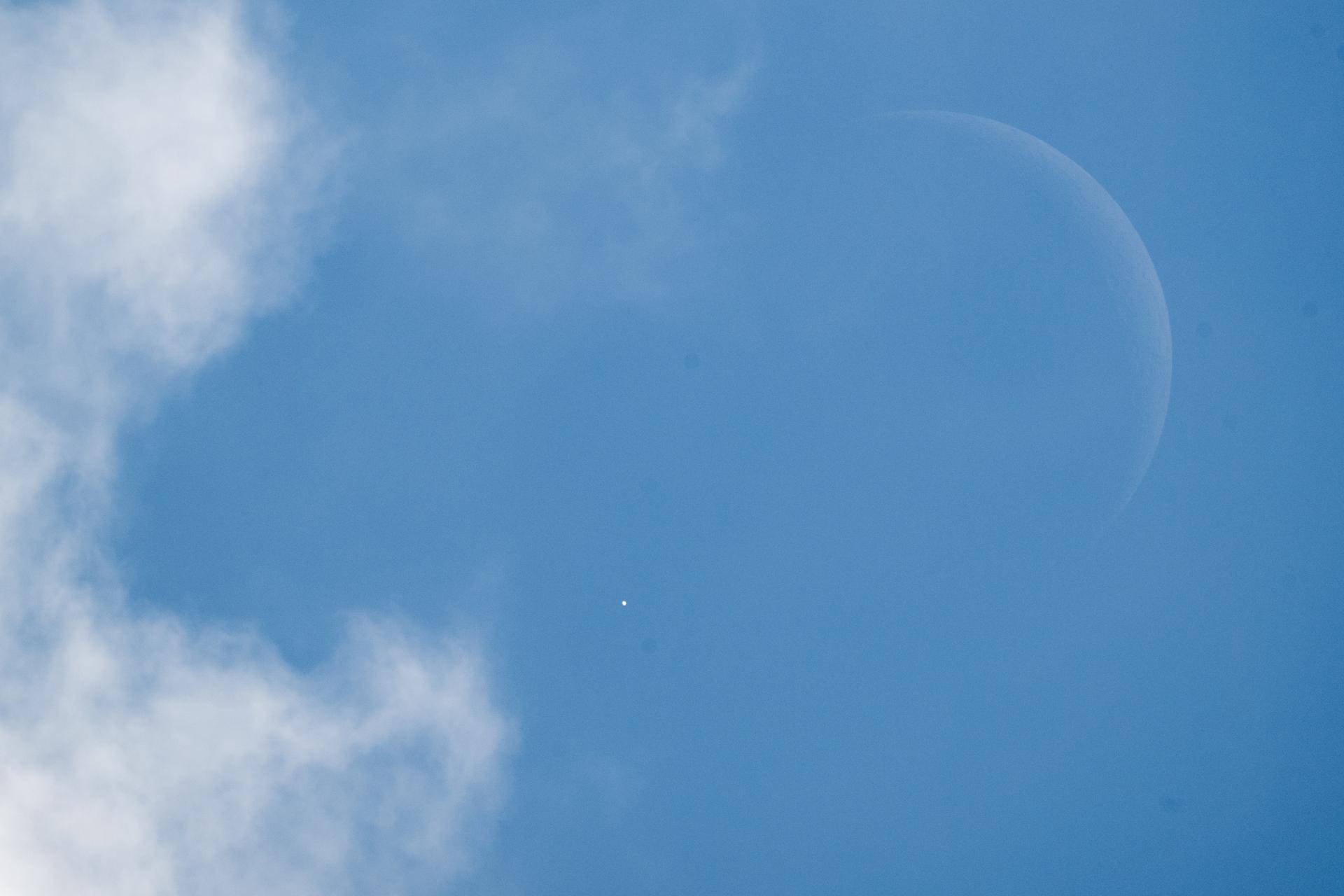
On Wednesday, June 17, skywatchers across the United States—and parts of Canada—enjoyed a rare event: a daytime lunar occultation of Venus. A lunar occultation occurs when the Moon moves directly in front of another celestial object from our viewpoint on Earth, briefly hiding it from sight.
This time, the Moon slipped in front of Venus for the first of three occultations happening this year, creating a striking daylight moment for those who caught it. If you missed it, there will be two more opportunities to see Venus disappear behind the Moon in 2026: Sept. 14, visible from parts of Asia, Africa, Europe, and western Russia; and Nov. 7, visible from southern South America.
Source: Lunar Occultation of Venus