AI Insight
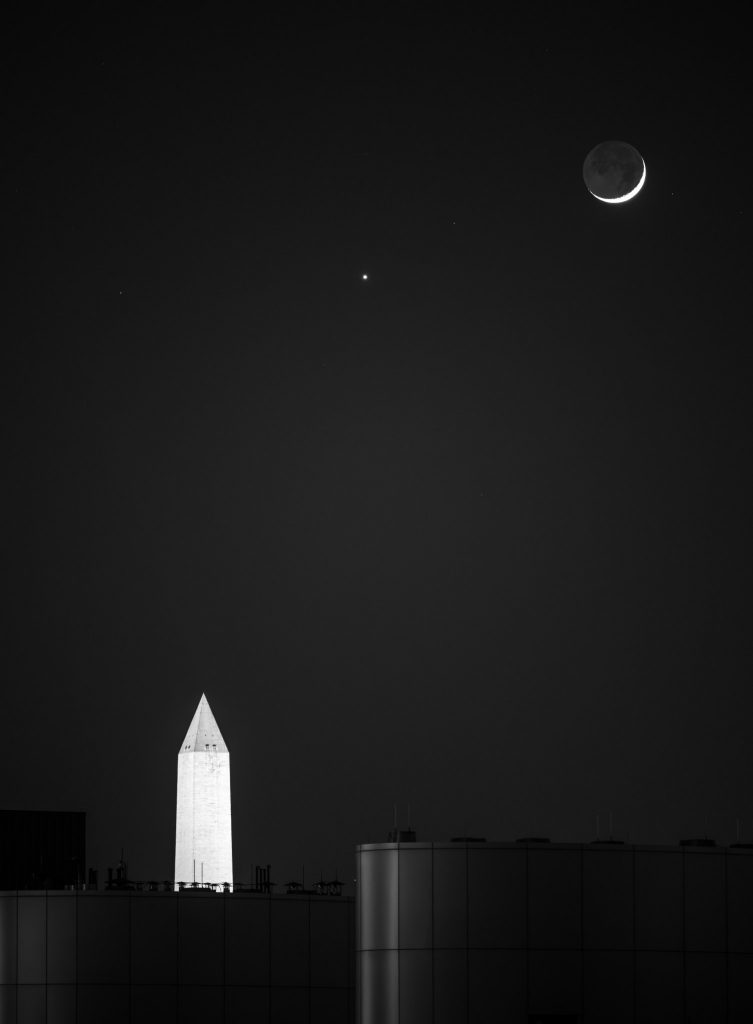
On May 18, 2026, the Moon and Venus were observed in a conjunction as seen from Washington, D.C., appearing in close proximity in the night sky above the Washington Monument. This apparent closeness is a line-of-sight effect caused by the alignment of the two bodies from Earth's perspective, not an actual spatial proximity. In reality, the Moon and Venus remain separated by millions of miles in space during such an event.
Why it matters
Conjunctions like this one serve as accessible astronomical events that engage the public in observational science and demonstrate fundamental concepts in celestial mechanics, such as the distinction between apparent and true spatial relationships. They also provide opportunities for astrophotography documentation and public science communication by agencies like NASA.
Understand the Science
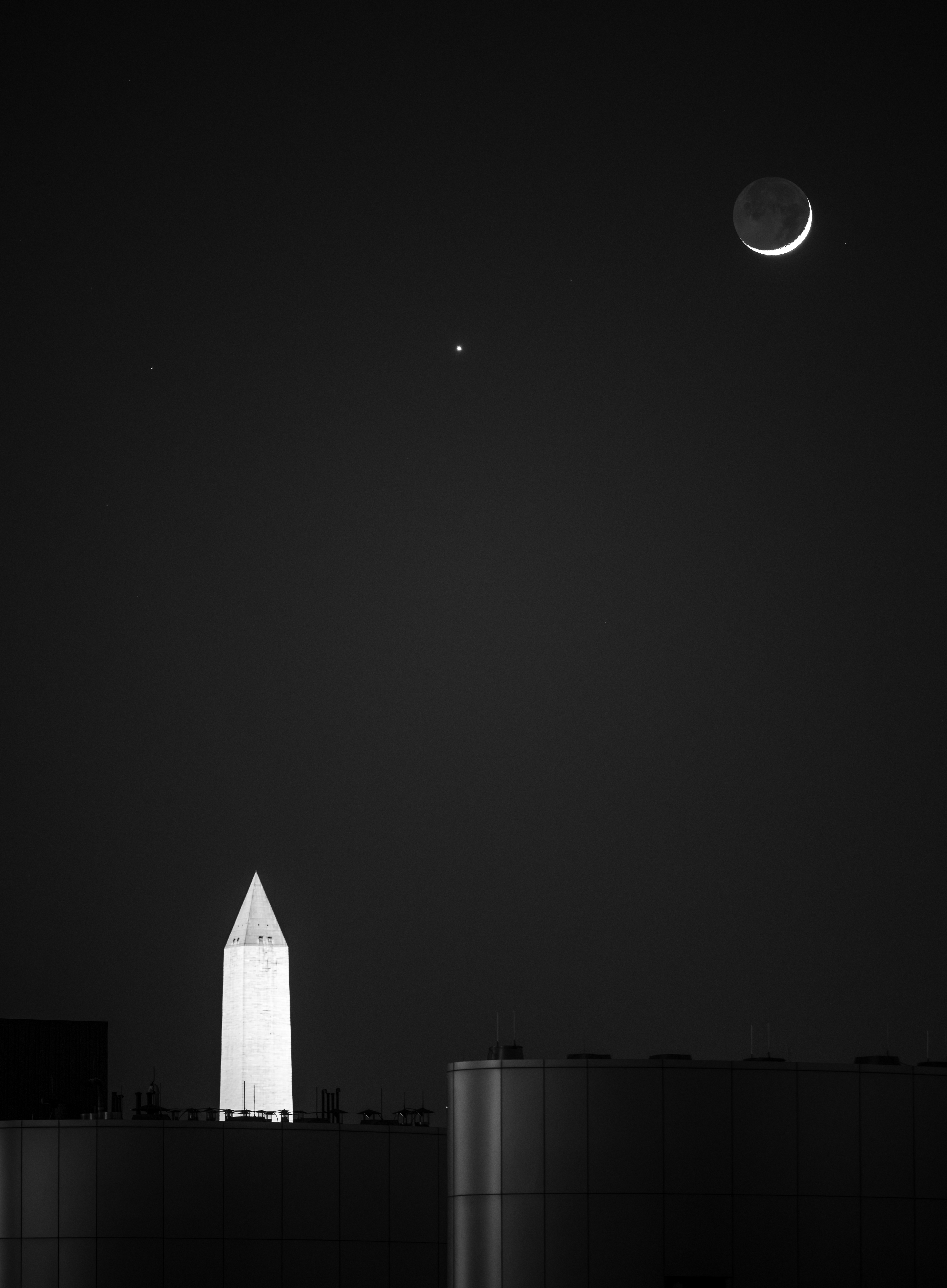
The Moon and Venus, center, are seen in conjunction above the Washington Monument, Monday, May 18, 2026, as viewed from the Mary W. Jackson NASA Headquarters Building in Washington.
The Moon and Venus look close together because they line up from our point of view on Earth. In reality, they are separated by millions of miles in space.
See more photos of the conjunction.
Image credit: NASA/Bill Ingalls
Source: Moon-Venus Conjunction