AI Insight
NASA's Boeing 777 aircraft has received a new paint scheme and returned to Langley Research Center in Hampton, Virginia. The B777 was acquired to replace the retired DC-8 aircraft and is scheduled to begin operations in 2027. It will serve as a flying laboratory for Earth science research, including sensor development, satellite calibration, data validation, and field studies of Earth system processes.
Why it matters
The B777 will provide NASA with enhanced global research capabilities to improve Earth observation technologies and climate models. This aircraft will support critical data collection missions that inform scientific understanding and environmental decision-making.
Understand the Science
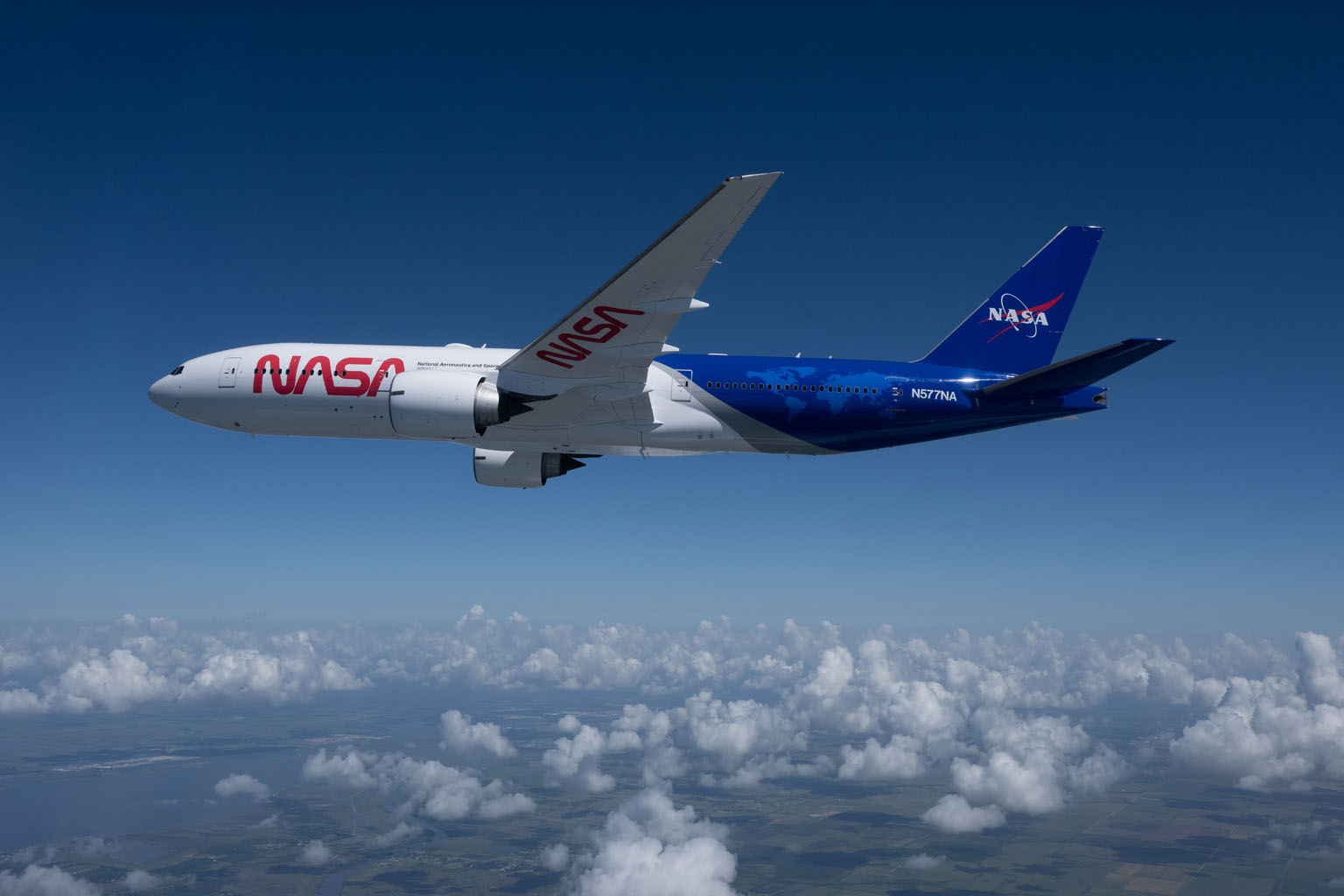
NASA’s Boeing 777 shows off a new paint job in this Aug. 11, 2026, photo. The B777 was acquired to replace and extend the capabilities of the NASA DC-8, which was retired in 2024.
The B777, set to begin operations from NASA’s Langley Research Center in Hampton, Virginia in 2027, will be a unique flying laboratory with global reach enabling data collection for NASA projects to include sensor development, satellite sensor calibration, data product validation, and field studies to better understand Earth system processes to improve models and decision-making.
Image credit: NASA/James Blair