AI Insight
On October 31, 2026, four crew members completed a year-long simulated Mars mission as part of NASA's Crew Health and Performance Exploration Analog (CHAPEA) program. The crew of Matthew Montgomery, James Spicer, Ross Elder, and Ellen Ellis tested critical systems including resource management, crop maintenance, communication protocols with Earth-like delays, and extravehicular activities in a controlled analog environment. The mission was designed to collect data on human adaptation to long-duration space missions to inform future lunar base design and Mars exploration planning.
Why it matters
This simulation provides essential data on human physiological and psychological responses to extended isolation and resource constraints without the risks of actual spaceflight. The insights gained will directly influence the design of life support systems, habitat architecture, and crew selection protocols for NASA's Artemis Moon Base and eventual crewed Mars missions.
Understand the Science
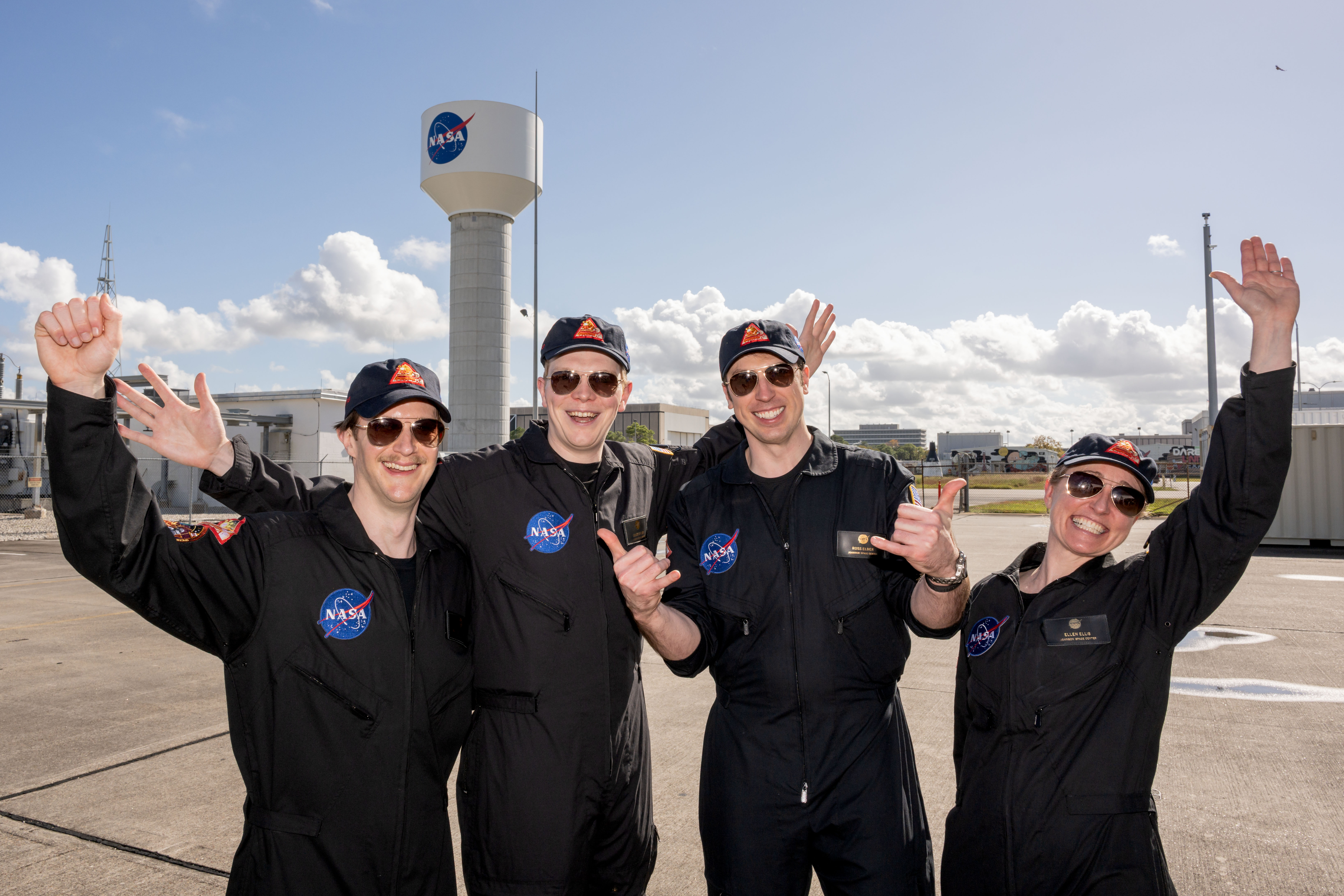
The four-member Crew Health and Performance Exploration Analog (CHAPEA) crew poses outside for the first time in more than a year following the end of their simulated Mars journey on Oct. 31, 2026. Crew members Matthew Montgomery (left), James Spicer (middle left), Ross Elder (middle right), and Ellen Ellis (right) spent more than a year testing systems, maintaining crops, managing limited resources and communication delays, conducting extravehicular activities and more in efforts to help NASA better understand how crews adapt to long-duration stays. Insights from their experiences will help NASA design its future Moon Base and plan for missions on Mars.
Image credit: NASA/James Blair