AI Insight
NASA's DAVINCI descent probe successfully completed thermal testing from August 28 to September 10, demonstrating its ability to withstand Venus's extreme temperatures. The yoga ball-sized engineering model was heated to 869°F (465°C) over approximately one hour in a specialized chamber, replicating the heating rate expected during its actual descent through Venus's atmosphere. The mission aims to investigate Venus's atmosphere, origin, and evolution to determine whether the planet was once habitable with liquid water like Earth.
Why it matters
This successful test represents a critical milestone for the DAVINCI mission, confirming the probe can survive Venus's harsh environment during its descent. Understanding Venus's past habitability could provide crucial insights into planetary evolution and the conditions necessary for life, with implications for assessing habitability of exoplanets.
Understand the Science
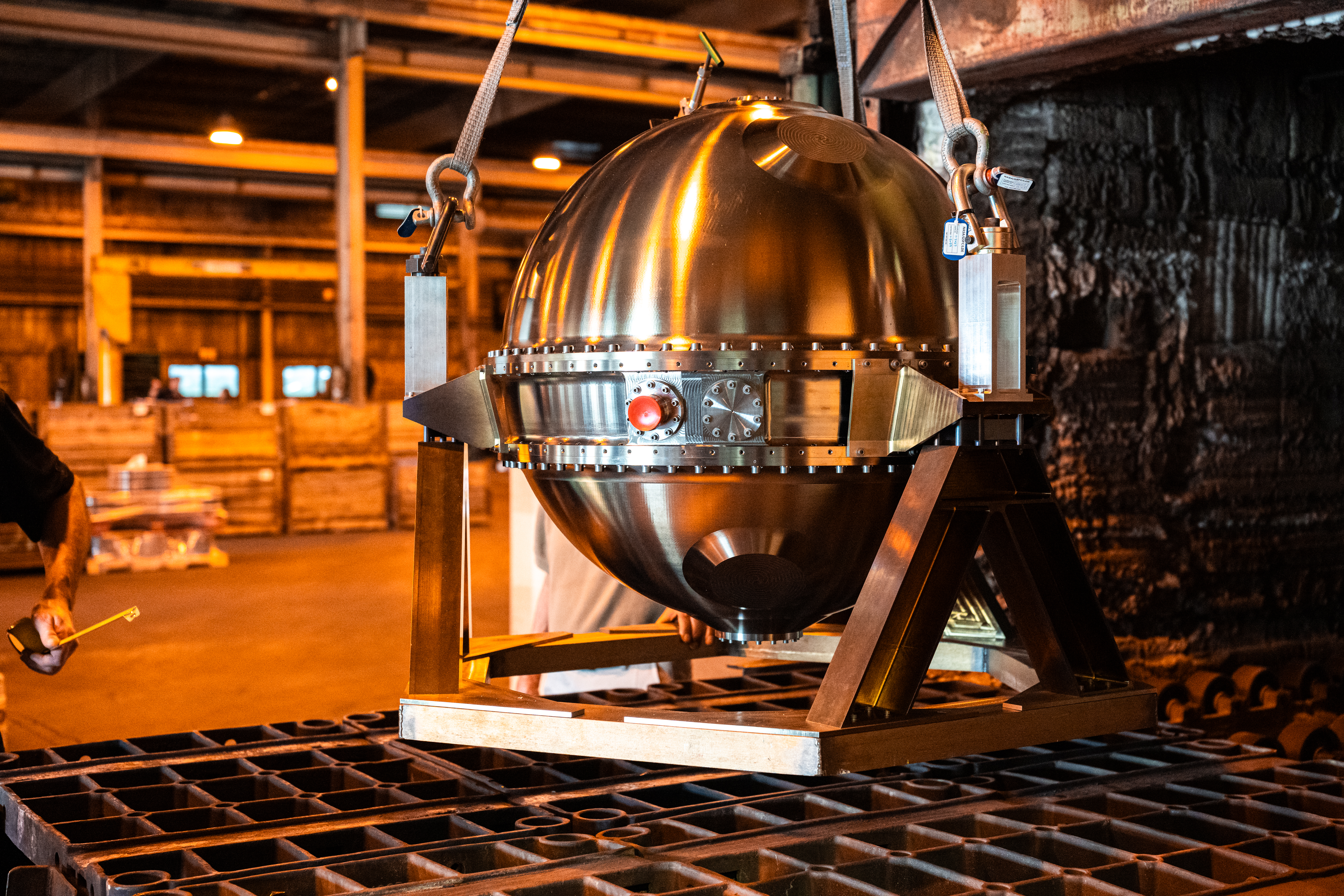
The engineering development unit for NASA’s DAVINCI (Deep Atmosphere Venus Investigation of Noble gases, Chemistry, and Imaging) probe is photographed prior to a major thermal evaluation.
The DAVINCI team put the yoga ball-sized vessel into a ceramic-lined chamber with heat-scorched walls and ratcheted up the temperature to 869 F, or 465 C, over the course of about an hour — the same pace the probe will heat up during its descent to the surface of Venus.
DAVINCI will study the origin, evolution, and present state of Venus in unprecedented detail to help determine whether it was once wet and habitable, like Earth.
Image credit: NASA/Mike Guinto