AI Insight
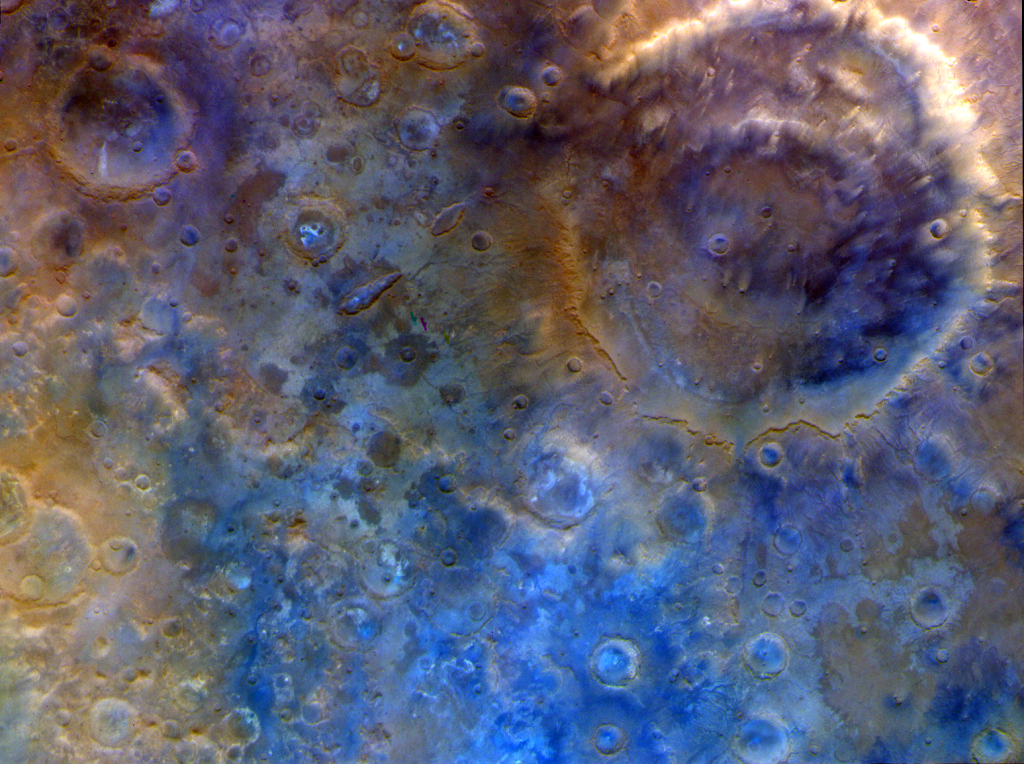
NASA's Psyche spacecraft captured an enhanced-color image of Mars' Huygens Crater, a large double-ring impact structure approximately 470 kilometers in diameter, located in the planet's heavily cratered southern highlands near 15 degrees south latitude. The image was acquired on May 15, 2026, using the mission's multispectral imager instrument shortly after the spacecraft's closest approach to Mars. Color variations visible in the image are attributed to differences in the compositional properties of surface materials including dust, sand, and bedrock, with an image resolution of approximately 670 meters per pixel.
Why it matters
The Psyche mission's flyby of Mars demonstrates the spacecraft's imaging capabilities ahead of its primary objective of studying the metallic asteroid 16 Psyche, while also contributing supplementary observational data on Martian surface geology. Multispectral imaging of ancient Martian terrain can help scientists better characterize surface mineralogy and the history of impact events in the solar system.
Understand the Science
NASA’s Psyche Mission Images Mars’ Huygens Crater
NASA/JPL-Caltech/ASU
Description
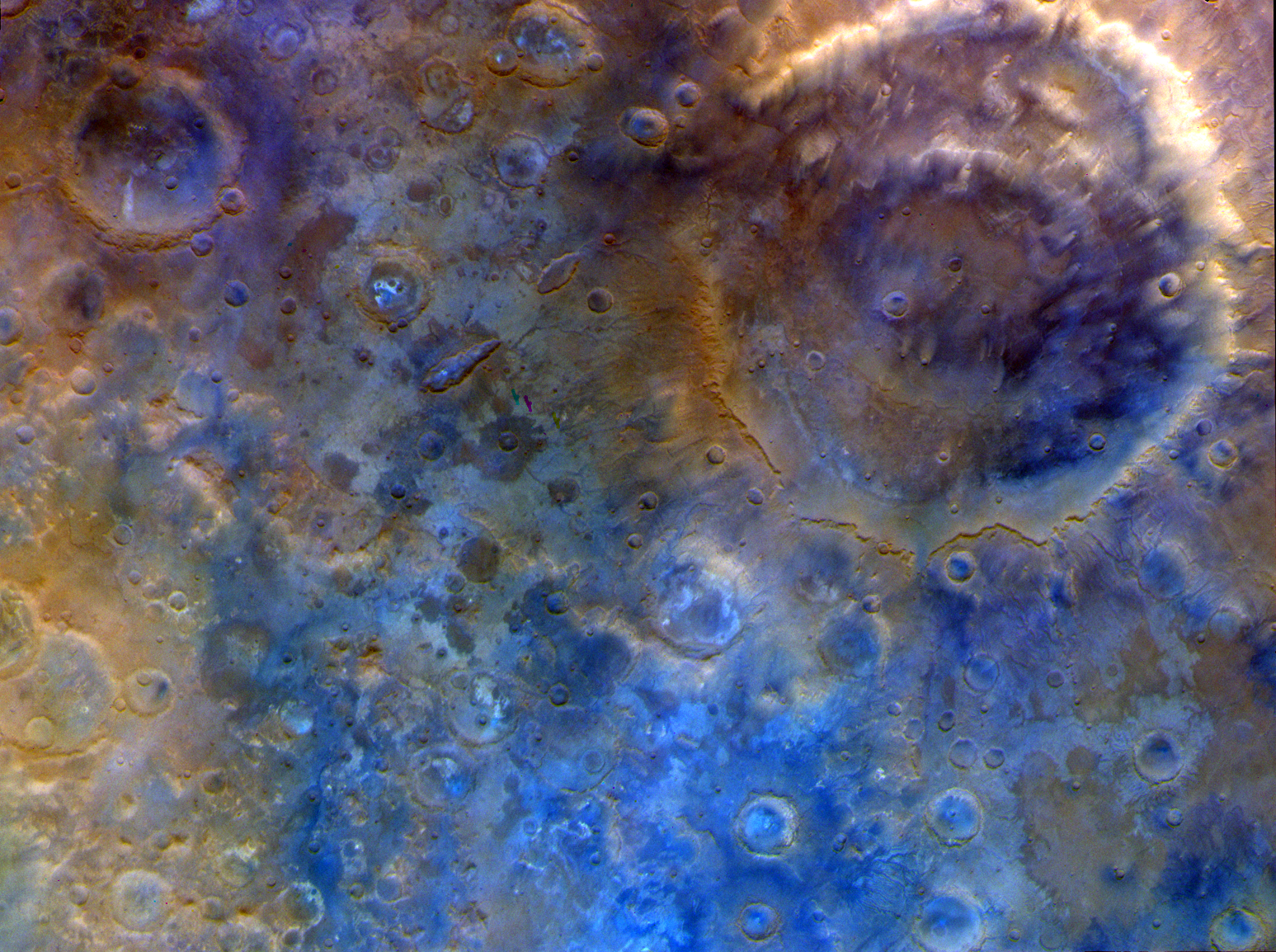
Captured by the multispectral imager instrument on NASA’s Psyche mission, this is an enhanced-color view of the large double-ring crater Huygens (upper left; about 290 miles, or 470 kilometers, in diameter) and the surrounding heavily cratered southern highlands near 15 degrees south latitude. The various colors in this dramatic scene are likely due to differences in the compositional properties of dust, sand, and bedrock in this ancient terrain. The image scale is around 2,200 feet (670 meters) per pixel.
The image was acquired with Imager A on May 15, 2026, at about 1:18 p.m. PDT, shortly after closest approach with the planet. The images have been processed into an enhanced-color view (to bring out color details beyond what the human eye can see) using red, green, and blue data from imager filters.
For more information about NASA’s Psyche mission, visit: