AI Insight
NASA's SpaceX CRS-35 mission launched on October 13, 2026, at 6:33 a.m. EDT from Cape Canaveral Space Force Station, carrying scientific investigations, supplies, and equipment to the International Space Station. The launch produced a "jellyfish" visual phenomenon, where sunlight illuminated the Falcon 9 rocket's exhaust plumes during the early morning hours, creating a glowing, jellyfish-shaped formation visible across the eastern United States. The uncrewed Dragon spacecraft was scheduled to dock with the ISS on October 15, 2026.
Why it matters
This mission represents the 35th commercial resupply service by SpaceX for NASA, demonstrating the ongoing partnership in maintaining the International Space Station's operations and scientific research capabilities. The jellyfish phenomenon, while visually striking, serves as a reminder of the atmospheric interactions that occur during rocket launches near twilight conditions.
Understand the Science
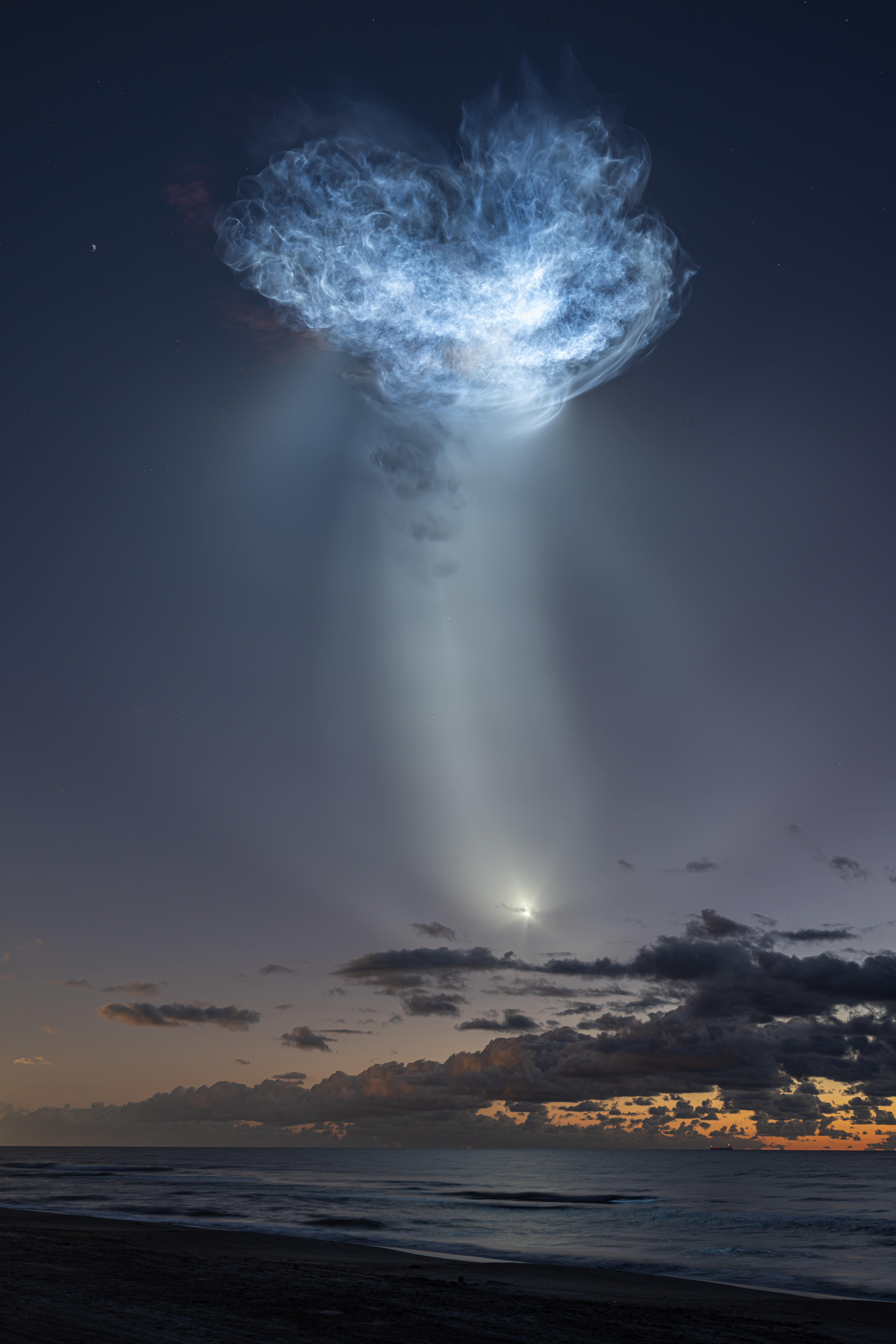
Sunlight illuminates the exhaust plumes of a SpaceX Falcon 9 rocket carrying the company’s Dragon spacecraft on Oct. 13, 2026. This visual phenomenon is known as a “jellyfish”; it happens near sunrise or sunset when the exhaust plume from the rocket becomes brightly illuminated, creating a glowing shape resembling a jellyfish.
The mission lifted off at 6:33 a.m. EDT from Space Launch Complex 40 at Cape Canaveral Space Force Station, carrying scientific investigations, supplies, and equipment to the International Space Station on SpaceX’s 35th commercial resupply services mission for NASA. The rocket’s exhaust plumes were visible across the eastern United States.
Image credit: NASA/John Kraus