AI Insight
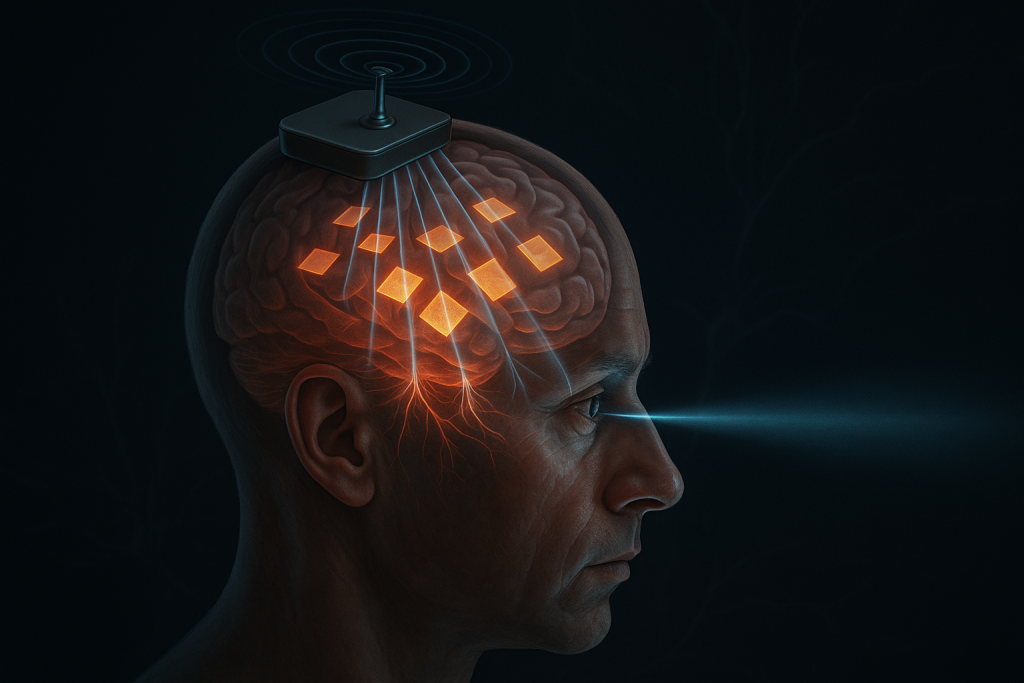
Researchers developed a fully implantable wireless device capable of delivering spatiotemporally patterned optogenetic stimulation through the intact skull to the cortex of mice. The system uses light to activate genetically modified neurons in precise spatial and temporal patterns without requiring physical penetration of the brain tissue. Behavioral experiments demonstrated that this transcranial stimulation was sufficient to generate artificial sensory perception in the animals.
Why it matters
This technology could advance the development of minimally invasive brain-computer interfaces and neuroprosthetic devices for restoring sensory function in patients with neurological conditions. The wireless and implantable nature of the device addresses a key practical barrier to translating optogenetic therapies from laboratory research toward clinical applications.
Understand the Science
Nature Neuroscience, Published online: 08 December 2025; doi:10.1038/s41593-025-02127-6
This work presents a fully implantable wireless optogenetic device that delivers spatiotemporally patterned cortical stimulation through the skull and generates artificial perception in mice.