AI Insight
The Perseids meteor shower, one of the brightest and most popular annual celestial events, was active from early July through the end of August, with its peak occurring on the night of August 12 into the early morning of August 13. A photograph taken at Cedar Breaks National Monument in Utah on August 12, 2018, captured two Perseid meteors framing the constellation Orion. NASA provided live coverage of the meteor shower on August 13.
Why it matters
The Perseids meteor shower provides an accessible opportunity for public engagement with astronomy and serves as a predictable annual celestial phenomenon for both amateur observers and scientific study. The event helps foster public interest in space science and offers educational value for understanding meteor activity and Earth's interaction with cosmic debris.
Understand the Science
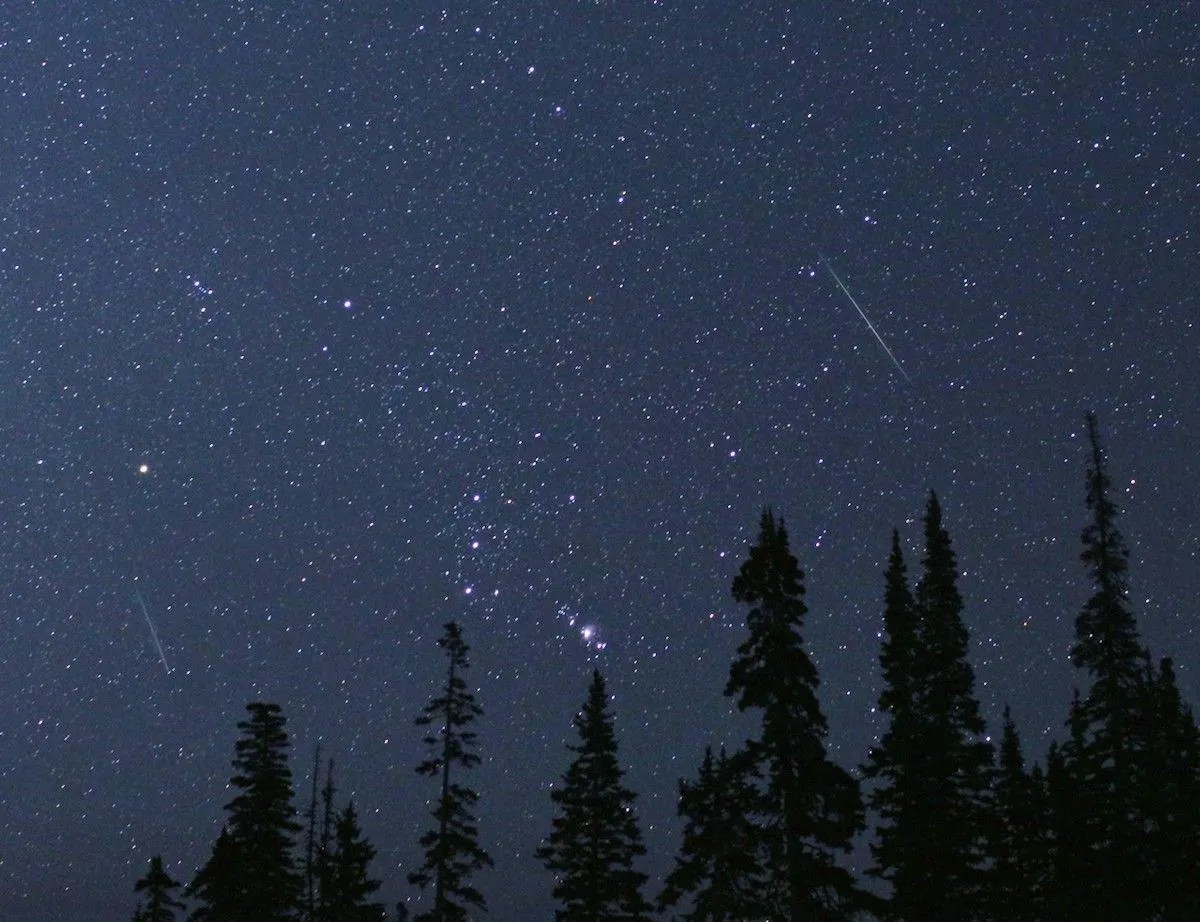
The constellation Orion is framed by two Perseid meteors in this photo from Aug. 12, 2018, in Cedar Breaks National Monument, Utah.
The Perseids – one of the year’s brightest and most popular meteor showers – has been ramping up since early July and will sparkle in the skies through the end of August. The shower reached its peak on the night of Aug. 12 into the early morning of Aug. 13.
Rewatch the Aug. 13 meteor shower.
Image credit: NASA/Bill Dunford
Source: Perseids Meteor Shower