AI Insight
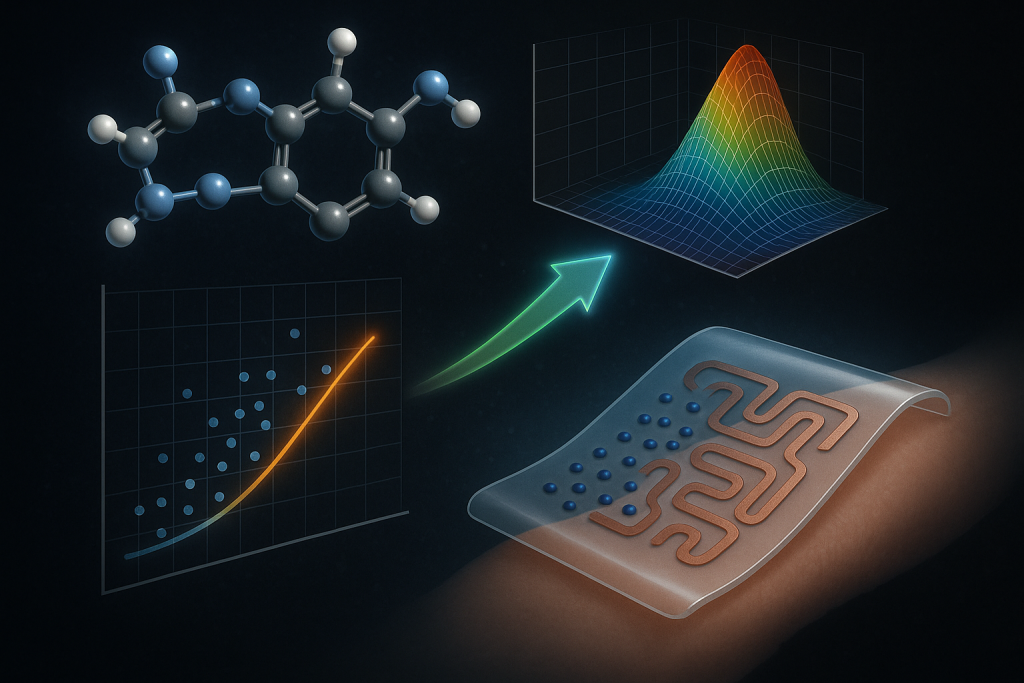
This study presents a physicochemical-informed machine learning framework designed to predict the properties of conductive polymer inks used in soft bioelectronics, even when working with limited experimental datasets. By integrating domain-specific physicochemical knowledge into the predictive models, the authors were able to overcome the typical data scarcity challenges that hinder standard machine learning approaches in materials science. The work demonstrates that embedding expert knowledge about molecular and formulation parameters can significantly improve model accuracy and generalizability for designing functional ink formulations.
Why it matters
Soft bioelectronics, including wearable sensors and biomedical implants, rely on conductive polymer inks with precisely tuned properties, and this approach could accelerate materials discovery while reducing costly and time-consuming experimental trials. The methodology also offers a broader template for applying machine learning to other advanced materials domains where large datasets are difficult to obtain.
Understand the Science