AI Insight
Researchers successfully used radiocarbon dating and oxygen isotope analysis of a single land snail shell from Australia to reconstruct rainfall patterns, including tropical cyclone events, that occurred during the snail's 5-year lifetime from 2013 to 2018. The snail's shell, made of aragonite calcium carbonate, grew incrementally and preserved chemical signatures corresponding to specific weather events. The study demonstrates that land snail shells can serve as archives of past precipitation patterns, with the absence of limestone contamination in the volcanic basalt region being crucial for accurate dating.
Why it matters
This technique could enable scientists to reconstruct rainfall patterns from thousands of years ago in regions worldwide where fossilized land snail shells are preserved, including South America and the southeastern United States. It provides a new tool for paleoclimate research that can reveal year-by-year weather patterns from periods where direct meteorological records do not exist.
Understand the Science
“If someone wanted to know what the rainfall pattern likely was in part of South America thousands of years ago, for example, or in the deserts of the U.S. Southeast, they could use land snail shells and get a picture of that rainfall over several years prior to the time of death of that snail.”
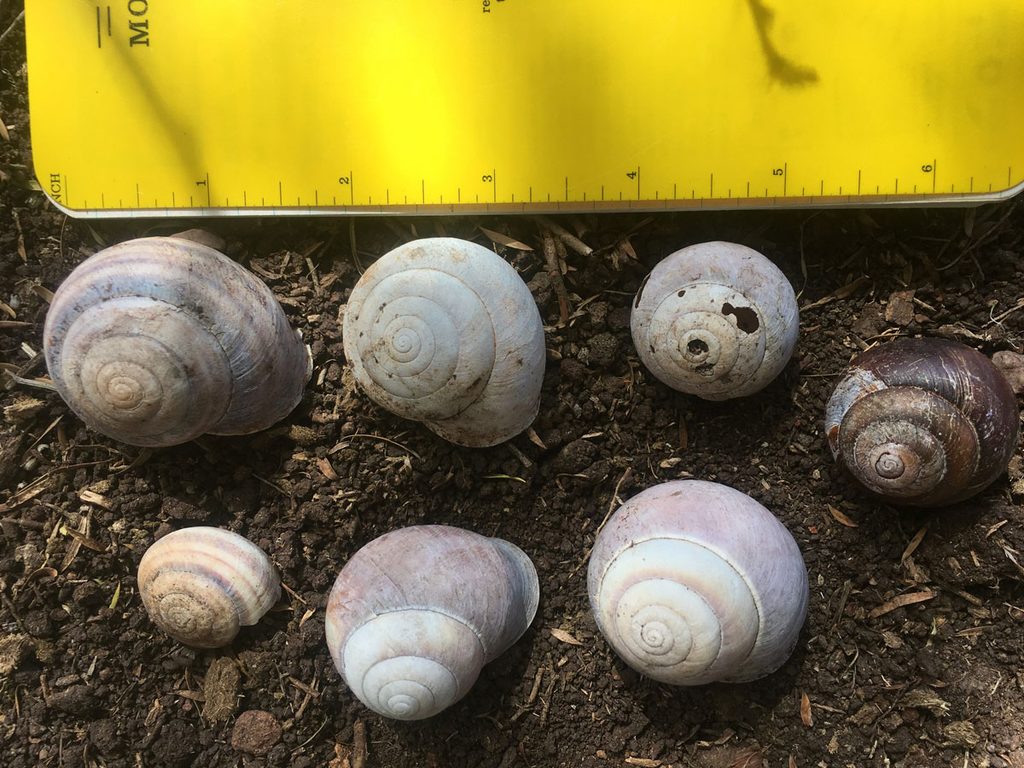
Somewhere in Australia’s Coalstoun Lakes National Park, a Biggenden banded snail spent its life feeding on decaying plant matter. It would have been more active in the humid summer months and would have been dormant during the drier winter. Occasionally, the remnants of a tropical cyclone would punctuate its daily life, which spanned from 2013 to 2018, with heavy rainfall. Now, using radiocarbon dating and oxygen isotopes to establish when different sections of the shell formed, researchers have been able to connect changes in the shell to ex-tropical cyclone rainfall that occurred during the snail’s lifetime.
They published their work in The Holocene.
“The implications of this paper are that this technique could be used with other land snails, from other sites around the world,” said Jann Vendetti, associate curator, malacology, at the Natural History Museum of Los Angeles County, who was not involved in the study. “If someone wanted to know what the rainfall pattern likely was in part of South America thousands of years ago, for example, or in the deserts of the U.S. Southeast, they could use land snail shells and get a picture of that rainfall over several years prior to the time of death of that snail.”
A Representative Snail
Coalstoun Lakes National Park is located next to Mount Le Brun, one of the most recently active volcanoes in Queensland. Approximately 600,000 years ago, a volcanic eruption created twin lakes that fill seasonally and periodically dry out. “Essentially, it’s a big rain trap,” said Nicholas Patton, a Quaternary scientist at Idaho State University and the study’s lead author.
Originally planning a paleoclimate project at the national park in 2018, Patton and the other researchers realized that the many empty snail shells they were finding might reveal interesting information about the climate—past and present.
A snail’s shell is made from aragonite, a crystallized form of calcium carbonate. A Biggenden banded snail’s shell grows at the aperture, the opening where the snail’s body emerges, until the snail reaches full maturity.
“We know when [the snail] passed away, but we don’t know how old it was. If we want to see if the snail contains a climate record, we have to know how old it was.”
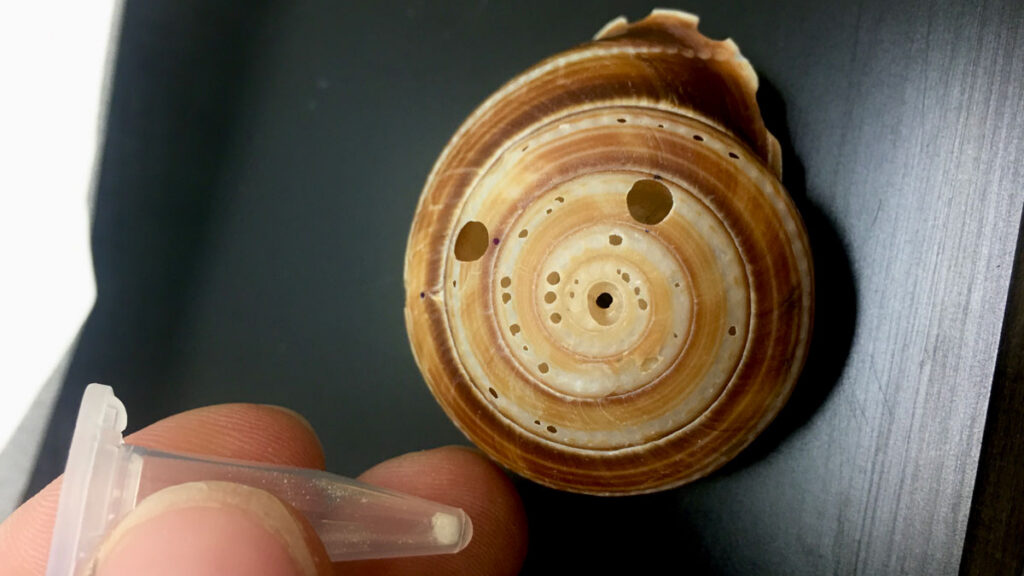
Patton and his team found a large (about 55 millimeters in diameter), recently deceased snail with remnants of tissue from its body still left inside the shell. “That stuff doesn’t last very long, so we thought the snail likely died in the past week or two,” said Patton. “We know when it passed away, but we don’t know how old it was. If we want to see if the snail contains a climate record, we have to know how old it was.”
The researchers cleaned the snail’s well-preserved and intact shell in the lab and confirmed that it was not contaminated with other minerals the snail may have ingested. The area around Coalstoun Lakes is made up of volcanic basalt. The lack of limestone in the region was key for an accurate snail study, said Jason Rech, a geologist at Miami University in Ohio who was not part of the study. “Most land snails will ingest limestone to get at the calcium.”
If a snail consumes too much limestone or other sources of calcium, some of that old carbon can be absorbed into the shell and interfere with radiocarbon dating by making the shell appear older than it actually is.
Seeing Storms Through the Shell
Researchers drilled samples from along the shell’s growth path, from the oldest part near the apex to the newest part along the opening. They sampled eight locations along the shell for radiocarbon dating and to establish when different sections formed. In radiocarbon dating, “typically we look at things between, you know, now and maybe 55,000 years ago, but with modern technology and techniques, we can do really, really short ages, post-bomb,” said Patton.
The Biggenden banded snail lived for approximately 4.5 years, researchers learned through radiocarbon dating and an age-growth model. The snail grew the fastest during the first and last years of its life, with the slowest growth recorded between 2015 and 2017.
The researchers then used Queensland satellite and climate data to identify periods of heavy rainfall and storms as well as changes in vegetation moisture levels at the park. They found those environmental changes were captured by changes in the shell’s chemistry. This finding helped build a timeline that connected the shell’s oxygen isotopes to Severe Tropical Cyclone Marcia in 2015 and Tropical Cyclone Debbie in 2017, suggesting that the snail’s growth was in response to those storms rather than just seasonal patterns.
Larger changes in the shell were consistent with heavier rainfall from ex-tropical cyclones in the park, making the signatures left by those cyclones key for modeling the snail’s growth. “We were able to come up with what we think is a pretty robust growth model for the snail,” Patton said.
Even though this study focused on a single snail in a single location, it’s possible that this same dating method could be used on fossil shells to help give clues about rainfall and storm cycles of the past. To use snail shells to build a paleoclimate record, scientists would first need to locate well-preserved samples in geological deposits. Those shells could potentially preserve information about short-term weather patterns during the years that the snails were alive.
—Rebecca Owen (@beccapox.bsky.social), Science Writer