AI Insight
NASA's Nancy Grace Roman Space Telescope arrived at Kennedy Space Center in Florida on June 21, 2026, aboard the Pegasus barge for final processing before its planned launch on August 30, 2026. The telescope, named after NASA's first chief astronomer, will have a field of view more than 100 times larger than the Hubble Space Telescope. Roman will study up to a billion galaxies, directly image exoplanets and planet-forming disks, and investigate dark energy and infrared astrophysics.
Why it matters
This telescope represents a significant advancement in space observation capabilities, enabling large-scale surveys of the universe that could answer fundamental questions about dark energy, galaxy evolution, and the discovery and characterization of planetary systems beyond our own.
Understand the Science
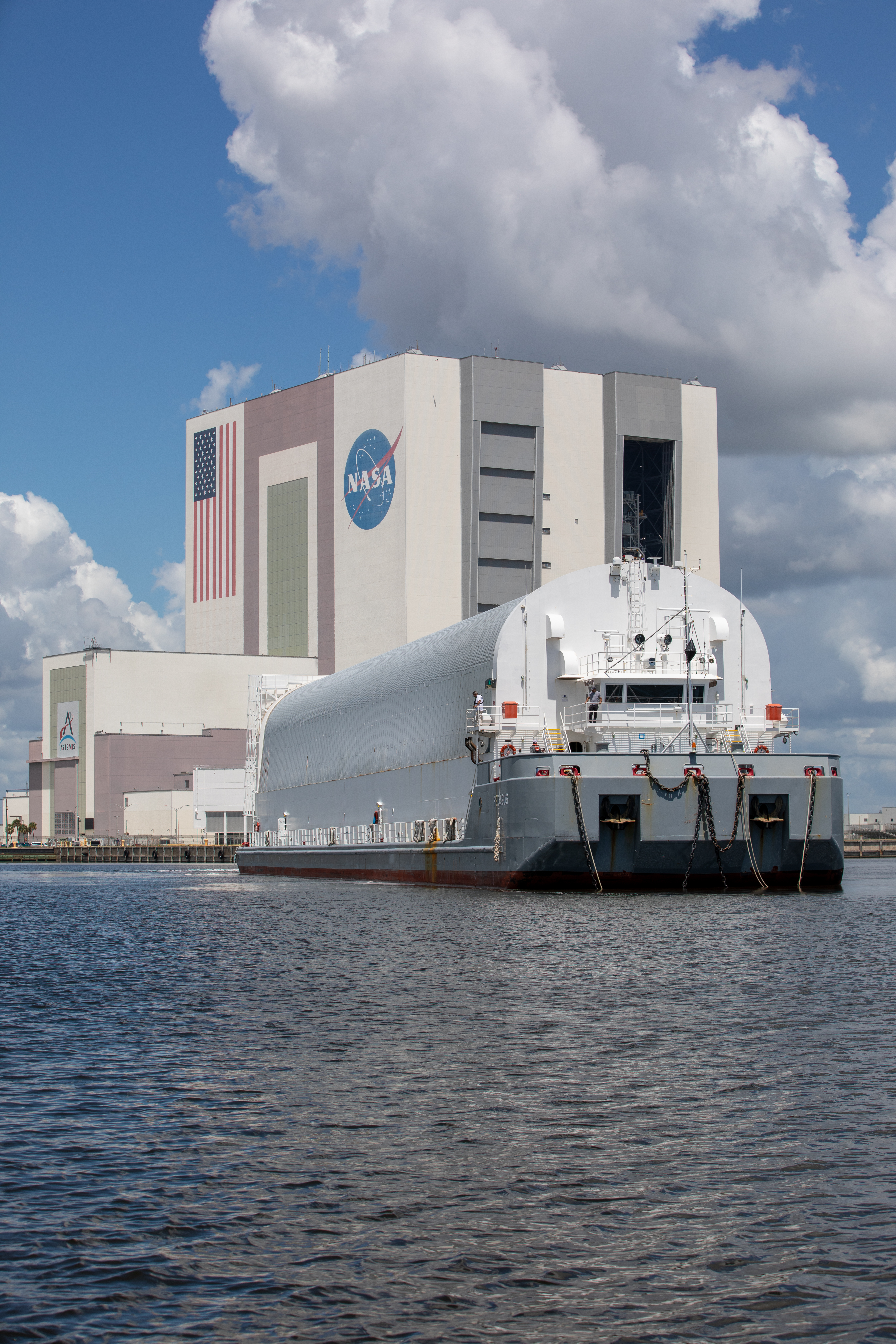
In this June 21, 2026, photo, NASA’s Nancy Grace Roman Space Telescope arrives at the agency’s Kennedy Space Center in Florida aboard NASA’s Pegasus barge. After offloading and transportation to the spaceport’s Payload Hazardous Servicing Facility, Roman will undergo processing ahead of launch, targeted no earlier than Sunday, Aug. 30, 2026.
Named for NASA’s first chief astronomer and “mother of the Hubble Space Telescope,” Roman will offer a field of view over 100 times larger than Hubble’s to study up to a billion galaxies, directly image exoplanets and planet‑forming disks, and address fundamental questions about dark energy, exoplanets, and infrared astrophysics.
Image credit: NASA/Amber Jean Notvest
Source: Roman Telescope Comes to Kennedy