AI Insight
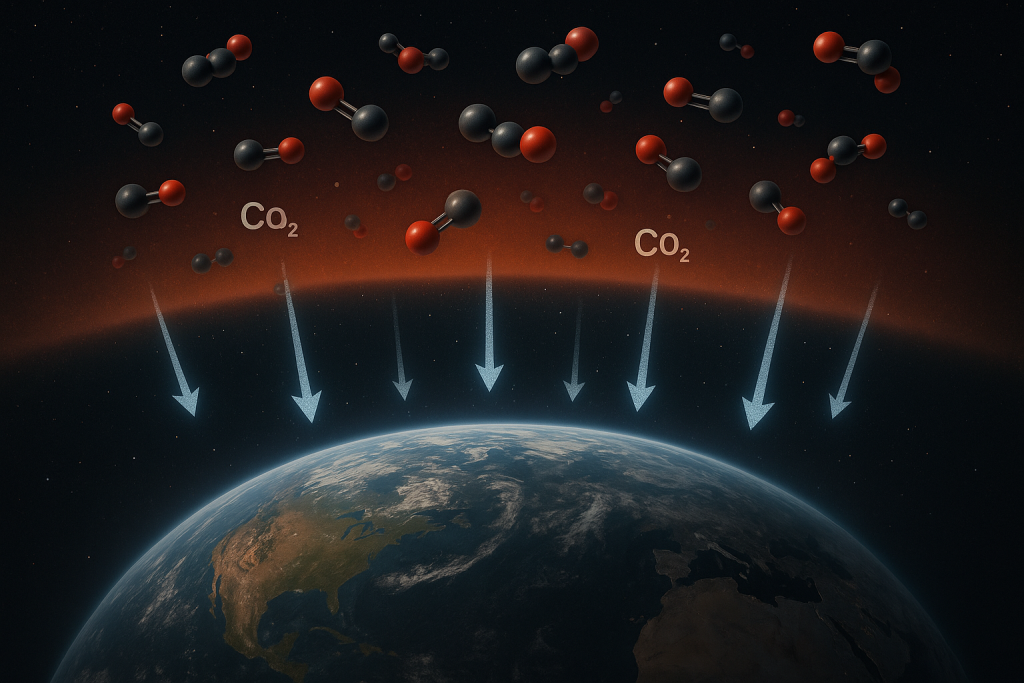
Columbia University researchers have identified the mechanism by which rising CO2 concentrations cool the upper atmosphere while simultaneously contributing to surface warming. Unlike its behavior in the lower atmosphere where it traps heat, CO2 in the stratosphere radiates infrared energy directly into space. Specific infrared wavelengths enter an optimal range of radiative efficiency as CO2 levels increase, enhancing this cooling effect progressively.
Why it matters
Understanding stratospheric cooling is essential for accurate climate modeling, as divergent temperature trends between atmospheric layers serve as a key diagnostic tool for attributing climate change to greenhouse gas emissions. This mechanism may also have implications for satellite operations and long-range atmospheric forecasting.
Understand the Science
Scientists have finally cracked the mystery behind one of climate change’s strangest fingerprints: while Earth’s surface heats up, the upper atmosphere is rapidly cooling. Researchers at Columbia University discovered that carbon dioxide acts very differently high above the planet, where it actually helps radiate heat into space instead of trapping it. The team found that certain infrared wavelengths fall into a “Goldilocks zone” that becomes increasingly effective as CO2 levels rise, accelerating cooling in the stratosphere.
Source: Scientists discover the strange way CO2 cools part of Earth’s atmosphere