AI Insight
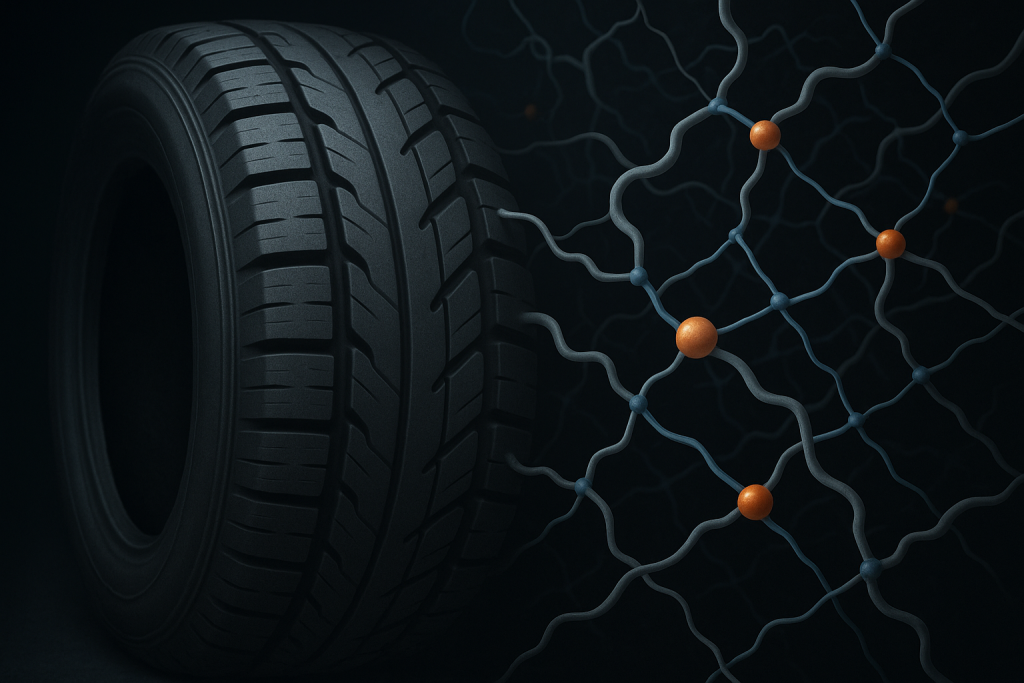
Researchers at the University of South Florida have identified the mechanism by which carbon black particles reinforce rubber, solving a longstanding problem in materials science that has persisted for approximately a century. Using large-scale computer simulations requiring the equivalent of 15 years of computing time, they found that carbon black induces internal mechanical conflict within the rubber polymer network when the material is stretched. This self-opposing response under tension is responsible for the significantly enhanced strength and durability observed in carbon black-reinforced rubber composites.
Why it matters
Understanding this mechanism could enable the rational design of next-generation rubber compounds with improved performance characteristics for applications in automotive tires, aerospace components, and other industrial materials. It may also allow manufacturers to optimize or reduce carbon black usage, with potential implications for production efficiency and environmental impact.
Understand the Science
For nearly 100 years, reinforced rubber has powered everything from car tires to airplanes, yet scientists never fully understood why adding tiny particles of carbon black made rubber so incredibly strong. Now, researchers at the University of South Florida have finally cracked the mystery using massive computer simulations that took the equivalent of 15 years of computing time. They discovered that carbon black forces rubber to “fight against itself” when stretched, dramatically boosting its strength and durability.
Source: Scientists finally solve the 100-year mystery behind tough tires