AI Insight
Researchers developed an experimental framework demonstrating how natural coastline shifts in river deltas control the burial and preservation of organic carbon in coastal marshes. The study shows that self-driven shoreline migration creates subsurface zones of paleo-blue carbon that extend beyond the surface wetland area, resulting in enhanced carbon burial rates. These autogenic processes, where sea level rise exceeds sediment input, cause the wetland accretion zone to move, depositing and preserving organic-rich sediments in the subsurface over time.
Why it matters
This research refines our understanding of carbon storage in coastal wetlands, which are critical natural carbon sinks in the global carbon cycle. The findings suggest that subsurface carbon reservoirs in deltas may be larger than previously estimated based on surface wetland area alone, improving assessments of coastal ecosystems' role in climate change mitigation.
Understand the Science
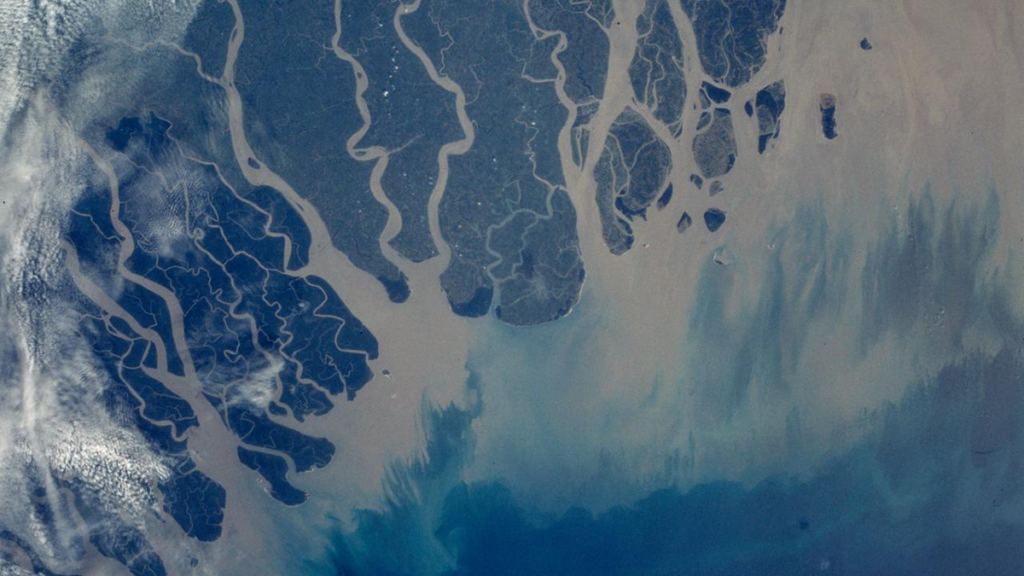
Editors’ Highlights are summaries of recent papers by AGU’s journal editors.
Source: AGU Advances
Coastal river deltas are important components of the global carbon cycle, providing significant long-term net carbon sinks. Silvestre et al. [2026] describe an experimental framework that links shoreline migration to preserved organic material in the subsurface coastal marsh. The experimental results provide insights into how natural, self-driven (autogenic) shifts in a coastline create, move, and bury organic-rich, carbon-storing sediments (termed paleo-blue carbon) over time. The control of shoreline migration by autogenic processes results in larger areal subsurface extent of paleo-blue carbon relative to surface wetland area and enhance carbon burial rates. The author’s results allow rates of organic matter accumulation to be constrained, affecting estimates of the relative size of carbon reservoirs in coastal wetlands.
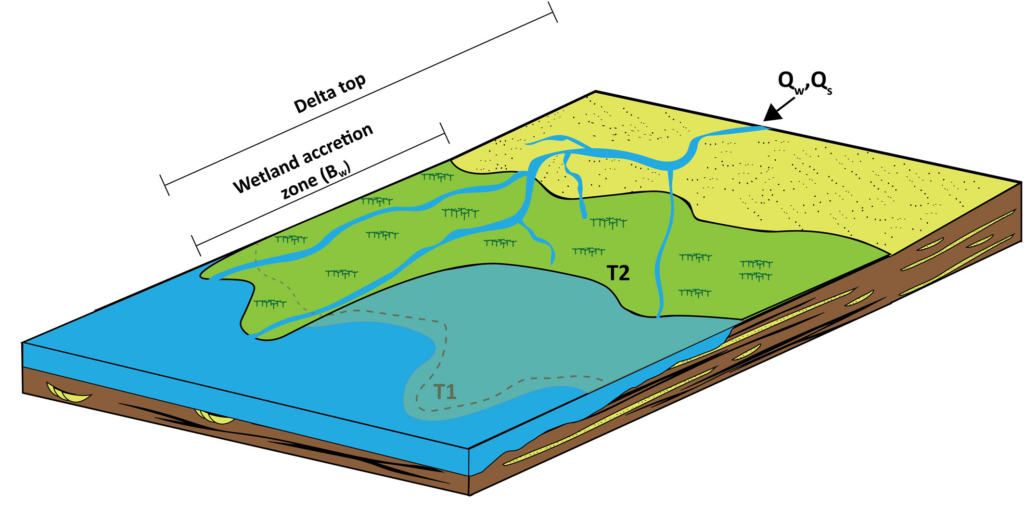
Citation: Silvestre, J. R., Sanks, K. M., Zapp, S. M., Hou, Y., Shaw, J. B., Mukherjee, U., et al. (2026). Autogenic shoreline migration and its effect on the storage of carbon in marginal marine successions. AGU Advances, 7, e2025AV002067. https://doi.org/10.1029/2025AV002067
—Eileen Hofmann, Editor, AGU Advances
Text © 2026. The authors. CC BY-NC-ND 3.0
Except where otherwise noted, images are subject to copyright. Any reuse without express permission from the copyright owner is prohibited.
Source: Shoreline Migration, Sediment Accumulation, and Blue Carbon Storage