AI Insight
ZWO has launched the Seestar S30 Plus, a compact smart telescope priced at $474 that features a 30mm aperture, upgraded four-element apochromatic optics with extra-low dispersion glass, and dual 3.7-megapixel cameras. The device weighs 3.64 pounds and includes a 43.5-degree wide-angle camera, built-in filters for light pollution reduction, mosaic mode, and equatorial tracking capabilities for deep-sky astrophotography. Initial testing has successfully captured images of several deep-sky objects including the Andromeda Galaxy, Pleiades cluster, and various nebulae, with a magnetic solar filter included for safe solar observation.
Why it matters
This entry-level smart telescope makes astrophotography more accessible to beginners by combining automated features, compact portability, and affordable pricing compared to competitors offering similar telescopes at $1,299 to $4,990. The immediate availability and simplified operation through an integrated app could lower barriers to amateur astronomy and celestial imaging.
Understand the Science
As rival makers announce increasingly ambitious smart telescopes, ZWO has taken a different approach. Its new Seestar S30 Plus launched today and is available for $474 from Seestar’s website and Amazon, just in time for Christmas. Better still, we’ve been using it for a month and can bring you a first look.
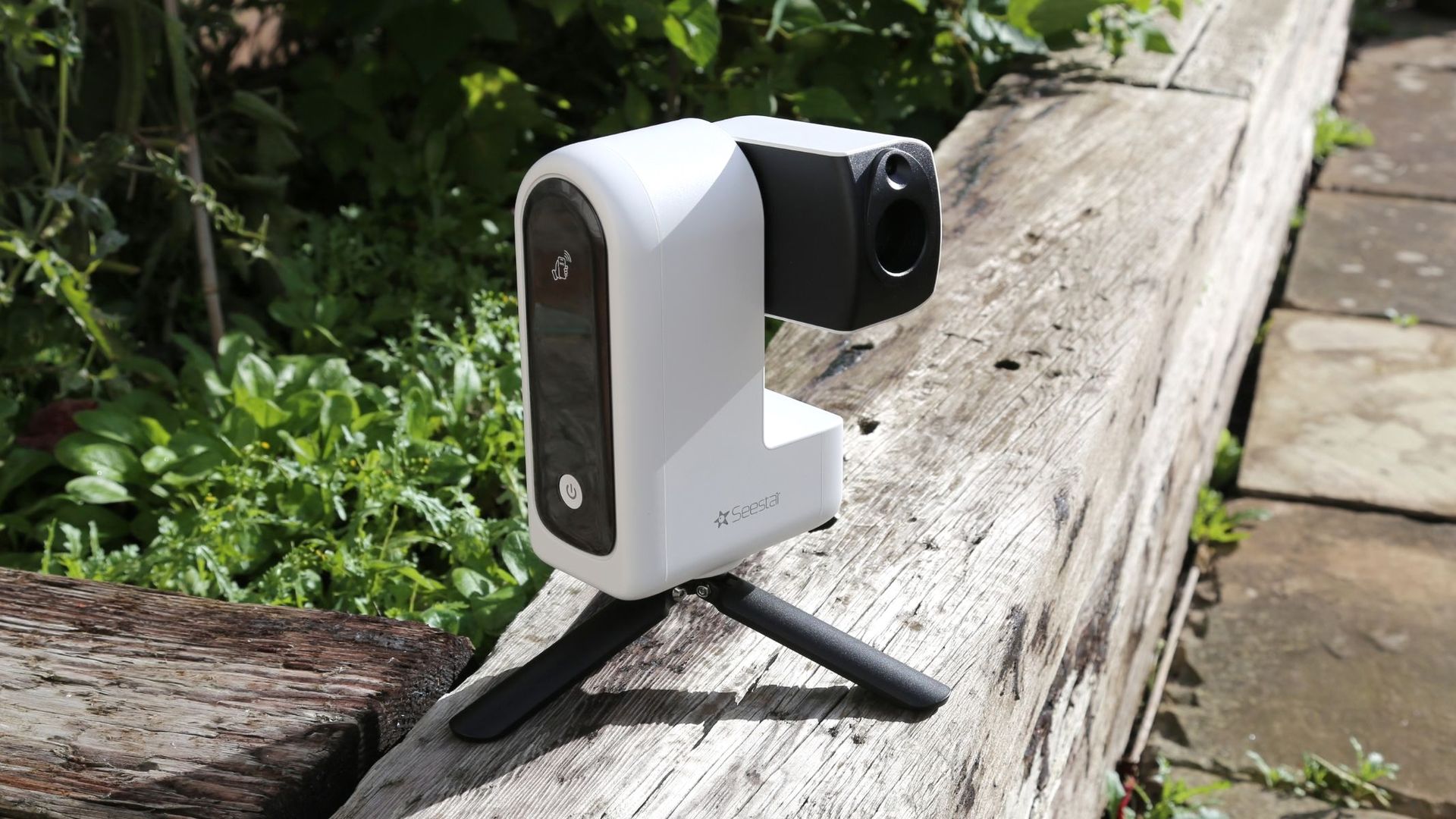
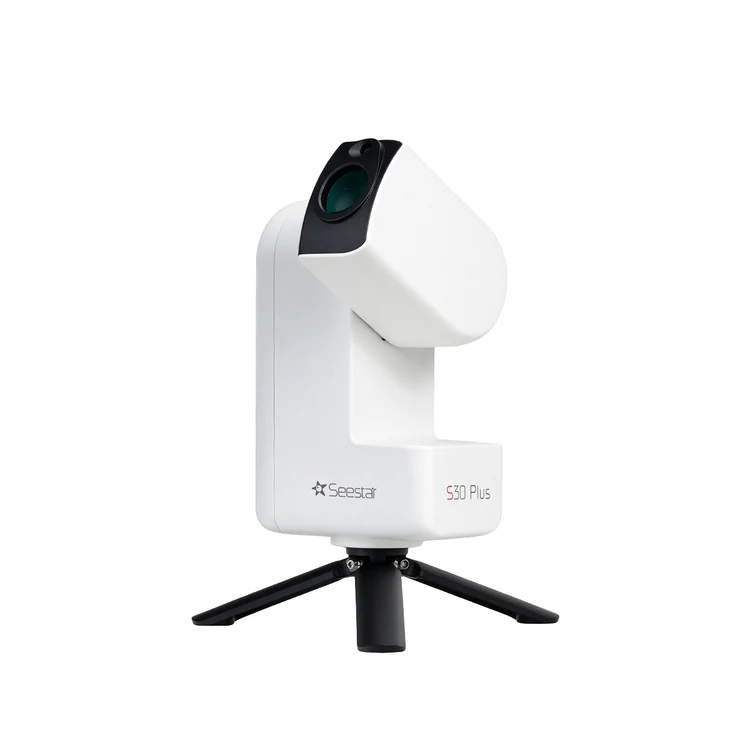
Announced a few months after the flagship Seestar S50 Pro and replacing the now-discontinued Seestar S30, the new Seestar S30 Plus retains its 30mm aperture and compact chassis, but upgrades to four-element apochromatic optics with extra-low dispersion (ED) glass and two 3.7-megapixel cameras.
Seestar S30 Plus: was $499 now $474
It has a 1.2-inch (30 mm) aperture, two 3.7 MP cameras and four-element apochromatic optics bundled into a compact build. View Deal
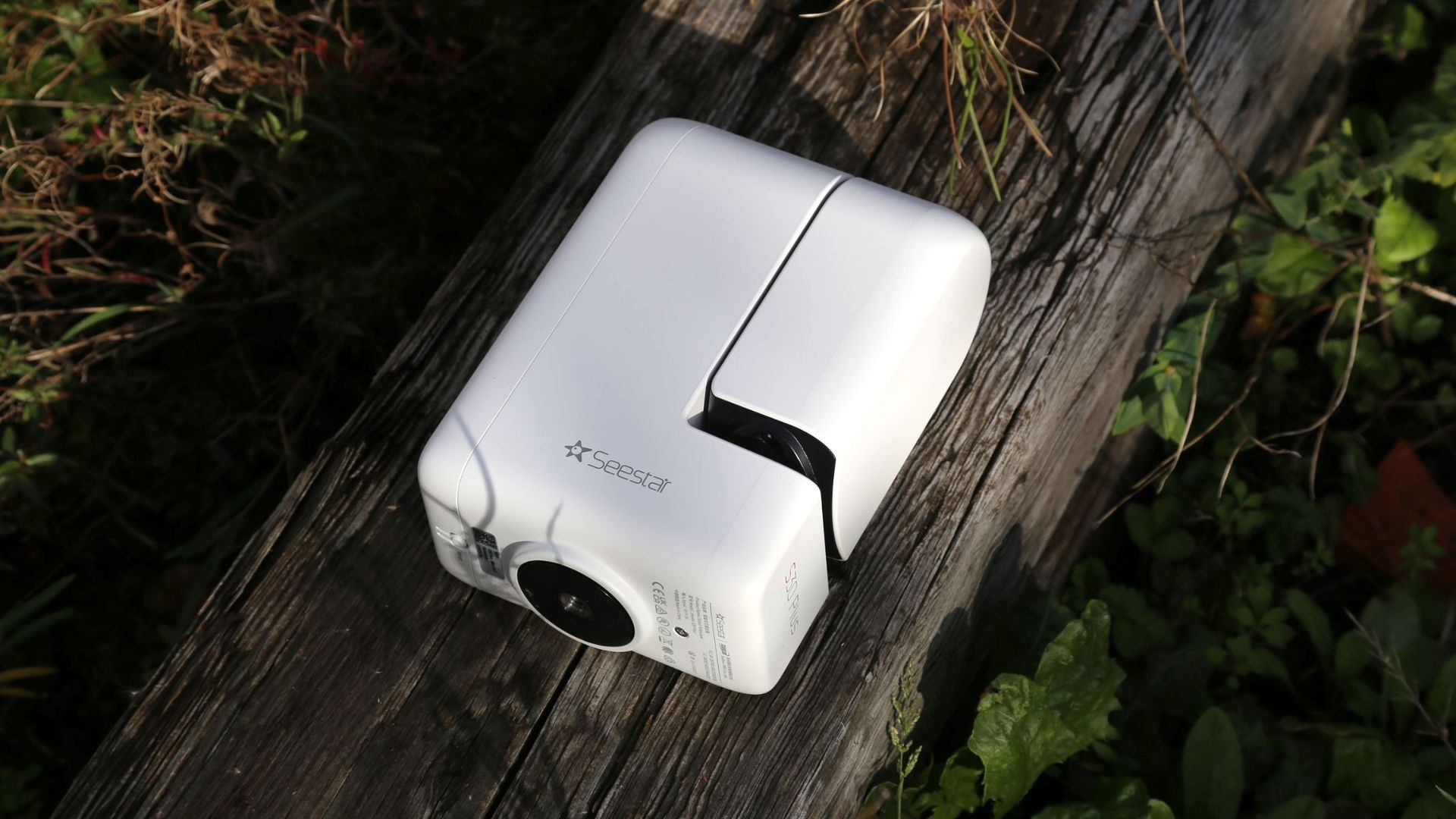
Both produce 1,440 x 2,560-pixel images, while a much-improved 43.5-degree wide-angle camera can capture the Milky Way, constellations, star trails and nightscapes. Built-in filters, a mosaic mode and equatorial (EQ) tracking add considerable deep-sky astrophotography potential.
For a telescope weighing just 3.64 lbs (1.65 kg), it’s impressive. It easily fits into a camera bag and could happily live on a bookshelf.
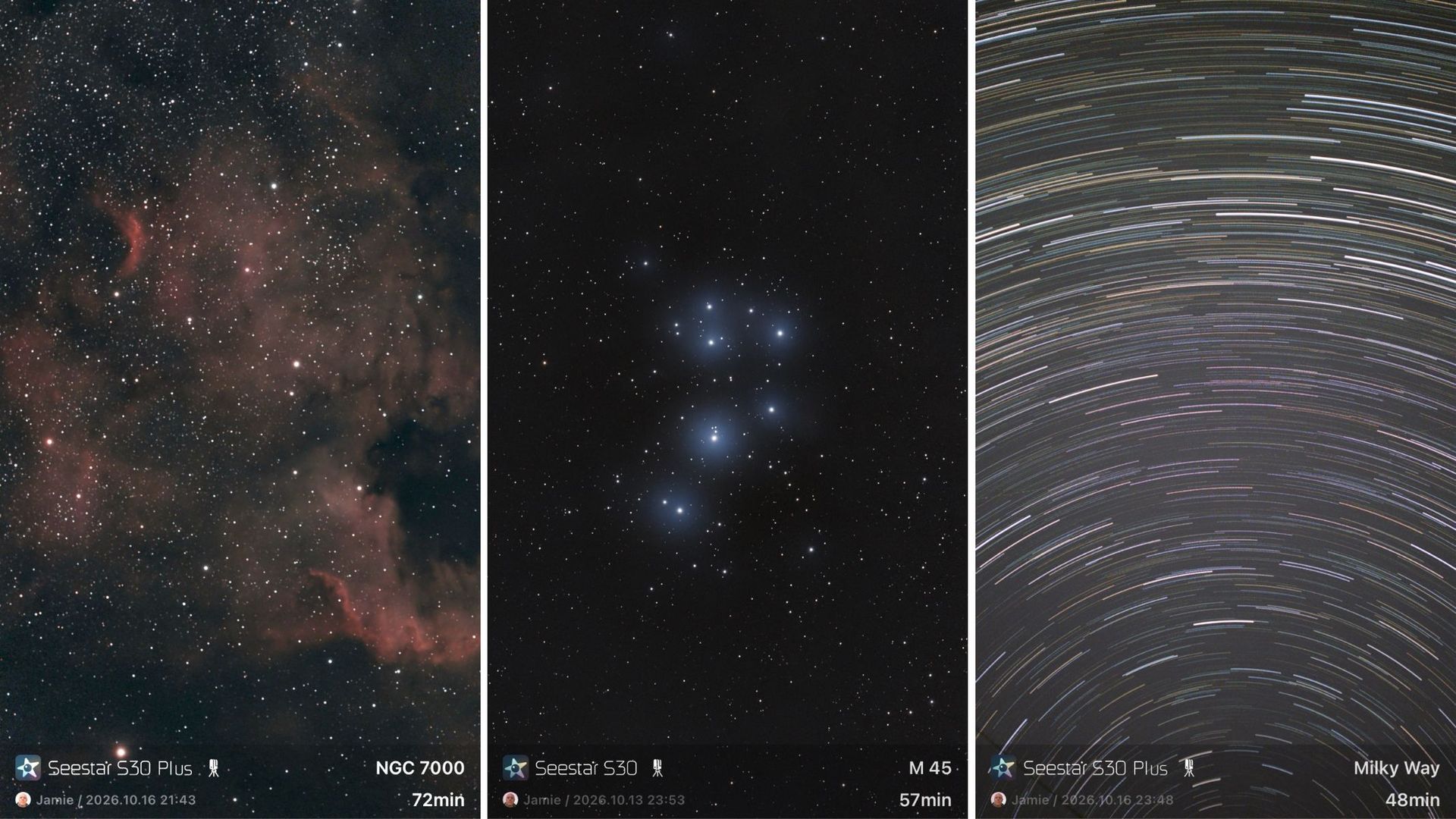
I’ve already photographed the Andromeda Galaxy (M31), the Pleiades (M45), the Dumbbell Nebula (M27) and the North America Nebula (NGC 7000). The results are excellent for such a small instrument, especially when imaging nebulas with its built-in dual-band filter, which helps reduce light pollution.
The Seestar app adds new in-app post-processing options, so you don’t have to mess around with any of that — though you can also export everything as lossless FITS files. The S30 Plus also includes a magnetic solar filter, enabling you to indulge in solar photography safely.
With Dwarflab’s $1,299 Draco (3.5-inch/90mm aperture) recently landed in stores and Vaonis’ own $4,990 Atlas (3.1-inch/80mm aperture) not available until 2027, ZWO’s decision to offer an upgraded entry-level smart telescope that buyers can get their hands on right now looks particularly smart.

With ZWO’s pattern of delivering cheaper smart telescopes without sacrificing on quality, the Seestar S30 Plus could be one of Christmas 2026’s best gifts for anyone interested in astronomy — and maybe that’s the point of it. Either way, first impressions are good. A full review is coming tomorrow, so check back at Space.com to find out our full thoughts and testing.
Source: See the first images from the new ZWO Seestar S30 Plus — a smart telescope aimed at beginners