AI Insight
On August 8, 1977, the Soviet Union's Salyut 5 space station reentered Earth's atmosphere and burned up after running low on propellant. Salyut 5, which launched in June 1976, was part of the secretive Almaz military reconnaissance program and hosted only two successful crewed missions instead of the planned four due to technical failures including a docking malfunction and possible fuel contamination. The station conducted military experiments and Earth reconnaissance photography before a film capsule was returned to Earth and the station was deliberately deorbited.
Why it matters
Salyut 5 was the final dedicated military reconnaissance space station in the Soviet Almaz program, marking the end of an era of orbital spy platforms before the Soviet Union shifted focus to purely scientific space stations with Salyut 6 and 7. Its operational challenges demonstrated the limitations of early space station technology, particularly the inability to refuel stations in orbit.
Understand the Science
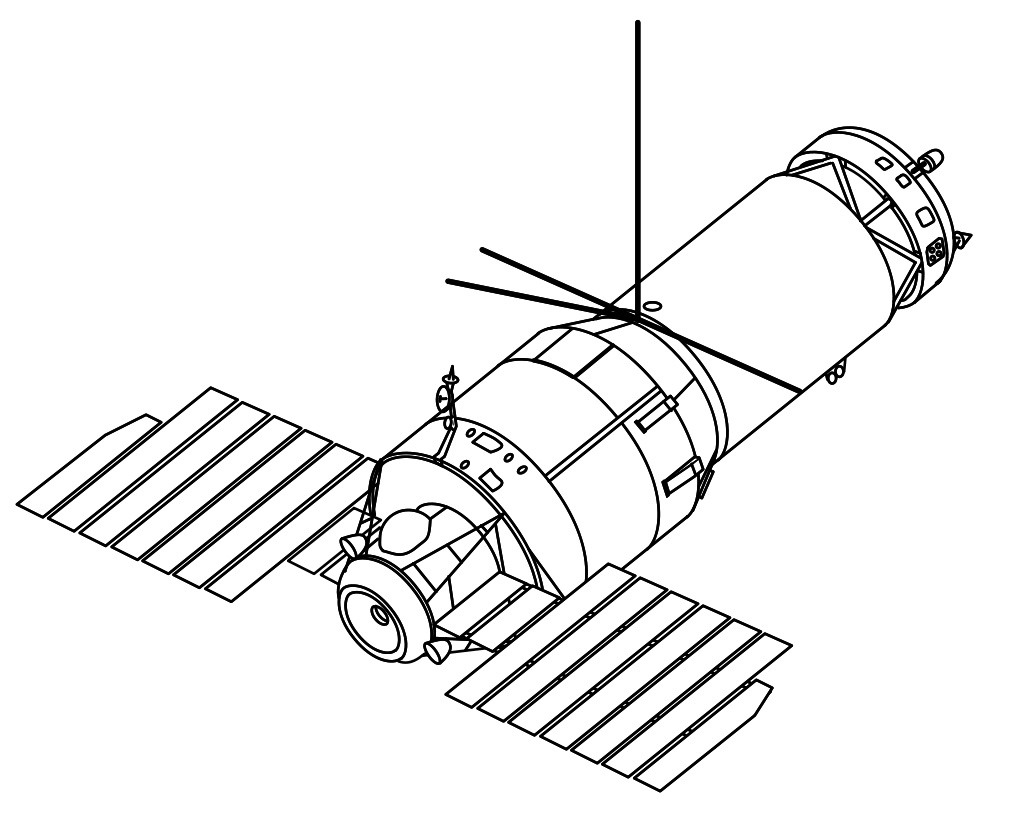
On Aug. 8, 1977, the Salyut 5 space station fell out of space and burned up in Earth’s atmosphere.
Salyut 5 was a Soviet space station and part of the highly-secretive Almaz military space station program. It launched in 1976 and housed two crew of cosmonauts as they conducted military experiments and other scientific research in orbit. Originally, four crewed missions were supposed to go to Salyut 5. However, the third crew was unable to dock their spacecraft and had to return home.
The fourth mission had to be canceled because Salyut 5 was starting to run low on propellant for its main engines and attitude control system. Salyut 5 couldn’t be refuelled, so it was deorbited and left to burn up in Earth’s atmosphere.
Why it mattered
When it comes to space stations, Salyut 5 was the last of its kind. While it was the Soviet Union’s fifth Salyut station, Salyut 5 was actually the third and final space station dedicated primarily to Earth reconnaissance from space, and was part of the Almaz military space station program, the Soviet Union’s counterpart to the U.S. Manned Orbiting Laboratory spy station.
Salyut 5 launched in June 1976 and was expected to host at least four cosmonaut crews during its time in orbit, but only three missions were ultimately launched.
The first mission, Soyuz 21, arrived at Salyut 5 a month after its launch, but returned to Earth early due to a noxious smell (possibly due to a fuel leak) on the station. A second mission, Soyuz 23, failed to dock at the station in October 1976 when their rendezvous system experienced a malfunction. After using too much propellant, they abandoned the docking attempt and returned to Earth, only to splash down in a frozen lake, making it the only Soyuz ever to land in water, according to RussianSpaceWeb.com.
The third and final Salyut 5 crew , Salyut 24, visited the station in February 1977, venting its air to avoid any lingering contamination before spending about 18 days in space. After the cosmonauts’ departure, a small reentry capsule carrying the film from their reconnaissance photography separated from Salyut 5 and returned to Earth, RussianSpaceWeb reported.
By mid-1977, Salyut 5 was running low on propellant and couldn’t be refueled. A fourth crewed mission was canceled and it was ultimately deorbited. Two more Salyut stations, Salyut 6 and 7, would eventually fly as science stations.
Want more space history? Check out our full On This Day In Space Story archive and watch our On This Day In Space videos on YouTube.