AI Insight
SpaceX launched the classified USSF-627 mission for the U.S. Space Force on November 11, 2026, from Vandenberg Space Force Base in California, marking the second secret military launch within six days following the USSF-432 mission on November 6. Both missions used Falcon 9 rockets with successfully recovered first-stage boosters, though mission details remain classified. Experts speculate both launches may have deployed Starshield satellites for the Space Force's Space Based Sensing and Targeting program, which provides military target-tracking capabilities worldwide.
Why it matters
These launches demonstrate the increasing operational tempo of classified military space operations and the growing reliance on commercial launch providers like SpaceX for national security missions. The suspected Starshield satellite deployments could significantly enhance U.S. military surveillance and targeting capabilities globally.
Understand the Science
SpaceX launched a classified mission for the U.S. Space Force from California tonight (Nov. 11), the second such flight for the company in a six-day span.
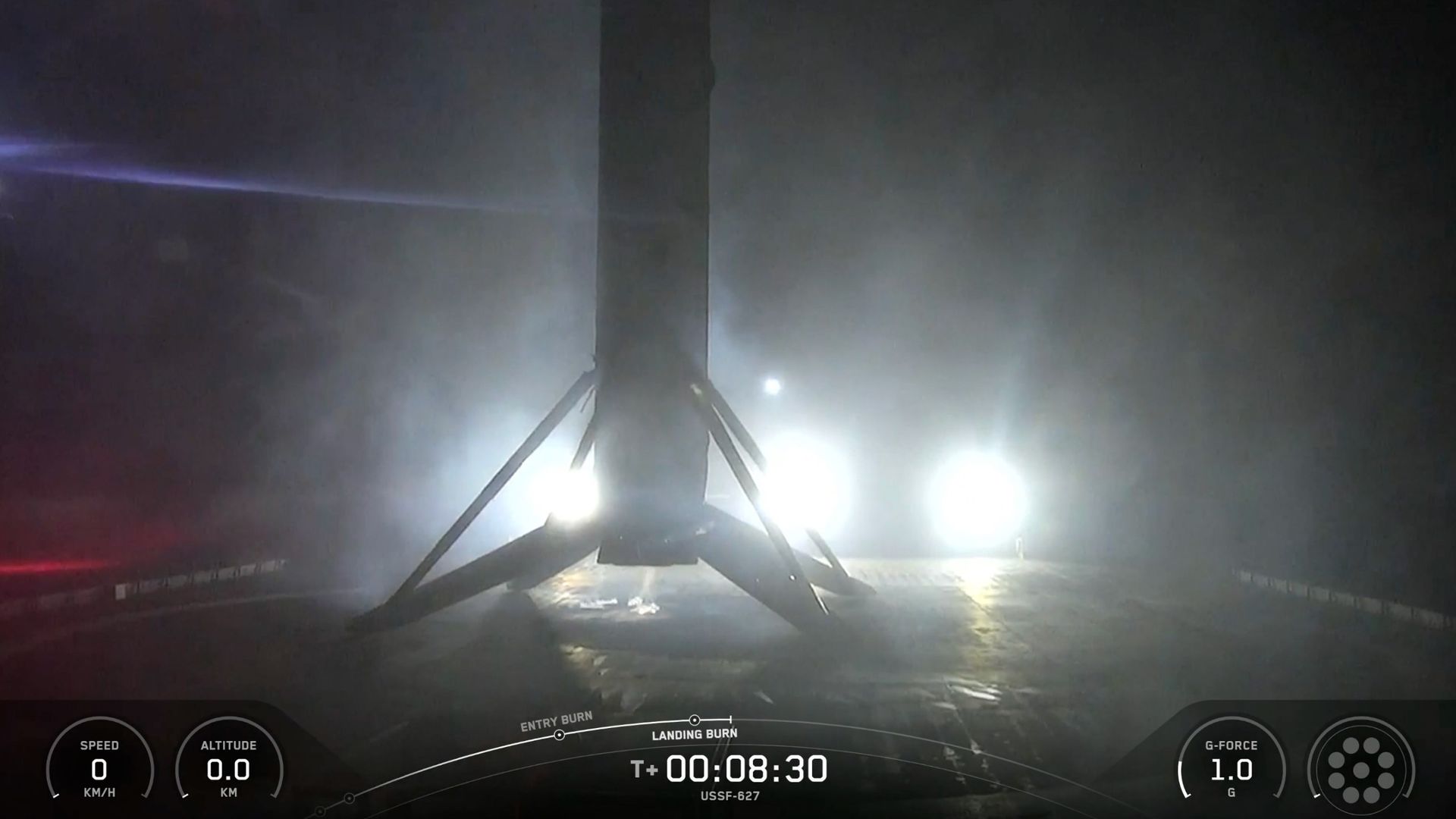
A Falcon 9 rocket lifted off from California’s Vandenberg Space Force Base tonight at 11:36 p.m. EST (8:36 p.m. local California time; 0136 GMT on Nov. 12), kicking off a mission called USSF-627.
Vandenberg hosted a similar liftoff less than a week ago: On Nov. 6, a Falcon 9 sent the USSF-432 mission skyward from the site, which lies on California’s gorgeous but often foggy central coast.
We don’t know much about USSF-627 or USSF-432; both are classified. Some experts have speculated, however, that each mission launched a batch of SpaceX’s Starshield satellites for the Space Force’s Space Based Sensing and Targeting portfolio, which helps the military branch track potential targets around the world.
SpaceX didn’t reveal details about either USSF-627 or USSF-432, and the company ended the webcast of both launches shortly after the first stages of their Falcon 9 rockets came back to Earth.
In both cases, that touchdown occurred about 8.5 minutes after liftoff on the SpaceX droneship “Of Course I Still Love You,” which was stationed downrange of Vandenberg in the Pacific Ocean.
It was the seventh mission for USSF-627’s Falcon 9 booster, which carries the designation 1103.
NROL-179 | SDA-T1TL-E | SDA-T1TL-A | 3 Starlink missions
USSF-627 was the 120th Falcon 9 launch of 2026 and the rocket’s 15th national-security flight of the year to date. Eighty-five of the 120 flights have been devoted to building out SpaceX’s Starlink broadband constellation in low Earth orbit, which currently consists of more than 11,000 satellites.
The Falcon 9 is not on a record-breaking cadence this year. In 2025, the rocket flew a whopping 165 missions, and 122 of them were Starlink flights.
Source: SpaceX launches 2nd mystery mission for US Space Force in 6-day span (photos)