AI Insight
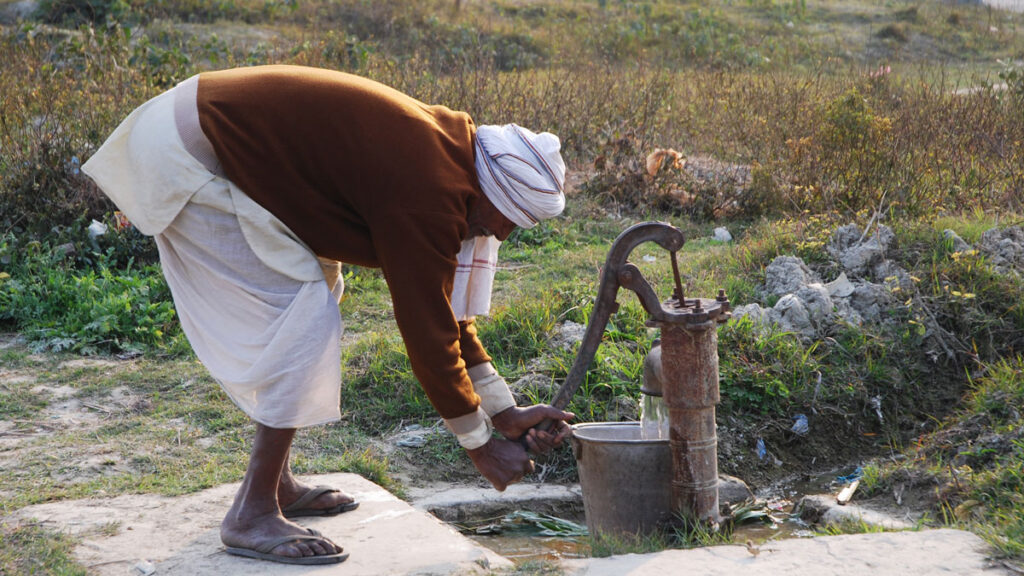
Researchers in Bihar, India, compared groundwater quality data collected by 583 community members (primarily students) with measurements taken by professional scientists. The community participants collected water samples from everyday sources like hand pumps, which were then analyzed at the University of Manchester. The community-collected data showed broadly similar results to professional measurements, demonstrating that participatory science can effectively expand environmental monitoring capabilities while maintaining data quality.
Why it matters
This approach enables more comprehensive spatial mapping of water contamination in regions where over 90% of the population depends on groundwater that may contain harmful levels of arsenic, iron, manganese, nitrate, and uranium. Community-based monitoring can provide larger datasets at lower cost while simultaneously raising environmental awareness and potentially increasing diversity in scientific fields.
Understand the Science
Source: Community Science
When a local community gets involved in environmental monitoring, their efforts can build awareness of local environmental issues and provide more plentiful data than scientists can collect on their own. But how does the quality of the data compare to readings taken by professionals?
The state of Bihar, India, was the perfect place to find out. More than 90% of the population relies on groundwater for cooking and cleaning, but at times, that same groundwater has been reported to be contaminated with arsenic, iron, manganese, nitrate, and uranium, all of which can cause health problems. Richards et al. compared the results of community members’ efforts to monitor groundwater for contaminants with those of professional scientists.
The researchers recruited community members who were affiliated with one secondary school, three colleges, and one professional institution. Many participants were teenage students, but some were adult employees of the schools. All told, the team included 583 people. The participants collected water samples from places people access water during their daily lives, such as hand pumps that supply drinking water. The research team brought the samples back to the University of Manchester on commercial flights, then analyzed the samples at the Manchester Analytical Geochemistry Unit laboratories.
The results were broadly similar to those collected by professional scientists, showing that participatory science is an excellent way to increase the amount of data environmental scientists have to work with, the authors say. With more data, scientists can spot spatial patterns that might be overlooked with a smaller workforce. Participatory science can also generate interest in research, potentially bringing more women and minorities into the field. (Community Science, https://doi.org/10.1029/2025CSJ000136, 2026)
—Saima May Sidik (@saimamay.bsky.social), Science Writer


Citation: Sidik, S. M. (2026), Students enable widespread water monitoring in India, Eos, 107, https://doi.org/10.1029/2026EO260233. Published on 20 July 2026.
Text © 2026. AGU. CC BY-NC-ND 3.0
Except where otherwise noted, images are subject to copyright. Any reuse without express permission from the copyright owner is prohibited.
Source: Students Enable Widespread Water Monitoring in India