AI Insight
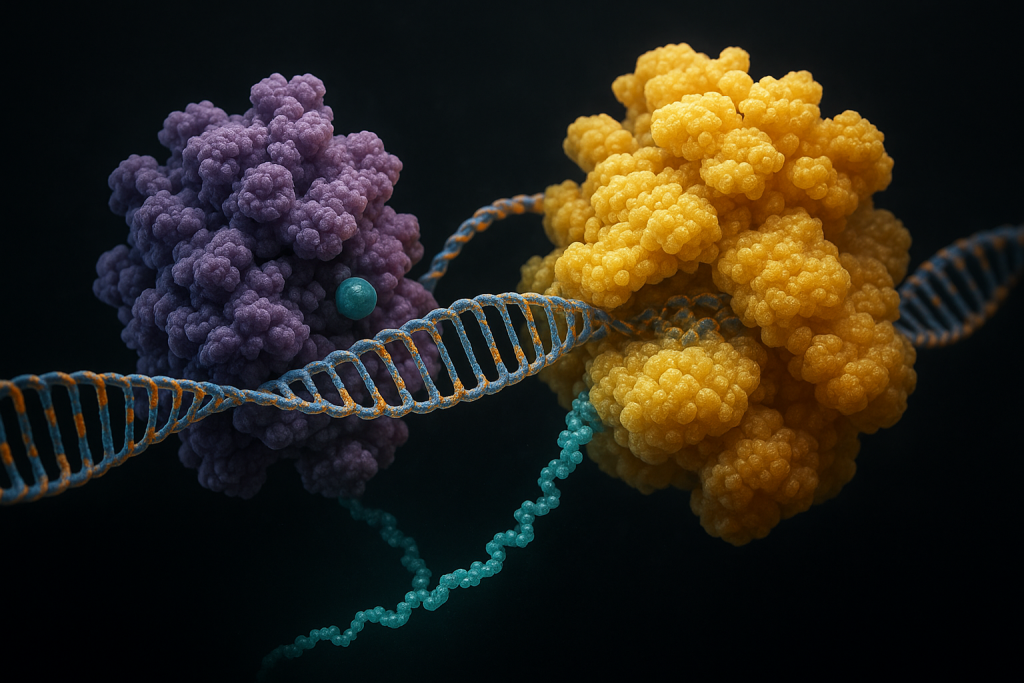
This study investigates the role of H3K4me3, a histone modification typically associated with active RNA polymerase II transcription, in the regulation of ribosomal DNA (rDNA) transcription by RNA polymerase I. Using customized genome assemblies and biochemical assays, the researchers identify KMT2F as the primary enzyme depositing H3K4me3 marks on rDNA loci, and demonstrate that it interacts directly with the RNA polymerase I transcriptional machinery. Loss of KMT2F and its associated H3K4me3 mark disrupts the epigenetic landscape of rDNA and impairs the formation of the pre-initiation complex, thereby repressing ribosomal RNA transcription.
Why it matters
Ribosomal RNA production is fundamental to protein synthesis and cell growth, and its dysregulation is linked to cancer and ribosomopathies. Understanding how KMT2F controls rDNA transcription opens potential avenues for targeting this pathway in diseases where ribosome biogenesis is disrupted.
Understand the Science
by Kaisar Ahmad Lone, Amit Mahendra Karole, Geethanjali Ravindran, Shweta Tyagi
Trimethylation of histone 3 lysine 4 (H3K4me3) is a mark of active transcription, and its regulatory role in RNA polymerase II-mediated transcription has been well-studied. However, if and how this mark regulates RNA polymerase I (RNA Pol I) is not known. Here, we used customized genome assemblies for rDNA to demonstrate that KMT2A and KMT2F bind to entire rDNA loci. The binding of these enzymes was mirrored by the binding of H3K4me2 and H3K4me3 marks. Using biochemical assays, we demonstrate the interaction of KMT2-specific subunits with RNA Pol I transcriptional machinery. Our findings reveal KMT2F as the primary KMT depositing the H3K4me3 on rDNA. Loss of H3K4me3 adversely affects the epigenetic landscape and leads to repression of the rDNA locus. Mechanistically, using mammalian cells as a model system, we demonstrate that KMT2F promotes the formation of the pre-initiation complex by RNA Pol I. Our findings highlight the thus far undiscovered role of H3K4me3 in the transcriptional initiation of rDNA genes.