AI Insight
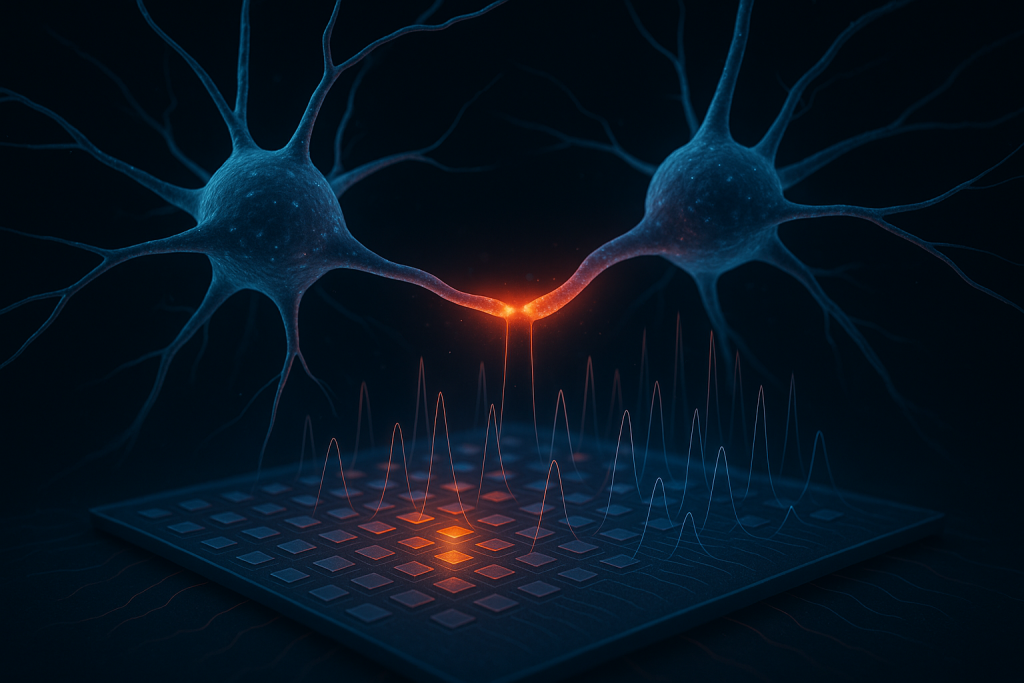
Researchers developed flexible active electrode arrays based on wafer-scale trilayer molybdenum disulfide (MoS2), a two-dimensional semiconductor, grown directly on a polyimide substrate. These arrays demonstrated high-fidelity spatiotemporal recording of neural activity both in cell cultures (in vitro) and in living mice (in vivo). The use of MoS2 as an active transistor material enabled improved signal amplification and spatial resolution compared to passive electrode systems.
Why it matters
This technology could advance brain-machine interfaces and neurological research tools by enabling more precise, large-scale monitoring of neural circuits with flexible, biocompatible electronics. Longer term, it may contribute to the development of next-generation neural implants for diagnosing and treating neurological disorders.
Understand the Science
Nature Materials, Published online: 05 December 2025; doi:10.1038/s41563-025-02430-4
Two-dimensional molybdenum disulfide (MoS2)-based active arrays made by growing wafer-scale trilayer MoS2 directly on a polyimidine substrate achieve high-fidelity spatiotemporal neuronal monitoring in vitro and in living mice.