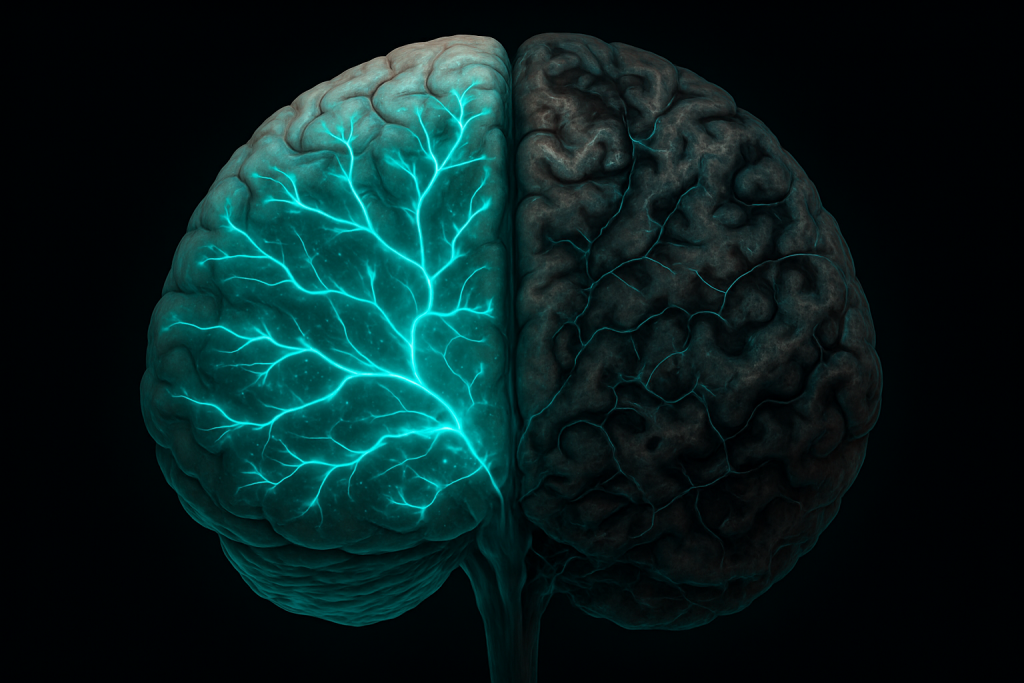
Image generated by AI
Every three seconds, someone in the world receives an Alzheimer’s disease diagnosis, yet scientists still cannot fully explain why the disease begins or how to stop it once it starts. This paradox—that we live in an age of unprecedented medical knowledge, yet remain largely helpless before one of our most common neurodegenerative disorders—sits at the heart of modern neuroscience. Alzheimer’s remains a disease of mysteries layered upon mysteries, even as new research methodologies reveal unexpected clues hidden within the brain’s microscopic architecture.
The urgency surrounding Alzheimer’s disease has never been greater. As global populations age, the prevalence of dementia is skyrocketing, with projections suggesting that by 2050, more than 150 million people worldwide will be living with Alzheimer’s or other forms of dementia. The disease exacts an enormous toll not only on patients but on families, healthcare systems, and economies—with annual costs exceeding $300 billion in the United States alone. Understanding what we know about Alzheimer’s disease and brain health is therefore not merely an academic exercise; it is increasingly a matter of public health urgency.
What Is Alzheimer’s Disease and Brain Health?
Alzheimer’s disease is a progressive neurodegenerative disorder characterized by the accumulation of abnormal protein aggregates in the brain, leading to the loss of cognitive function and eventual severe dementia. Unlike normal aging, which involves some gradual cognitive decline, Alzheimer’s represents a pathological process where neurons deteriorate and die at an accelerated rate, particularly in brain regions associated with memory and executive function. The disease typically begins silently, with biochemical changes occurring years or even decades before any noticeable symptoms appear. As it progresses, patients experience increasingly severe memory loss, confusion, behavioral changes, and ultimately loss of bodily functions, with the disease process typically lasting eight to ten years from diagnosis, though some cases progress more rapidly or slowly.
Alzheimer’s disease was first formally described in 1906 by German psychiatrist Alois Alzheimer, who noticed unusual plaques and tangles of fibers in the brain tissue of his deceased patient, Auguste D., a woman who had suffered from progressive dementia. For most of the twentieth century, Alzheimer’s was considered a rare disease affecting only younger patients; it was only in the 1970s that researchers and clinicians recognized that the same pathology was responsible for much of the dementia seen in older adults. This historical oversight meant that we had essentially been calling the same disease by different names—”Alzheimer’s disease” for younger patients and “senile dementia” for older ones—a confusion that delayed research and understanding for decades. The convergence of these two disease descriptions fundamentally changed how we conceptualize age-related cognitive decline.
What the Research Shows
The pathological hallmarks of Alzheimer’s disease involve two primary protein abnormalities: amyloid-beta plaques and tau tangles, though researchers increasingly recognize that the disease involves far more complex mechanisms than these two proteins alone. Amyloid-beta, a small protein fragment, accumulates outside neurons to form sticky plaques, while the tau protein becomes twisted inside neurons, forming tangles that disrupt the cell’s internal transport system. These protein aggregations spread through the brain in a somewhat predictable pattern, advancing from regions involved in memory formation toward broader cortical areas responsible for higher cognitive functions. The accumulation of these proteins is believed to trigger a cascade of molecular events: inflammation, oxidative stress, mitochondrial dysfunction, and ultimately neuronal death, though the precise sequence and the relative importance of each step remains contested among researchers.
Think of a neuron as a sophisticated city, and amyloid-beta plaques as debris accumulating in the streets outside the city walls, while tau tangles are like broken-down highways within the city itself preventing the movement of goods and supplies. When too much debris accumulates outside, and when the internal infrastructure becomes sufficiently compromised, the city slowly loses its ability to function—some residents leave, some buildings fall into disrepair, and eventually the entire city becomes uninhabitable. This collapse doesn’t happen overnight; it unfolds gradually over many years. Similarly, a brain with Alzheimer’s disease loses its functional capacity slowly, though the rate of decline varies considerably between individuals, suggesting that additional factors—genetic, environmental, and lifestyle-related—modify how quickly the pathological process advances.
What This Means for Patients and Science
Understanding Alzheimer’s disease at the molecular level has profound implications for how physicians diagnose and monitor the condition, even though current treatments remain limited in their ability to slow disease progression. Modern diagnostic approaches increasingly rely on biomarkers—measurable indicators of disease pathology that can be detected through blood tests, cerebrospinal fluid analysis, or brain imaging—rather than waiting for cognitive symptoms to manifest. This biomarker revolution has enabled the concept of “preclinical Alzheimer’s disease,” the stage at which pathological changes are occurring in the brain but cognitive symptoms have not yet appeared. For patients and clinicians, this means earlier detection is now possible, potentially creating a window of opportunity for interventions that might prevent or slow symptom development, though the psychological and practical implications of diagnosing an asymptomatic disease remain complex.
Pharmaceutical companies and research institutions are now employing these biomarker-based approaches in drug development pipelines, with several investigational therapies targeting amyloid-beta and tau pathology currently in various stages of clinical testing. Major medical centers are establishing “cognitive health” or “brain aging” programs that screen asymptomatic individuals for Alzheimer’s pathology, particularly those with family histories of dementia or genetic risk factors. Healthcare providers are increasingly monitoring patients with mild cognitive impairment—a stage between normal aging and dementia where some cognitive decline is noticeable but not yet severe enough to impair daily functioning—to identify those most likely to progress to dementia and therefore most likely to benefit from emerging treatments.
Recent Breakthroughs in Alzheimer’s Disease and Brain Health
The FDA’s 2023 accelerated approval of lecanemab, a monoclonal antibody that targets amyloid-beta, marked a watershed moment in Alzheimer’s treatment after nearly two decades of failed therapeutic trials. Lecanemab demonstrated that reducing amyloid-beta in the brain could produce measurable, albeit modest, slowing of cognitive decline in people with mild cognitive impairment or mild dementia caused by Alzheimer’s disease. However, the drug comes with significant practical and medical considerations: it requires intravenous infusions every two weeks, costs approximately $26,500 annually, and carries a small but concerning risk of amyloid-related imaging abnormalities (ARIA), which can include brain microhemorrhages and microinfarcts. Despite these limitations, lecanemab’s approval has reinvigorated the field, with several other anti-amyloid and anti-tau antibodies in advanced clinical development, suggesting that we may be entering an era of disease-modifying treatments for Alzheimer’s disease.
Simultaneously, researchers have made significant progress in understanding the roles of neuroinflammation and glial cells—the support cells in the brain including microglia and astrocytes—in Alzheimer’s pathogenesis. Large-scale genetic studies have identified numerous genes associated with increased Alzheimer’s risk, many of which are involved in immune function and the clearance of protein aggregates, fundamentally shifting our understanding of the disease from purely a protein-folding problem to a multi-system disorder involving immune dysfunction. Investigators are now exploring whether manipulating microglial activation, reducing neuroinflammatory cascades, or enhancing protein clearance mechanisms might provide therapeutic benefits independent of, or complementary to, direct amyloid and tau targeting. The field is also increasingly focused on understanding why some individuals with significant amyloid-beta and tau pathology in their brains never develop dementia symptoms—a phenomenon known as “resilience”—with hopes that understanding this resilience might reveal protective mechanisms that could be therapeutically harnessed.
Why Alzheimer’s Disease and Brain Health Matters for the Future
As aging populations expand globally, Alzheimer’s disease will become an increasingly dominant challenge for healthcare systems and societies worldwide, making advances in prevention, diagnosis, and treatment essential for public health and economic sustainability. The convergence of neuroscience, genetics, artificial intelligence, and biomarker science is creating unprecedented opportunities to understand not only Alzheimer’s disease but also normal brain aging and the maintenance of cognitive health across the lifespan. Evidence increasingly suggests that many factors—physical exercise, cognitive engagement, quality sleep, cardiovascular health, social connection, and even air quality—influence the risk of developing Alzheimer’s disease and dementia, implying that individual and public health interventions might substantially reduce disease burden. Understanding these mechanisms could potentially lead to preventive strategies that reduce Alzheimer’s incidence, complementing any pharmaceutical treatments and possibly allowing individuals to live longer, healthier lives with preserved cognitive function.
Major scientific and medical challenges remain unsolved: we still don’t fully understand why amyloid-beta and tau begin accumulating in some brains but not others, why the same pathology in different individuals produces vastly different cognitive outcomes, and why current treatments show only modest benefits despite targeting well-characterized pathological features. The blood-brain barrier, which protects the brain but also excludes most large molecules, continues to limit our ability to deliver therapeutic agents to brain tissue. Neuroplasticity and compensatory mechanisms in the aging brain remain incompletely understood, and we lack good animal models that faithfully reproduce the full complexity of human Alzheimer’s disease. Additionally, equitable access to emerging treatments remains a concern, as expensive new therapies and biomarker testing risk widening health disparities if not carefully managed through policy and healthcare infrastructure development.
Key Takeaways
- Alzheimer’s disease is a progressive neurodegenerative disorder involving the accumulation of amyloid-beta plaques and tau tangles, leading to neuronal death and cognitive decline.
- The disease begins with silent molecular changes years or decades before symptoms appear, a stage now detectable through biomarkers like blood tests and brain imaging.
- Lecanemab, approved by the FDA in 2023, represents the first disease-modifying treatment showing modest but measurable slowing of cognitive decline in early-stage disease.
- Emerging research points to neuroinflammation, immune dysfunction, and genetic factors as equally important to amyloid-beta and tau in driving disease pathogenesis.
- Understanding Alzheimer’s disease and maintaining brain health will be crucial for aging societies, with prevention through lifestyle factors potentially complementing pharmaceutical treatments.
Explore TED Talks on Alzheimer's Disease and Brain Health:
TED content is used under CC BY-NC-ND 4.0. © TED Conferences, LLC.
Frequently Asked Questions
What are the abnormal protein aggregates that accumulate in the Alzheimer's brain?
The primary protein aggregates in Alzheimer's disease are amyloid-beta plaques and tau tangles, which form outside and inside neurons respectively, disrupting normal brain function. These misfolded proteins accumulate over time and are believed to trigger a cascade of neuronal damage and death.
Why do scientists still not fully understand what causes Alzheimer's disease to begin?
Alzheimer's disease likely results from multiple interacting factors including genetics, age, lifestyle, and environmental influences rather than a single cause, making it difficult to pinpoint a definitive origin. The complexity of brain biology and the decades-long lag between initial pathological changes and symptom appearance further obscure the disease's initiation mechanisms.
How does Alzheimer's disease lead to memory loss and cognitive decline?
The accumulation of amyloid-beta and tau proteins damages and kills neurons, particularly in the hippocampus and cortex—brain regions critical for memory and cognition. As these neural networks degrade, communication between brain cells breaks down, progressively impairing the formation and recall of memories.
Can current medical interventions stop the progression of Alzheimer's disease?
Current treatments can only temporarily slow cognitive decline in some early-stage patients but cannot stop or reverse the disease's progression once it has begun. Despite decades of research, no cure exists, and the disease remains largely resistant to intervention once neurodegeneration is underway.