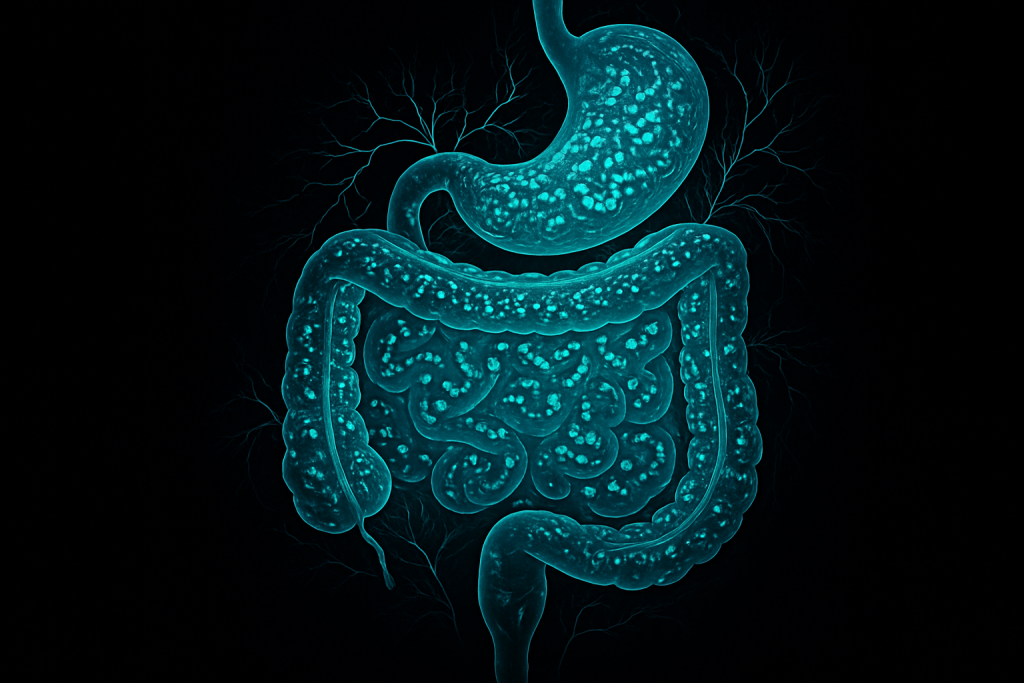
Image generated by AI
Your gut harbors a hidden universe. Within the three meters of your intestinal tract lives a community of roughly 38 trillion microorganisms—bacteria, viruses, fungi, and archaea—whose collective weight rivals that of your brain. For most of human history, we didn’t know they were there. Yet this invisible ecosystem, called the microbiome, may be as consequential to your health as your own genetic code, influencing everything from your mood to your immune system’s ability to fend off disease.
The revelation that our bodies are fundamentally partnered with microbial life has triggered a scientific revolution. What began as microbiology’s curiosity—peering at the organisms thriving in human waste—has evolved into one of the most dynamic fields in medicine, with implications stretching from psychiatry to oncology. Understanding the gut microbiome and its relationship with host health is now central to answering some of biology’s deepest questions: How do we maintain health? What makes us sick? And can we engineer our microbial partners to treat disease?
What Is Gut Microbiome and Host Health?
The gut microbiome refers to the vast community of microorganisms residing primarily in the large intestine, along with the genes they carry and the chemical environment they create. The “host”—that’s you—is the human body providing the habitat. When scientists speak of gut microbiome and host health, they mean the intricate, often symbiotic relationship between these microbial residents and the human body that shelters them. This is no parasitic arrangement; it’s a negotiated partnership refined over millions of years of evolution. The microbiota (the actual organisms) perform critical functions your body cannot accomplish alone: breaking down indigestible fibers into short-chain fatty acids that nourish your colon cells, synthesizing vitamins like K and B12, and training your immune system to distinguish friend from foe.
The modern scientific understanding of the microbiome began in earnest in the early 2000s, catalyzed by the Human Microbiome Project—an international initiative launched by the National Institutes of Health in 2008. Before then, microbiologists could only culture and study the roughly 1 percent of gut bacteria that grew in laboratory conditions. The advent of DNA sequencing technology, particularly 16S ribosomal RNA gene sequencing, suddenly allowed researchers to identify all the microorganisms present without needing to grow them. This methodological breakthrough transformed the field overnight. Suddenly, scientists discovered that the human gut was far more diverse and complex than anyone had imagined, populated by thousands of distinct species in an intricate web of metabolic cooperation and competition.
How It Works in Nature
The gut microbiome operates as a metabolic factory and a biological firewall simultaneously. Bacteria in your colon ferment dietary fiber—a type of carbohydrate your own enzymes cannot break down—into short-chain fatty acids like butyrate, which serve as fuel for your intestinal epithelial cells and signal molecules for your immune system. This process is remarkably efficient; by some estimates, your gut bacteria salvage 10 percent of the calories you consume from otherwise indigestible material. The microbiota also synthesize essential nutrients, occupy physical space that would otherwise be colonized by pathogens, and produce antimicrobial compounds that suppress dangerous invaders. Perhaps most astonishingly, the gut microbiota engages in constant chemical conversation with your intestinal lining through metabolites and proteins, modulating inflammation, barrier function, and even the permeability of your intestinal wall.
Think of the gut microbiota as an invisible organ that evolved as an extension of your digestive system. Just as your liver detoxifies harmful compounds, your microbiota processes otherwise inaccessible nutrients. When you eat a high-fiber diet, certain bacterial species flourish, producing more butyrate, which strengthens the intestinal barrier and reduces systemic inflammation. Conversely, a diet high in processed foods and low in fiber starves the beneficial bacteria and allows less-desirable organisms to expand, a state called dysbiosis. This is not merely a matter of microbial preference; it’s a cascade of biochemical consequences. A dysbiotic microbiota produces fewer short-chain fatty acids, the intestinal barrier becomes “leaky,” and bacterial metabolites enter the bloodstream, triggering inflammatory responses throughout the body.
Medical and Scientific Relevance
The implications of microbiome science for human health are already reshaping medicine. Dysbiosis has been implicated in inflammatory bowel disease, type 2 diabetes, obesity, cardiovascular disease, and even neuropsychiatric conditions like depression and anxiety. The mechanistic links are becoming clearer: dysbiosis-derived metabolites can cross the blood-brain barrier, altering neurotransmitter production; dysbiotic microbiotas produce less butyrate, weakening the intestinal barrier; and dysbiosis-associated lipopolysaccharides (endotoxins from gram-negative bacteria) trigger systemic inflammation. Conversely, engineering the microbiota toward beneficial compositions—through diet, probiotics, or even targeted antimicrobials—has shown promise in clinical trials for conditions ranging from infection susceptibility to metabolic disorders.
Practical applications are already emerging in clinical practice. Fecal microbiota transplantation (FMT), in which stool from a healthy donor is introduced into a patient’s colon, has become the gold-standard treatment for recurrent Clostridioides difficile infection, with cure rates exceeding 90 percent. Pharmaceutical companies are developing next-generation probiotics and “psychobiotics”—microbial strains selected for their effects on mental health—moving toward clinical trials. The food industry is capitalizing on microbiome science, marketing prebiotic fibers and fermented foods as microbiota-friendly products. Simultaneously, research into the microbiome is revealing why certain antibiotics devastate long-term health outcomes; by indiscriminately destroying the microbiota, these drugs leave patients vulnerable to secondary infections and metabolic dysfunction for months after treatment concludes.
Recent Breakthroughs in Gut Microbiome and Host Health
The past two years have witnessed several pivotal discoveries. A 2023 study published in Nature identified specific bacterial metabolites that regulate the differentiation of immune cells in the gut, explaining how certain microbial taxa protect against autoimmune disease. Researchers discovered that a molecule called secondary bile acid, produced when bacteria metabolize primary bile acids, activates immune cells that suppress intestinal inflammation—a finding that could lead to targeted therapies for inflammatory bowel disease. Simultaneously, longitudinal studies tracking thousands of individuals over years have revealed that microbiota diversity is a stronger predictor of healthy aging than most genetic factors, suggesting that maintaining a rich microbial ecosystem may be as important as exercise and diet.
Current research frontiers are extending microbiome science beyond the gut. Scientists are now investigating the microbiota of the oral cavity, respiratory tract, and skin, asking whether dysbiosis in these communities contributes to systemic disease. A major open question concerns causality: does dysbiosis cause disease, or does disease cause dysbiosis? The field is moving toward longitudinal studies and animal experiments that can establish causal relationships rather than mere associations. Personalized medicine approaches are emerging, with the goal of designing microbiota-targeted interventions based on an individual’s genetic background and current microbial composition—yet major technical challenges remain in predicting which interventions will benefit which patients.
Why Gut Microbiome and Host Health Matters for the Future
As human populations age and chronic diseases proliferate, the microbiome may offer a new frontier for prevention and treatment. If dysbiosis truly contributes to diabetes, heart disease, and neurodegeneration, then restoring healthy microbial communities could address the root causes of epidemic diseases rather than merely treating symptoms. The microbiome also offers a window into evolutionary trade-offs: our ancestors lived in an environment far richer in microbial diversity and fermented foods, yet modern sanitation, antibiotics, and processed diets have impoverished our microbiotas. Understanding this mismatch between our evolved biology and our contemporary environment could inform public health strategies that enhance both individual and population health. Furthermore, microbiome-targeted interventions are potentially cheaper and less risky than pharmaceutical drugs, offering hope for improving health outcomes in resource-limited settings.
Major challenges remain. The microbiome is extraordinarily complex, with thousands of species and millions of possible metabolic interactions; untangling cause from consequence requires sophisticated experimental designs and computational approaches that are still in their infancy. Individual variation is vast—your microbiota is as unique as your fingerprint, shaped by your genetics, early life exposures, diet, and medication history. This variability makes it difficult to identify universal microbiota-modifying interventions. Ethical questions also loom: if we engineer microbiotas to treat disease, are we crossing into enhancement? And how do we ensure equitable access to microbiome-based treatments in an era of widening health disparities?
Key Takeaways
- Your gut harbors approximately 38 trillion microorganisms—bacteria, viruses, fungi, and archaea—whose collective genes and metabolic activities are integral to human health and cannot be replicated by the human body alone.
- The microbiota ferments indigestible fiber into short-chain fatty acids, synthesizes essential vitamins, strengthens the intestinal barrier, and trains the immune system through constant chemical signaling with the intestinal epithelium.
- Dysbiosis—disruption of healthy microbial communities—has been implicated in inflammatory bowel disease, type 2 diabetes, obesity, cardiovascular disease, and neuropsychiatric conditions, suggesting that restoring microbial balance could treat multiple diseases.
- Recent breakthroughs have identified specific mechanisms by which microbial metabolites regulate immune function and protect against disease, while longitudinal studies reveal that microbiota diversity is a stronger predictor of healthy aging than most genetic factors.
- Microbiome science promises personalized, preventive medicine approaches that address root causes of chronic disease, yet major challenges remain in understanding individual variation and establishing causal relationships between dysbiosis and disease.
Explore TED Talks on Gut Microbiome and Host Health:
TED content is used under CC BY-NC-ND 4.0. © TED Conferences, LLC.
Frequently Asked Questions
How do the 38 trillion microorganisms in our gut influence our mood and immune system?
Gut microbes produce neurotransmitters and metabolites that cross the blood-brain barrier to affect mood through the gut-brain axis, while simultaneously training immune cells in the intestinal tissue to distinguish between harmful pathogens and beneficial microbes. These microbial metabolites, particularly short-chain fatty acids, directly regulate both neural signaling and immune cell development and function.
What is the chemical environment created by the microbiome, and why is it important to host health?
The microbiome produces various chemical compounds through fermentation of dietary fiber, including short-chain fatty acids like butyrate, which nourish intestinal cells, reduce inflammation, and strengthen the gut barrier. This chemical environment also influences nutrient absorption, pH levels, and the bioavailability of minerals essential for host metabolism and disease prevention.
Why is the weight of the microbiome comparable to that of the human brain significant?
The brain-comparable biomass suggests the microbiome represents a substantial metabolically active organ system with proportional influence on whole-body physiology and health outcomes. This analogy emphasizes that the microbiome should be considered a major organ system worthy of serious scientific investigation, not merely a minor component of digestion.
Can the microbiome composition be engineered to treat diseases beyond gastrointestinal disorders?
Yes, emerging research demonstrates therapeutic potential for microbiome modulation in treating conditions including inflammatory bowel disease, obesity, metabolic syndrome, and certain psychiatric disorders through mechanisms like immune tolerance and metabolite production. However, clinical applications remain largely experimental, with fecal microbiota transplantation currently approved only for recurrent Clostridioides difficile infection in most jurisdictions.