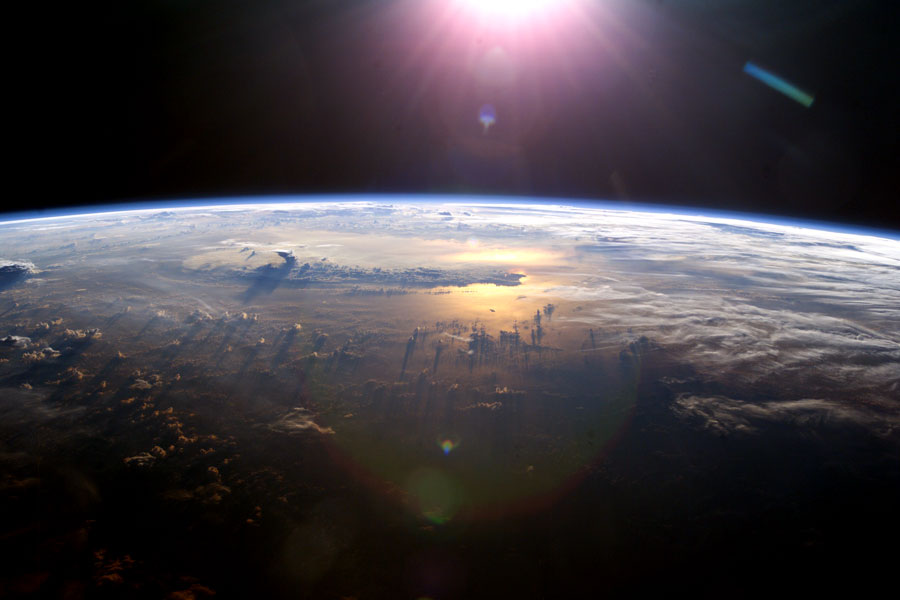
Image: NASA
In the time it takes you to read this sentence, billions of worlds have already formed across the cosmos. Yet here on Earth, our own planetary system took millions of years to assemble itself into the orderly arrangement we observe today—a process so protracted that it challenges our intuition about how quickly nature operates at cosmic scales. When astronomers speak of planet and moon formation timescales, they’re wrestling with one of the universe’s most fundamental questions: how long does it actually take to build a world?
This question matters profoundly for our understanding of exoplanet systems and the likelihood of finding habitable worlds elsewhere. The speed at which planets form constrains how many of them can exist in the universe, influences the stability of planetary systems, and shapes the chemical composition of the worlds that emerge from swirling disks of dust and gas. In an era when we’ve discovered more than 5,600 planets orbiting other stars, understanding the timeline of planetary birth has become essential to answering whether Earth-like worlds are common or vanishingly rare.
What Is Planet and Moon Formation Timescales?
Planet and moon formation timescales refer to the duration required for planets and moons to assemble from primordial material—dust, gas, and rocks orbiting a young star. Rather than a single fixed timeline, formation unfolds across multiple overlapping phases, each operating on vastly different durations. The initial assembly of planetary embryos from microscopic dust grains occurs relatively quickly, in perhaps 100,000 to a few million years, while the subsequent gravitational shuffling and orbital migration of larger bodies can extend for tens of millions of years. Understanding these timescales requires examining how gravity, chemistry, and physics conspire to transform cosmic dust into worlds.
The modern concept of planetary formation emerged primarily in the late 20th century as astronomers combined observations of dust disks around young stars with theoretical models of gravity and orbital mechanics. Pioneering work by researchers like Peter Goldreich, Fred Hoyle, and later scientists such as Douglas Lin and the team at the Carnegie Institution established the framework we use today. However, the story truly accelerated when the first extrasolar planet was discovered in 1995, forcing astronomers to reconsider whether formation timescales could vary dramatically across different stellar systems.
What We Know So Far
Planet formation begins inside protoplanetary disks—vast, flattened structures of gas and dust surrounding newborn stars. Within these disks, dust particles collide and stick together through electrostatic forces, a process called accretion. Within the first million years or so, these dust grains aggregate into kilometer-sized bodies called planetesimals. Once planetesimals reach sufficient size, gravity becomes the dominant force, pulling more material inward and accelerating growth dramatically. This gravitational phase, known as runaway accretion, can produce Mars-sized planetary cores in just a few hundred thousand to a few million years—an astronomical blink of an eye.
Imagine constructing a building not brick by brick, but by tossing pebbles into a gravity well where each pebble automatically attracts others toward it. As your pile grows larger, it pulls in pebbles from ever-greater distances, accelerating the construction process. This captures the essence of planetary growth: the more massive a proto-planet becomes, the more vigorously it devours surrounding material. In our solar system, evidence suggests that Jupiter grew large enough to open a gap in Saturn’s orbit within 2 to 3 million years of the Sun’s formation, while the terrestrial planets like Earth took considerably longer—perhaps 50 to 100 million years—to reach their final masses.
Yet growth doesn’t proceed smoothly or predictably. Gravitational interactions between planets, chaotic orbital dynamics, and encounters with planetary embryos create a violent period sometimes called the late heavy bombardment. Computer simulations of this era reveal that planetary systems are inherently unstable arrangements that must “settle down” through numerous collisions and gravitational ejections of smaller bodies. Some models suggest that Jupiter and Saturn dramatically migrated through our solar system, scattering asteroids and terrestrial planets across vast distances. This late dynamical evolution could have lasted millions or even tens of millions of years.
The Future of Exploration
The future of understanding planet and moon formation timescales lies in combining observations across multiple wavelengths with increasingly sophisticated computational models. The James Webb Space Telescope has begun detecting molecules and dust structures within protoplanetary disks around young stars, revealing the chemical and physical signatures of active planet formation in unprecedented detail. Ground-based observatories like the Atacama Large Millimeter/submillimeter Array (ALMA) map the architecture of dust gaps and rings that betray the presence of forming planets, allowing astronomers to measure planetary masses and estimate their ages directly. These observations are beginning to reveal whether our solar system’s formation timescale was typical or exceptional.
Scientists are also using asteroids, meteorites, and lunar samples as physical records of formation timescales. Radiometric dating techniques—measuring the decay of radioactive isotopes like uranium and lead—allow researchers to determine when different planetary bodies solidified. Studies of meteorites from the earliest solar system materials, preserved essentially unchanged for 4.6 billion years, reveal that planetary cores began forming within perhaps the first 100,000 years, far faster than theorists initially predicted. Ongoing analysis of samples returned from the Moon and asteroids promises to refine these timescales even further.
Recent Breakthroughs in Planet and Moon Formation Timescales
Within the past few years, astronomers have made remarkable discoveries that are overturning earlier assumptions about how quickly planets can form. In 2023, observations from ALMA revealed evidence that some planets may form within just 300,000 years—far more rapidly than the million-year timescales previously considered typical. Meanwhile, studies of young star systems like the Orion Nebula cluster have shown that protoplanetary disks dissipate on timescales of 2 to 5 million years, meaning planets must complete most of their growth before their parent disk evaporates. This compressed timeline has forced theorists to develop new mechanisms for rapid planetary assembly.
One of the most intriguing recent findings concerns the role of disk instabilities in accelerating planet formation. Traditional models relied on the gradual accumulation of material, but newer research suggests that gravitational instabilities within massive, cool disks can directly collapse large regions into planet-sized bodies—essentially skipping many intermediate steps. This gravitational instability model may explain how to form massive planets like Jupiter in just a few thousand years, radically faster than conventional accretion pathways would allow. Researchers are currently investigating how frequently such instabilities occur and whether they operate in systems like ours.
Another breakthrough involves the detection of newborn planets still embedded within their protoplanetary disks. Systems like PDS 70 and AB Aurigae contain young planets that appear to be actively accreting material and undergoing rapid mass growth. By measuring how quickly these planets are gaining mass, astronomers can test competing formation theories directly. Early results suggest that planets in these systems are accumulating material at rates broadly consistent with theoretical predictions, lending credence to current models while also revealing unexpected complexity in how planets interact with their surroundings.
Why Planet and Moon Formation Timescales Matters for the Future
Understanding planet and moon formation timescales carries profound implications for astrobiology and the search for life elsewhere in the universe. If planets form very rapidly, planetary systems could be common even in regions where stellar densities are high and gravitational disruptions frequent. Conversely, if formation requires stable conditions over tens of millions of years, habitable worlds might be rarer, confined to particularly tranquil stellar neighborhoods. This question directly addresses whether the conditions for life are easily achieved throughout the cosmos or represent a delicate confluence of circumstances. The timescales also determine what types of planetary systems can form around different stellar types—hot, massive stars may not retain disks long enough to produce Earth-like planets, while cool red dwarfs might form planets much more slowly.
These timescales also reshape our understanding of our own solar system’s history and our place in the cosmos. If Earth formed according to the rapid timescale observed in some young systems, it would suggest our formation was unremarkable. If we formed much more slowly than the average exoplanet system, it might explain certain unique features of our planetary arrangement. Additionally, understanding moon formation timescales informs our interpretation of planetary habitability; moons like Earth’s own Moon may have stabilized Earth’s climate and enabled the emergence of complex life. Similar moons around exoplanets could be as important as the planets themselves in determining habitability.
The challenges that remain are substantial. Computational models require enormous computing power to simulate billions of interacting bodies over millions of years with realistic physics. Observational constraints are limited by the fact that protoplanetary disks exist for only a few million years in cosmic time, yet are scattered throughout the galaxy at various distances from Earth. Distinguishing between competing formation mechanisms—accretion versus gravitational instability, in-situ formation versus migration—requires observations precise enough to measure planetary properties and ages with unprecedented accuracy. Researchers are currently developing new statistical frameworks to compare the predictions of competing theories against growing catalogs of exoplanetary systems, but significant uncertainties remain.
Key Takeaways
- Planet and moon formation is not instantaneous but unfolds across multiple timescales ranging from thousands of years for rapid gravitational collapse to tens of millions of years for orbital migration and dynamical settling.
- The formation process begins with dust grain accretion into planetesimals, transitions into runaway gravitational growth of planetary cores, and culminates in complex orbital dynamics that scatter and redistribute planetary systems.
- Recent astronomical observations using ALMA and the James Webb Space Telescope have revealed that some planets form much more rapidly than previously thought, potentially within just hundreds of thousands of years.
- Current research focuses on distinguishing between different formation mechanisms and measuring formation timescales directly through observations of young planetary systems and radiometric dating of meteorites and lunar samples.
- Understanding planet and moon formation timescales is essential for assessing the abundance of habitable worlds in the universe and interpreting the geology and potential habitability of exoplanetary systems.
Explore TED Talks on Planet and Moon Formation Timescales:
TED content is used under CC BY-NC-ND 4.0. © TED Conferences, LLC.
Frequently Asked Questions
Why does it take millions of years for planets to form rather than happening instantaneously?
Planets form through gradual accretion, where dust grains collide and stick together, then planetesimals merge into larger bodies, a hierarchical process that requires millions of years to reach planetary mass. The time required increases with each stage because larger objects take longer to accumulate sufficient material from the protoplanetary disk.
How does the speed of planet formation affect the number of planets that can exist in the universe?
Slower formation timescales mean fewer planets can complete their assembly before protoplanetary disks dissipate, directly limiting the total planetary population across the cosmos. Conversely, faster formation timescales would allow more planets to develop within the finite lifespan of star-forming regions.
What role does the chemical composition of a protoplanetary disk play in determining planet formation timescales?
The abundance and distribution of dust and gas in the disk affect how quickly planetesimals can collide and merge; disks with higher dust density enable faster accretion and shorter formation timescales. Different chemical compositions also influence which volatile compounds are retained during formation, shaping the final chemical makeup of the resulting planets.
How can understanding planet formation timescales help astronomers predict the habitability of exoplanets?
Formation timescales indicate how stable and long-lived planetary systems are likely to be, which directly affects whether planets remain in habitable zones long enough for life to develop. Faster-forming systems may achieve geological stability sooner, providing earlier windows for habitability, while slower-forming systems might face greater dynamical instability during their critical early phases.