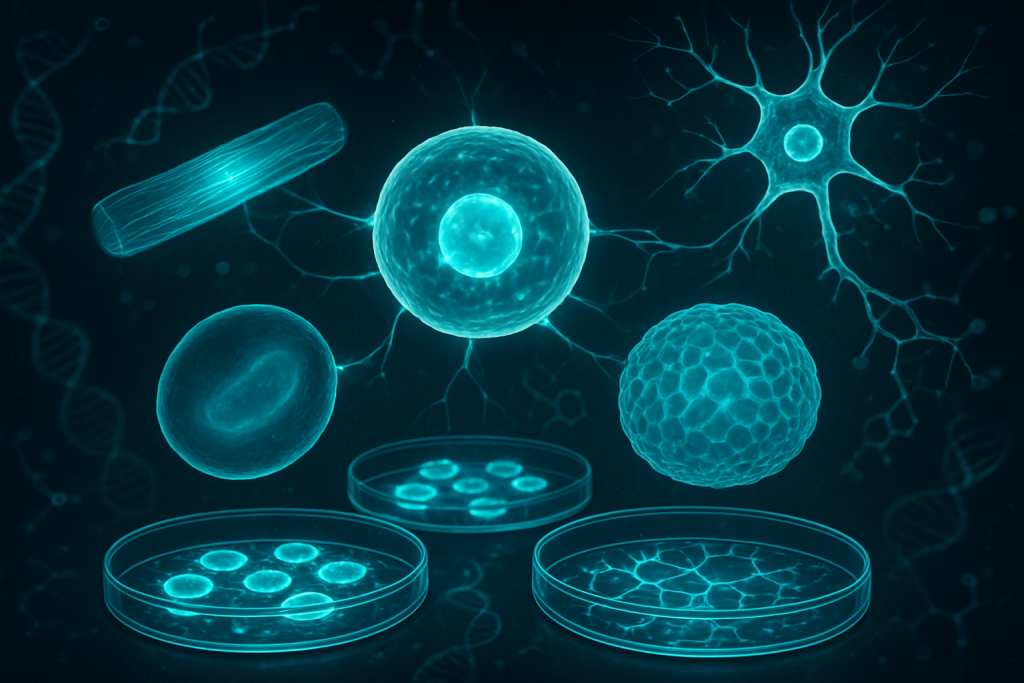
Image generated by AI
Imagine a patient’s own cells being reprogrammed to replace damaged tissue, or a miniature human organ grown in a laboratory dish to test new drugs before they ever touch a human body. These are no longer science fiction scenarios—they are rapidly becoming clinical reality. Stem cell therapy and disease modeling represent one of the most transformative frontiers in modern medicine, offering the tantalizing prospect of regenerating failing organs, curing previously untreatable genetic diseases, and accelerating drug development with unprecedented precision.
Yet most people have only a vague sense of what stem cells actually are, much less how they could revolutionize medicine. The science behind these technologies is intricate, spanning molecular biology, developmental embryology, and clinical medicine. Understanding stem cell therapy and disease modeling is essential not only for appreciating the future of medicine, but also for navigating the ethical questions, regulatory challenges, and hype that surround these powerful tools. In an age when regenerative medicine promises to extend human healthspan and personalized disease models could make drug development faster and safer, the stakes have never been higher.
What Is Stem Cell Therapy and Disease Modeling?
Stem cells are remarkable biological entities distinguished by two fundamental properties: self-renewal and differentiation. Self-renewal means they can divide repeatedly to produce more stem cells, maintaining a reservoir of undifferentiated cells throughout life. Differentiation means they can specialize into specific cell types—neurons, cardiac muscle, liver cells, or immune cells—each with distinct form and function. This dual capacity makes stem cells uniquely powerful for both therapeutic and research applications. Unlike ordinary cells, which are locked into their specialized roles and cannot divide indefinitely, stem cells occupy a peculiar middle ground: plastic enough to become almost anything, yet capable of sustaining themselves over extended periods.
Stem cell therapy involves harvesting stem cells from a patient or donor, expanding them in the laboratory, often coaxing them to differentiate into specific cell types, and then transplanting them back into the patient to repair damaged or diseased tissue. Disease modeling, by contrast, uses stem cells to build living laboratories—three-dimensional tissue cultures or even miniature organs called organoids that recapitulate aspects of human disease. By studying disease in a dish, researchers can understand mechanisms of pathology, screen thousands of drug candidates, and test personalized treatments on cells derived from individual patients. Together, these approaches represent a fundamental shift in how we conceptualize treatment and research: from a one-size-fits-all model toward increasingly personalized, regenerative, and preventive medicine.
The modern stem cell era began in 1981 when Martin Evans discovered embryonic stem cells in mice—a discovery that would eventually earn him a share of the Nobel Prize in Physiology or Medicine. But the field truly ignited in 2006 when Shinya Yamanaka reported that just four genetic factors could reprogram adult skin cells back to an embryonic-like state, creating what are now called induced pluripotent stem cells, or iPSCs. This breakthrough was revolutionary because it bypassed the ethical controversies surrounding embryonic stem cells while opening vast new possibilities: you could now take a sample of skin or blood from almost any patient and derive pluripotent stem cells from it. The flood of research that followed has transformed stem cells from an exotic laboratory curiosity into a genuine therapeutic platform.
How It Works in Nature
To understand how stem cell therapy works, you must first appreciate what stem cells do in your body right now. Throughout your lifetime, stem cells function as your body’s cellular maintenance crew. In your bone marrow, hematopoietic stem cells continuously divide and differentiate to replace the roughly 200 billion red blood cells you lose daily, along with platelets and immune cells. In your intestinal lining, intestinal stem cells in small pits called crypts divide rapidly to replace every cell in your gut epithelium every three to five days. Even in your brain, neural stem cells in specialized regions generate new neurons that integrate into memory circuits. These natural stem cell niches—protected microenvironments that sustain and regulate stem cells—are fundamental to homeostasis and repair, allowing your body to maintain itself and recover from everyday damage.
The regenerative process follows a characteristic pattern. When tissue is damaged, local cells release chemical signals called cytokines and growth factors that activate resident stem cells. These stem cells then proliferate to expand the available cell pool, some remain as stem cells while others differentiate into the needed cell type, and the new cells integrate into the tissue architecture, functionally restoring the organ’s capacity. Think of it like a construction crew responding to a building fire: the manager (growth factors) sounds the alarm, workers (stem cells) show up at the site, some stand by for the next emergency while others grab tools and start rebuilding, and soon the damaged wing is operational again. In young, healthy people, this process works remarkably well. But as we age, and in disease states, this regenerative capacity falters—stem cells become exhausted, growth factor signaling diminishes, and tissues lose their ability to repair themselves.
This is where stem cell therapy enters the picture. The strategy is to bypass or augment these failing natural processes by delivering stem cells or their derivatives directly to damaged tissue. A patient with a spinal cord injury, for instance, has suffered destruction of neurons and supporting glial cells that the body cannot spontaneously regenerate in significant quantities. By transplanting neural stem cells or their differentiated progeny into the injury site, researchers aim to replace lost cells, reduce inflammation, promote regeneration of surviving neurons, and restore some degree of function. The transplanted cells don’t necessarily become perfect replacements; often, their most powerful effects come from releasing healing molecules or from providing scaffolding that helps the body’s own repair machinery function better.
Medical and Scientific Relevance
The potential applications of stem cell therapy span virtually every organ system and disease category. For cardiovascular disease, stem cells could regenerate heart tissue after a myocardial infarction, replacing the scar tissue that normally forms. For neurodegenerative diseases like Parkinson’s and Alzheimer’s, dopamine-producing neurons or other neural cell types could be derived from patient iPSCs and transplanted to slow or halt cognitive decline. For type 1 diabetes, insulin-producing beta cells grown from stem cells could provide a source of replacement cells independent of immune rejection. For blood disorders, hematopoietic stem cell transplantation is already standard therapy for leukemia and lymphoma. For orthopedic injuries, stem cell-derived cartilage and bone could repair joints damaged by arthritis or trauma. The breadth of possibilities reflects the fundamental truth that stem cells, once properly directed, can become almost any cell type the body needs.
Disease modeling applications are equally expansive and increasingly urgent. Pharmaceutical companies spend billions developing new drugs, yet the failure rate remains staggering: roughly 90 percent of drug candidates that pass laboratory testing fail in human clinical trials, often due to toxicity or inefficacy not detected in traditional animal models. By deriving stem cells from patients with specific genetic diseases and differentiating them into disease-relevant cell types, researchers create living disease models that faithfully recapitulate human pathophysiology. A patient with a genetic form of muscular dystrophy could provide skin cells that are reprogrammed to muscle stem cells, which researchers can then study to understand disease mechanisms and screen drug libraries for compounds that restore muscle function. Similarly, patient-derived iPSC-derived neurons can model neurodevelopmental disorders like autism or schizophrenia, potentially revealing the cellular basis of these conditions and identifying therapeutic targets. Organoid technology takes this further, enabling researchers to grow miniature organs that recapitulate the structure and function of real tissues, providing three-dimensional models far more physiologically relevant than flat cell cultures.
Recent Breakthroughs in Stem Cell Therapy and Disease Modeling
The past two to three years have witnessed accelerating progress that moves these technologies closer to clinical reality. In 2023, several research groups reported successful differentiation of pluripotent stem cells into fully functional kidney units that could filter blood and produce urine, a major advance toward eventual kidney transplants grown in the laboratory. Simultaneously, improvements in organoid technology have produced increasingly sophisticated models of the human brain, heart, and intestine, enabling researchers to study human development and disease with fidelity impossible in animal models. One particularly striking study demonstrated that brain organoids derived from patients with autism spectrum disorder exhibit distinctive cellular and connectivity patterns that correlate with behavioral features, offering a potential window into the cellular basis of neurodevelopmental disorders. Meanwhile, clinical trials have expanded beyond blood disorders into new territories: trials are underway for stem cell-derived treatments for macular degeneration, heart failure, and spinal cord injury, with some early results suggesting meaningful clinical benefit.
Researchers are now grappling with increasingly sophisticated challenges. How can we ensure that transplanted stem cells integrate properly into host tissue and adopt the correct identity? How do we manufacture stem cells at pharmaceutical scale while maintaining quality and safety? Can we overcome immune rejection when using allogeneic (non-patient-derived) stem cells, and if so, could off-the-shelf stem cell therapies become feasible? Perhaps most ambitiously, how can disease models derived from iPSCs be made more physiologically complex and more predictive of human drug responses—essentially creating a “human-on-a-chip” that encompasses multiple interacting tissues? The answers to these questions will determine whether stem cell therapies transition from niche applications to mainstream medicine.
Why Stem Cell Therapy and Disease Modeling Matter for the Future
The convergence of stem cell biology, bioinformatics, and tissue engineering is poised to redefine medicine in the twenty-first century. In a personalized medicine paradigm enabled by iPSC technology, treatments could be tailored to individual patients based on their unique genetic and cellular characteristics. A patient diagnosed with cancer could have a biopsy analyzed, tumor cells grown from iPSCs derived from their own tissue, and drug screening performed on their specific cancer cells before selecting therapy—potentially eliminating the trial-and-error approach that currently characterizes oncology. More broadly, as organ transplant waiting lists remain desperately long and rejection remains a persistent problem, the prospect of growing replacement organs from a patient’s own cells represents an ethical and practical advancement of enormous significance. For rare genetic diseases affecting small populations, patient-derived disease models could identify targeted therapies that might otherwise never reach development, since traditional pharmaceutical pipelines depend on large patient populations to justify investment.
Yet substantial hurdles remain before stem cell therapies become commonplace. Manufacturing challenges are formidable: scaling up stem cell production while maintaining consistency and safety requires advances in bioreactor design, quality control, and regulatory pathways that are still evolving. Immune rejection poses a persistent problem for allogeneic transplants, though research into immune-evasive stem cells and improved immunosuppression may provide solutions. Tumorigenicity—the risk that stem cells or their derivatives might transform into cancer—must be thoroughly characterized for each therapeutic approach. Ethical questions linger around the use of human embryonic stem cells and around how genetic modifications of stem cells should be regulated. And the sheer biological complexity of tissues means that growing a fully functional kidney or liver in the laboratory remains extraordinarily difficult; current organoids are useful models but imperfect imitations of the real thing.
Key Takeaways
- Stem cells are undifferentiated cells capable of both self-renewal and differentiation into specialized cell types, making them uniquely powerful for therapy and research.
- Stem cell therapy works by harvesting stem cells, expanding and differentiating them, and transplanting them to repair damaged tissue; disease modeling uses stem cells to create living laboratory models of human disease.
- The most promising near-term applications include regeneration of cardiac tissue, replacement of neurons in neurodegenerative diseases, production of insulin-secreting cells for diabetes, and personalized drug screening on patient-derived cells.
- Recent breakthroughs include increasingly sophisticated organoid models, expanded clinical trials, and improved methods for directing stem cell differentiation, though manufacturing, immune rejection, and safety concerns remain significant challenges.
- Stem cell therapy and disease modeling will likely enable a transition toward personalized medicine, reduce the failure rate of drug development, and eventually provide sources of replacement organs independent of donor transplantation, fundamentally transforming how medicine diagnoses and treats disease.
Explore TED Talks on Stem Cell Therapy and Disease Modeling:
TED content is used under CC BY-NC-ND 4.0. © TED Conferences, LLC.
Frequently Asked Questions
What are the two fundamental properties that define stem cells?
Stem cells are defined by self-renewal—their ability to divide and create more stem cells—and differentiation, which is their capacity to develop into specialized cell types. These two properties enable stem cells to both maintain a reserve pool and generate the diverse cell types needed for tissue repair and organ function.
How does disease modeling using stem cells accelerate drug development compared to traditional methods?
Disease models created from stem cells allow researchers to grow miniature human organs and tissues in laboratory dishes that can be used to test new drugs before human trials, reducing both the time and cost of drug development. This approach provides more accurate predictions of how drugs will behave in human biology compared to animal models or cell cultures alone.
Why is reprogramming a patient's own cells into stem cells significant for therapy?
Reprogramming a patient's own cells into stem cells eliminates the risk of immune rejection, since the cells are genetically matched to the patient's body. This approach also bypasses many of the ethical concerns associated with embryonic stem cells while enabling personalized regenerative treatments.
Can stem cell therapy potentially treat genetic diseases that are currently untreatable?
Yes, stem cell therapy can address genetic diseases by either replacing damaged tissues caused by the disease or by using gene-corrected stem cells to restore normal cellular function. This approach is particularly promising for inherited disorders where current treatments only manage symptoms rather than addressing the underlying genetic cause.