AI Insight
Researchers from Köhler et al. demonstrated that artificial intelligence can detect weak seismic signals more effectively than traditional techniques by integrating data from multiple seismometers across an array. Using 30 years of observational data from Norwegian seismic arrays, they tested three AI training approaches and found that pre-merging signals from multiple stations before training produced the highest detection accuracy, while allowing the AI model to autonomously merge station data offered the best balance between computational efficiency and precision. The model showed excellent generalization for P-wave detection but struggled with S-waves when applied outside its training region, suggesting that training with global datasets could improve performance.
Why it matters
This advancement could significantly enhance monitoring capabilities for earthquakes, underground nuclear tests, and other seismic activities by detecting signals previously too weak to identify reliably. The findings provide practical guidance for implementing AI in real-time seismic monitoring systems, where computational speed and detection accuracy must be balanced.
Understand the Science
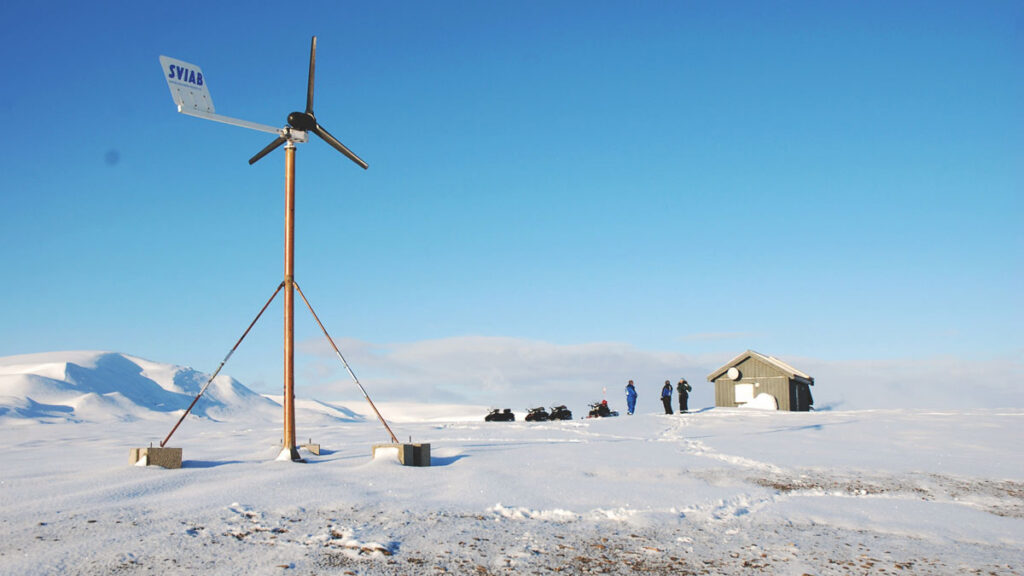
Source: Journal of Geophysical Research: Machine Learning and Computation
This is an authorized translation of an Eos article. 本文是Eos文章的授权翻译。
单个地震仪通常不足以可靠地探测地震或地下核试验等人类活动。因此,研究人员通常会结合分布在小范围地理区域内的多个地震仪的读数,来提高分析的可靠性。Köhler 等人的一项新研究表明,人工智能 (AI) 可以比传统技术更有效地整合来自多个传感器的读数,从而更可靠地探测微弱的地震信号。
研究人员利用挪威地震研究基金会 NORSAR和其他运营商运营的地震阵列 30 年的观测数据,并通过三种不同的方式训练了一个 AI 模型来探测地震信号。首先,他们每次使用一个台站的数据训练模型,然后应用该模型并将每个台站的结果合并。其次,他们使用传统技术合并同一阵列中多个传感器的信号,然后使用来自多个台站的这些合并信号训练模型。第三,他们将来自所有阵列台站的所有数据都提供给模型,让模型自行决定如何合并这些数据。
第二种方法(训练前合并信号)能够放大微弱信号,其信号检测精度在三种方法中最高。同时,第三种模型(由模型自行决定如何合并台站数据)是计算效率最高的策略,其精度介于其他两种方法之间。
考虑到需要在精度和速度之间取得平衡,研究人员建议在进行实时监测时由模型自行决定如何合并数据,而在可以接受较慢速度的情形中,可以在应用模型之前或之后合并数据。
然而,由于使用区域性有限的训练数据集,该模型对训练区域之外的区域泛化能力较差。若能使用全球数据进行训练,有望改进结果。这一问题主要出现在S波检测中,在P波检测的泛化能力方面则未出现类似问题。
总体而言,结果表明,人工智能可以通过帮助研究人员检测地震、地下核试验和其他地震活动中难以识别的微弱信号来提升地震监测能力。(Journal of Geophysical Research: Machine Learning and Computation, https://doi.org/10.1029/2026JH001249, 2026)
—科学撰稿人Saima May Sidik (@saimamay.bsky.social)
This translation was made by Wiley. 本文翻译由Wiley提供。
Read this article on WeChat. 在微信上分享本文。

Text © 2026. AGU. CC BY-NC-ND 3.0
Except where otherwise noted, images are subject to copyright. Any reuse without express permission from the copyright owner is prohibited.
Source: 人工智能提升地震检测能力