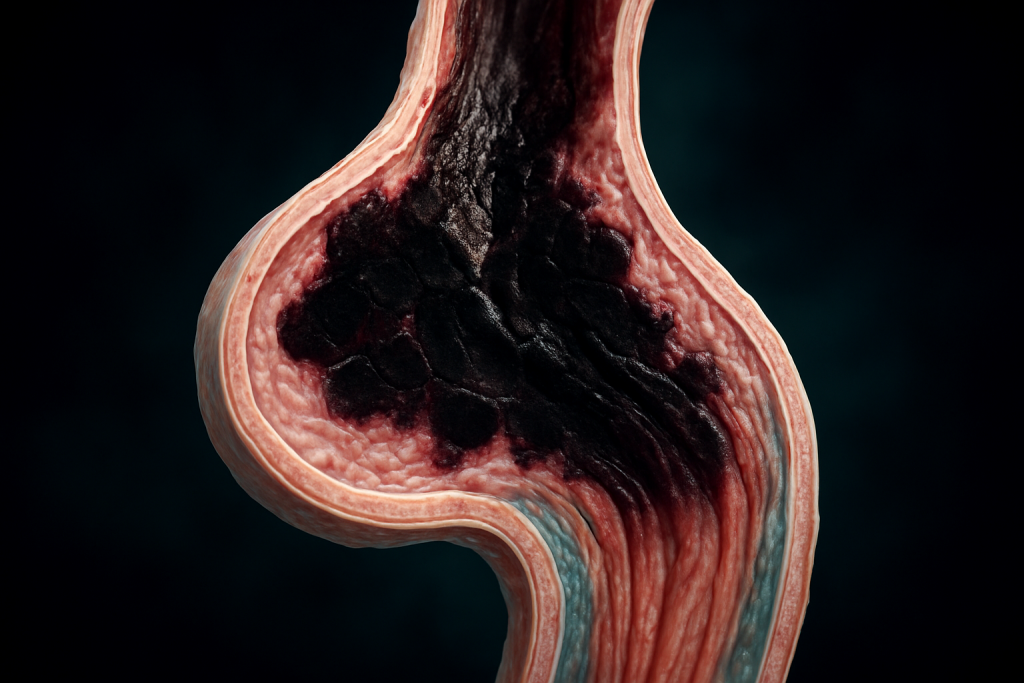
Image generated by AI
AI Insight
Acute esophageal necrosis, also known as "black esophagus," is a rare but clinically significant condition characterized by circumferential dark discoloration of the esophageal mucosa, typically involving the distal esophagus. It is associated with a combination of low blood flow states, mucosal barrier compromise, and gastric reflux, most commonly presenting in elderly men with multiple underlying comorbidities. The condition is diagnosed endoscopically and carries notable morbidity and mortality, largely driven by the severity of the underlying precipitating illness rather than the esophageal lesion itself.
Why it matters
Recognizing acute esophageal necrosis promptly is essential for clinicians, as early supportive management and treatment of underlying conditions can improve patient outcomes. Increased clinical awareness may reduce diagnostic delays in critically ill patients presenting with upper gastrointestinal bleeding.
Understand the Science
New England Journal of Medicine, Ahead of Print.
Source: Acute Esophageal Necrosis