AI Insight
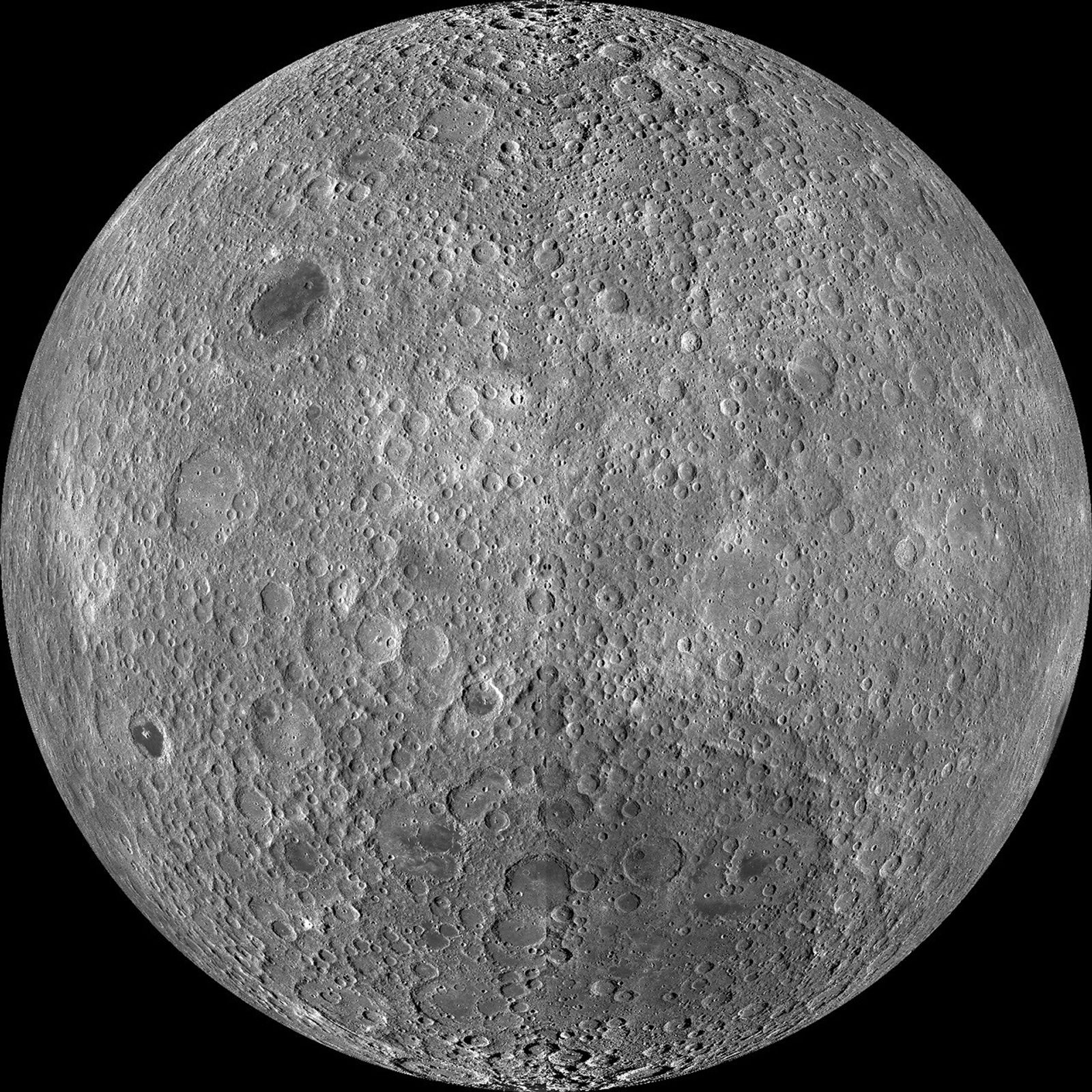
The Lunar Reconnaissance Orbiter has captured a high-resolution mosaic of the Moon's farside, compiled from over 15,000 images taken between November 2009 and February 2011, showing features at a scale of 100 meters per pixel. The farside appears rough and heavily cratered, contrasting sharply with the nearside's smooth dark maria (volcanic plains). This difference is attributed to the farside's thicker crust, which prevents molten material from the Moon's interior from reaching the surface to form the dark, smooth basaltic plains visible on the nearside.
Why it matters
This observation helps explain the asymmetric geological evolution of the Moon and provides crucial insights into lunar crustal thickness and volcanic activity. Understanding these differences is important for planning future lunar missions and resource utilization, as the geological characteristics affect landing site selection and potential subsurface exploration.
Understand the Science
APOD
Astronomy Picture of the Day
Discover the cosmos! Each day a different image or photograph of our fascinating universe is featured, along with a brief explanation written by a professional astronomer.
Lunar Farside
Explanation: Tidally locked in synchronous rotation, the Moon always presents its familiar nearside to denizens of planet Earth. From lunar orbit, the Moon’s farside can become familiar, though. In fact this sharp picture, a mosaic from the Lunar Reconnaissance Orbiter’s wide angle camera, is centered on the lunar farside. Part of a global mosaic of over 15,000 images acquired between November 2009 and February 2011, the highest resolution version shows features at a scale of 100 meters per pixel. Surprisingly, the rough and battered surface of the farside looks very different from the nearside covered with smooth dark lunar maria. A likely explanation is that the farside crust is thicker, making it harder for molten material from the interior to flow to the surface and form dark, smooth maria.
Tomorrow’s picture: Sunday’s Childe
| Date: | October 10, 2026 |
|---|---|
| Credit: | NASA / GSFC / Arizona State Univ. / Lunar Reconnaissance Orbiter |
| Authors & editors: | Jerry Bonnell, Cecilia Chirenti, Robert Nemiroff, Keighley Rockcliffe |
| A service of: |
ASD at NASA / GSFC, NASA Science Activation & Michigan Tech. U. |