AI Insight
Carbon capture and storage (CCS) is a technology that captures CO2 emissions from industrial sources like power plants and factories, then stores them permanently underground to prevent atmospheric release. Major organizations including the IPCC consider CCS critical for achieving net-zero emissions, particularly for decarbonizing high-emission industries like cement production where few alternatives exist. However, CCS faces significant criticism due to high costs, historical underperformance, limited deployment at scale, and concerns about its ties to the fossil fuel industry.
Why it matters
CCS is positioned as essential in many national net-zero strategies, with countries like the UK committing billions in investment. The debate over its viability and role directly impacts climate policy decisions, industrial decarbonization pathways, and the allocation of substantial public funding for climate solutions.
Understand the Science
When carbon dioxide (CO2) is released from a factory or power plant, the gas can be captured and permanently stored underground, preventing it from driving climate change.
This is the idea underpinning carbon capture and storage (CCS), a technology that is at the heart of many nations’ net-zero plans.
Influential organisations, including the Intergovernmental Panel on Climate Change (IPCC), describe CCS as “critical” for cutting emissions from key sectors – and for helping to avoid dangerous global warming.
In particular, capturing CO2 is seen as one of the only viable options for decarbonising some of the world’s highest-emitting industries, such as cement production.
The UK, for example, has committed to investing as much as £21.7bn over the coming decades in its nascent CCS industry, as part of the nation’s net-zero strategy.
Yet, in the UK and elsewhere, there has been a backlash against plans for CCS.
Citing high costs, ties to the fossil-fuel industry and a “history of poor performance”, critics describe CCS as a “dangerous distraction” or a “false climate solution”.
Time and again, the outlook for the roll-out of CCS has been scaled back, as the technology has failed to deliver as quickly as expected – and as policy support has wavered.
Furthermore, critics state that the technology remains “unproven” on the scale required to make a meaningful impact on global emissions.
In this Q&A, Carbon Brief explores the role CCS is expected to play in achieving net-zero, its record to date and the reasons it has been criticised, using the UK as an example.
What is CCS?
CCS involves capturing CO2 emissions released from a large source, such as a gas power plant or a cement factory.
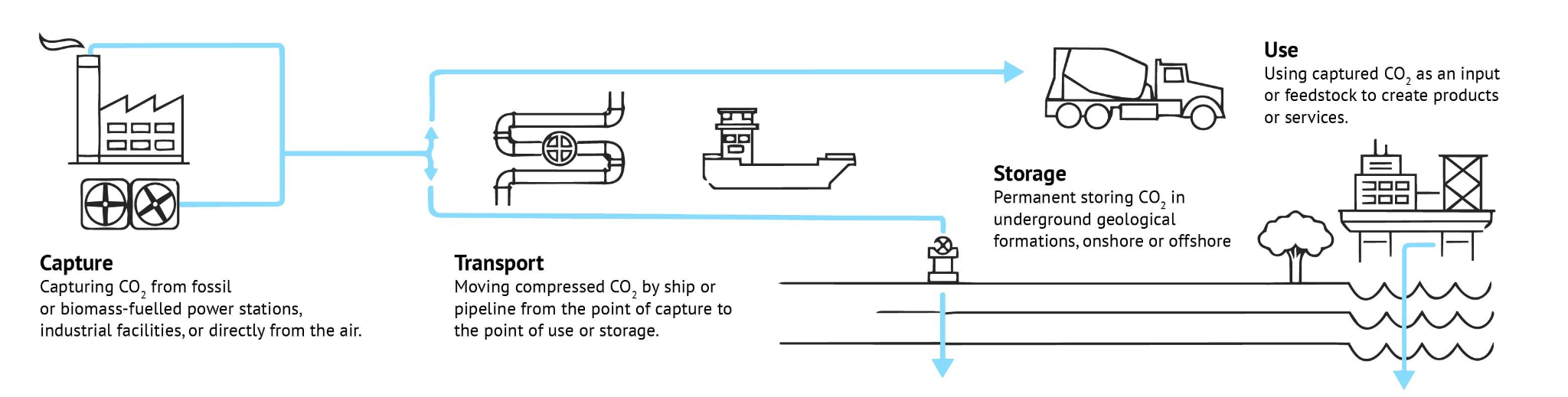
The CO2 is separated from the facility’s exhaust stream, generally using a chemical solvent, before being compressed into a liquid and transported via pipeline or vehicle. The CO2 is then stored by injecting it into underground reservoirs, such as depleted oil fields or saline aquifers.
The term “CCUS” is sometimes also used, referring to the “utilisation” of CO2 to make products, including fertilisers, fuels or building materials. Such uses do not necessarily lead to permanent emissions cuts, as the CO2 can end up later being released back into the atmosphere.
(“CCS” is used in this Q&A, unless quoting another organisation that specifically refers to “CCUS”.)
The infographic below shows the stages of capturing CO2 and transporting it to be either stored or used in other applications.
Carbon capture technology was originally rolled out at US and Canadian oil wells in the early 1970s as a way to achieve “enhanced oil recovery”. This involves injecting captured CO2 into depleted wells – a process that stores CO2, but also helps to extract more oil.
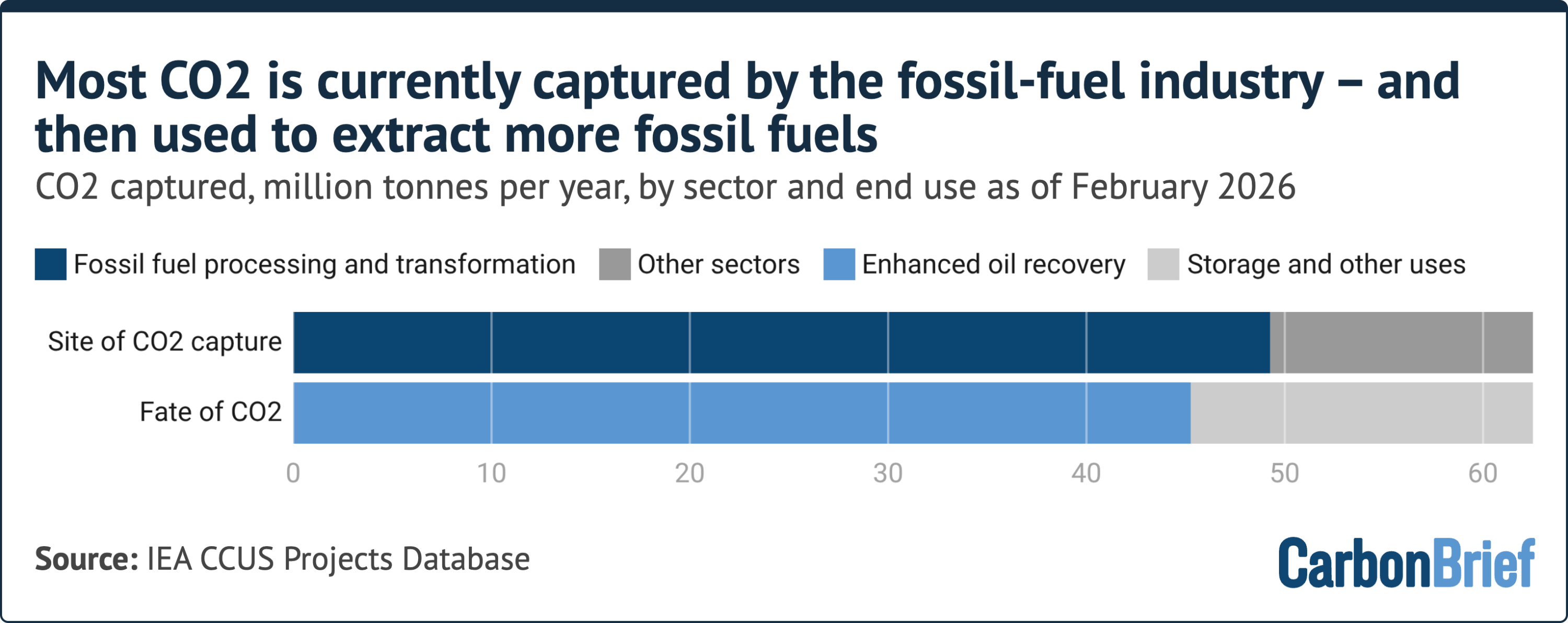
This remains, by far, the most significant end use for captured CO2 worldwide, with around three-quarters of it used for this purpose.
Moreover, most of the CO2 currently captured is a by-product of gas purification – the process by which fossil fuels such as methane are separated from other, unwanted substances. Selling this CO2 can make such gas projects more economically viable.
Therefore, as shown in the chart below, which is based on International Energy Agency (IEA) data, the majority of CO2 that is both captured and used today helps the fossil-fuel industry to extract and sell more oil and gas.
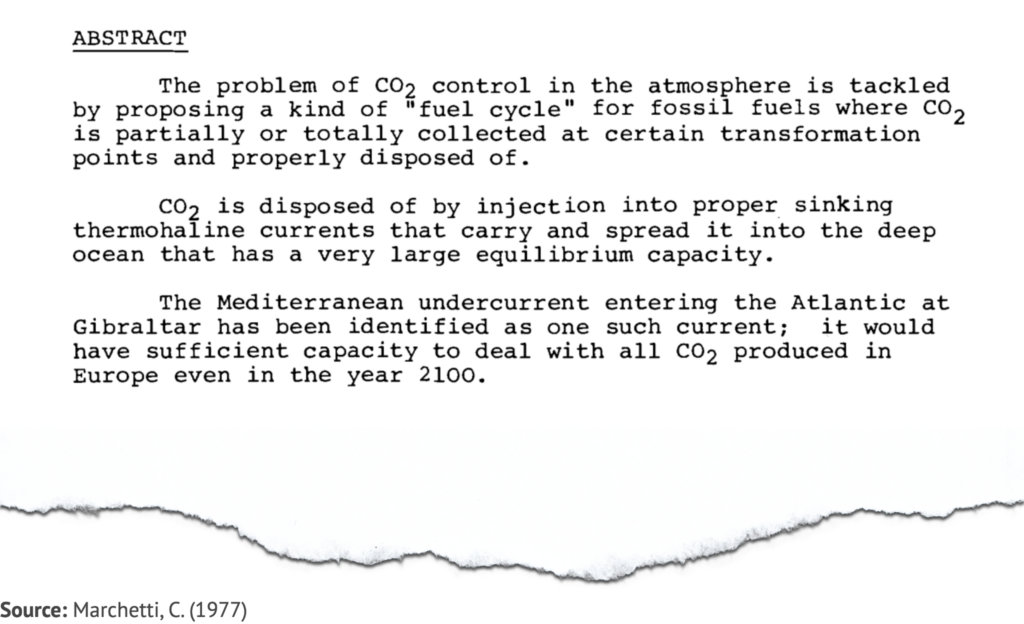
CCS was first proposed as a way to deal with CO2 emissions in a 1976 academic article, which imagined injecting the captured gas into the ocean.
It is only since the early 2000s that CCS has gained traction as a proposed climate solution, with a 2005 “special report” by the IPCC exploring the topic. At that time, the authors note there were just three small-scale projects trying to capture and permanently store CO2.
Installing CCS at factories or power plants and permanently storing the CO2 would mean that, in theory, such facilities could continue using fossil fuels without contributing to climate change.
Such applications are often mentioned alongside two related technologies, both of which could be used to “suck” CO2 out of the atmosphere and, thus, deliver “negative emissions”.
One is bioenergy with carbon capture and storage (BECCS). Crops absorb CO2 as they grow and BECCS involves a power plant burning these crops, then storing the resulting CO2.
The other technology is direct air carbon capture and storage (DACCS).
These technologies are classed as “CO2 removal”, as they involve absorbing CO2 from the atmosphere using plants or machines and then storing it permanently.
By contrast, CCS installed at a factory is considered a way to avoid CO2 emitted by that specific facility from entering the atmosphere. This Q&A focuses on such applications, which account for the vast majority of existing and planned CCS.
How much CCS capacity has been built so far?
As of February 2026, there were a total of 75 operational CCS projects around the world. As noted above, almost all of them are at fossil-fuel extraction and processing sites, according to the IEA’s database.
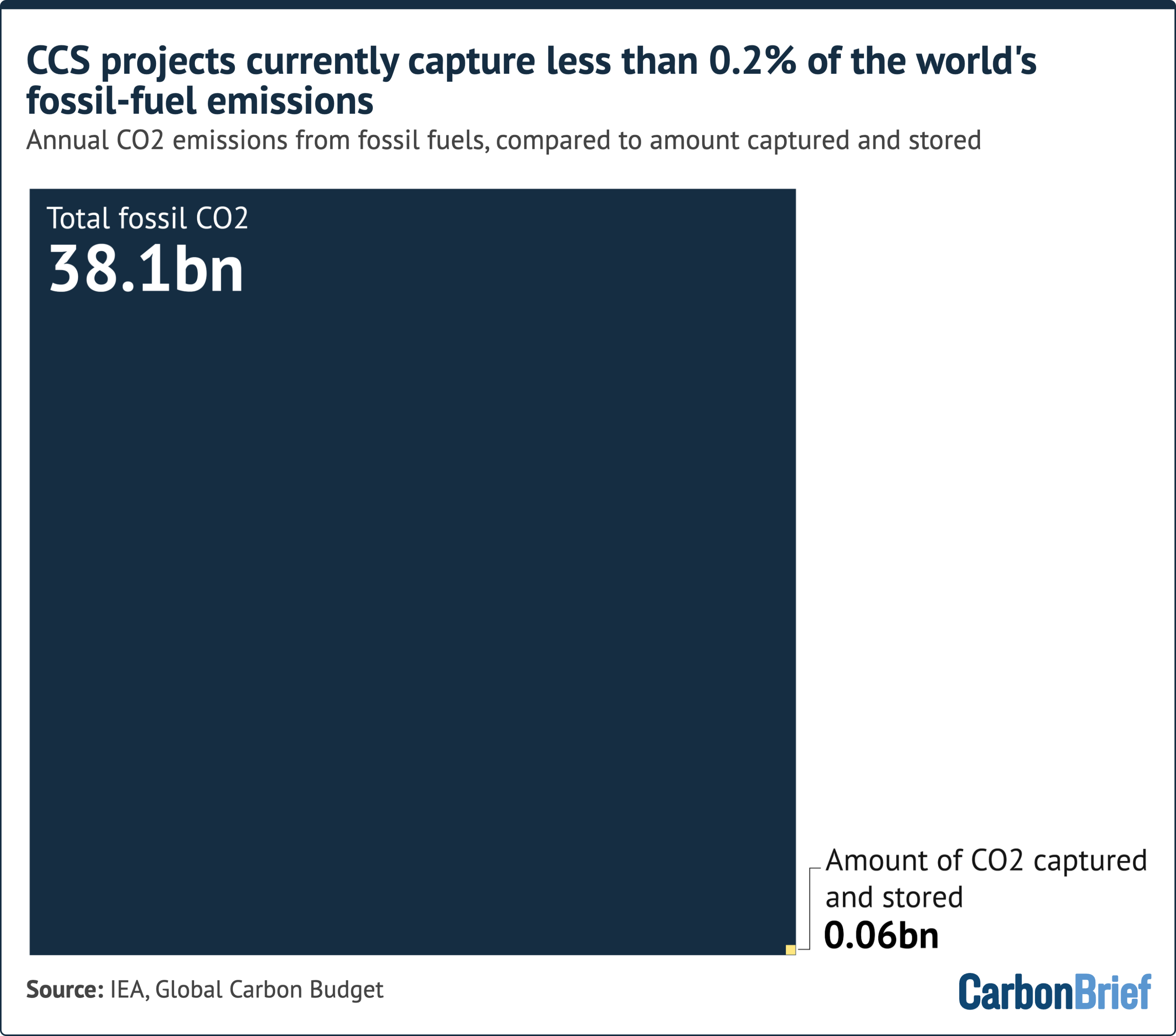
Together, these projects capture 62.5m tonnes of CO2 (MtCO2) each year. This is equivalent to the annual greenhouse gas emissions of Ecuador.
(This compares with the 22 CCS projects, promising to capture 40MtCO2 annually, that were operational or under construction as of 2014.)
As the chart below shows, the amount of CO2 currently being captured and stored is a tiny fraction of the total emissions from fossil-fuel use.
In a 2020 report, the IEA explained that the “story of CCUS has largely been one of unmet expectations: its potential to mitigate climate change has been recognised for decades, but deployment has been slow”.
A wave of interest in CCS in the 2000s, largely from countries in Europe and North America, focused on enabling coal power plants to continue operating with lower emissions.
This interest largely petered out, as plummeting renewable energy costs weakened the case for coal plants with CCS. Today, there are only seven operating CCS-coal plants worldwide – five in China, one in the US and one in Canada.
Yet the Paris Agreement in 2015 – and the national net-zero targets that followed – highlighted the need for deep emissions cuts in sectors that previously expected to continue emitting for decades. This, once again, has fuelled interest in the use of CCS.
In recent years, there has also been growing interest in producing low-carbon “blue” hydrogen from gas with CCS.
Hydrogen is widely seen as key for decarbonising certain sectors – particularly in industry – but analyses suggest that it may be difficult to make sufficient “green” hydrogen using renewable power on the timescales required.
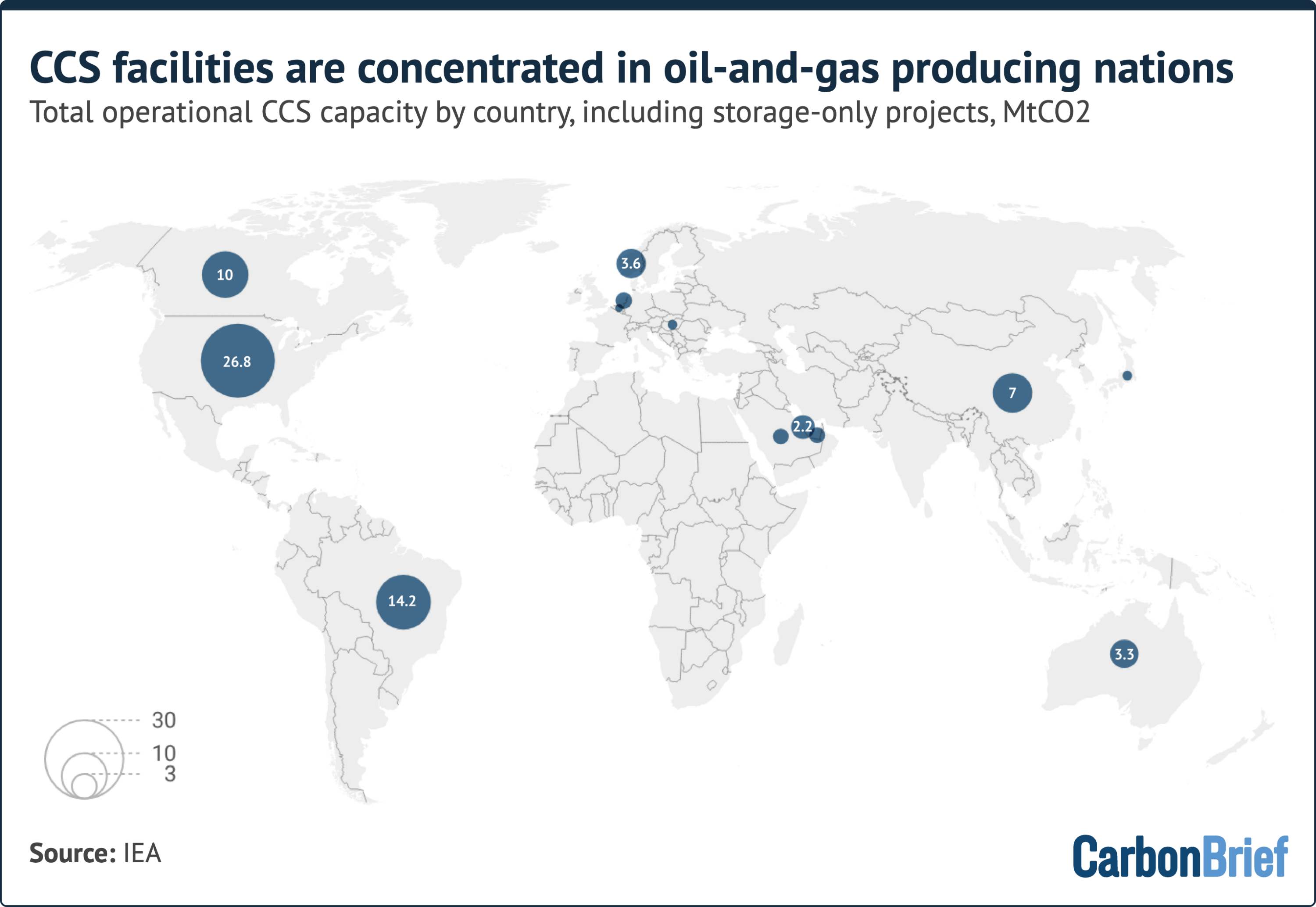
As the map below shows, most CCS capacity is based in the US and Canada, with other major fossil-fuel producers such as Norway, Brazil and the Gulf states also contributing.
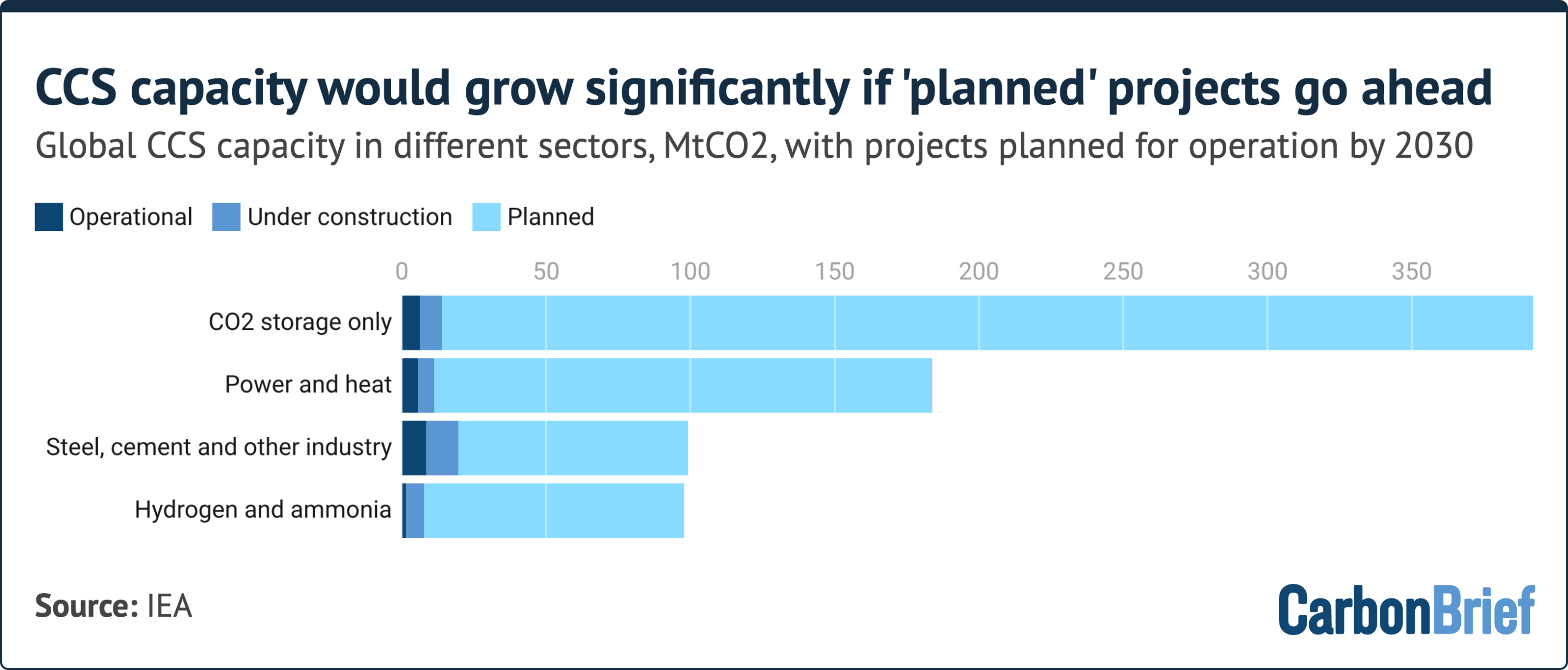
A surge of projects have entered the global CCS pipeline in recent years. According to the IEA, 93.7MtCO2 of capture or storage capacity is under construction as of February 2026 and another 1,279.6MtCO2 is in the “planning” stages.
“Planned” projects include any initiative at early concept, feasibility or engineering study stages and the industry has a long history of projects being cancelled or delayed.
Nevertheless, this pipeline of projects could lead to a large expansion of facilities dedicated to permanent CO2 storage that does not involve extracting more oil.
The planned projects – if they are realised – would also include significant growth in sectors where CCS is virtually non-existent, such as steel, hydrogen and cement production, as shown in the chart below.
What role is CCS expected to play in reaching net-zero?
It will be impossible to stop dangerous climate change unless the world reaches net-zero emissions, according to the IPCC. The amount of global warming – and whether the Paris Agreement temperature target can be met – depends on when net-zero is reached.
Many global pathways that have been set out for achieving net-zero, including a majority of the IPCC-assessed pathways where global warming is limited to 1.5C, rely on the use of CCS at fossil-fuel plants and industrial sites.
“These models have been quite instrumental in bringing CCS back onto the agenda,” Lina Lefstad, an ecological economist at Lund University, tells Carbon Brief.
Influential organisations relying on CCS in their net-zero scenarios range from the International Renewable Energy Agency (IRENA) through to the oil company Shell. The IEA has stated that net-zero would be “virtually impossible” without CCS.
These scenarios often include 10s to 100s of times more CCS capacity being built in the coming decades. The IEA includes 1.7GtCO2 being captured by 2035 in its net-zero scenario – nearly 30 times more than is captured today.
(Some of the much higher numbers in scenarios assessed by the IPCC have been dismissed by experts as implausible, especially given the slow rollout of CCS to date.)
When considering CCS for both emissions cuts and removals, Dr Jennifer Roberts, a researcher at the University of Strathclyde and deputy director at the UK Carbon Capture and Storage Research Centre (UKCCSRC), tells Carbon Brief the situation is clear:
“From an IPCC climate modelling perspective…reaching net-zero without CCS is far more expensive, disruptive and potentially out of reach.”
This does not mean that it would be impossible to reach net-zero without using CCS. However, net-zero scenarios that use little or no CCS rely on dramatic changes elsewhere, such as much lower global energy demand.
Net-zero scenarios often include a crucial role for CCS in “hard-to-abate” sectors, referring to activities that lack available, low-cost options to fully decarbonise. In particular, CCS is widely seen as vital for decarbonising parts of heavy industry.
The IPCC sixth assessment report (AR6) summary for policymakers calls CCS a “critical mitigation option” for some sectors, including cement and chemicals. The technical summary of the AR6 Working Group III report says that “CCS will be required to mitigate remaining CO2” in industrial sectors.
The IEA describes CCS as “virtually the only technology” that can significantly cut cement emissions, which account for around 7% of the global total. (Much of this CO2 comes from chemical processes, meaning it would still be released if the industry was electrified.)
Yet, the understanding of “hard-to-abate” emissions is changing, as alternatives to CCS become cheaper and increasingly available. As a result, CCS has become a less attractive option in some sectors, as well as being seen as less vital in some others.
Carbon Brief analysis shows that the IEA has reduced its outlook for CCS in the power sector by a third, compared to its expectations in 2021, as the chart below shows.
This reflects both slow progress in deploying CCS and rapid cost reductions in renewables, which make running gas or coal power plants less attractive.
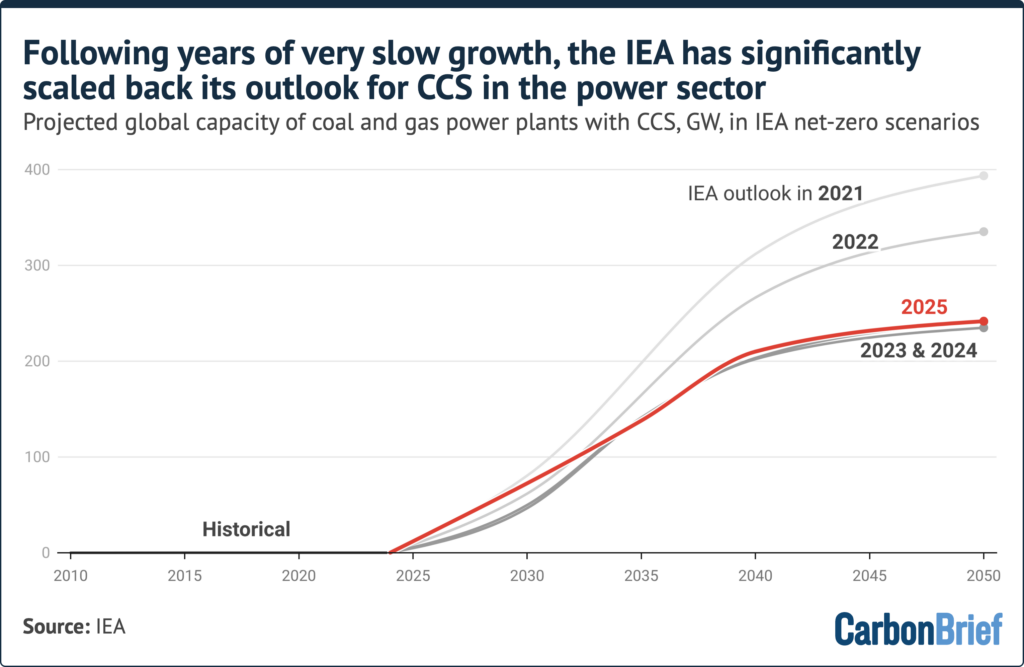
(Even prior to this adjustment, the IEA’s net-zero scenario was already at the lower end of CCS use, compared to those assessed by the IPCC.)
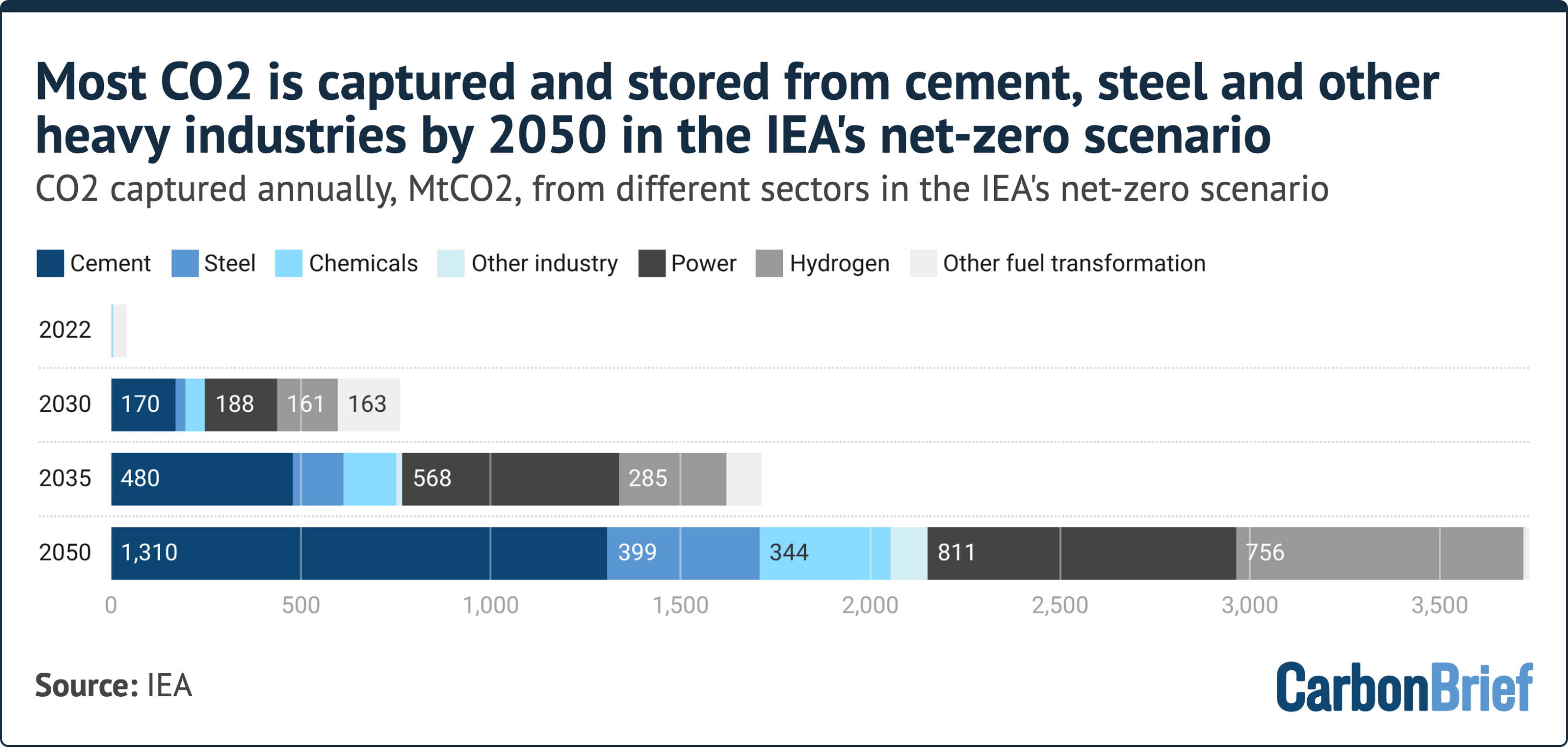
This declining role for CCS in the power sector would mean its use is more concentrated in industry.
Industrial sectors – particularly cement, steel and chemicals – account for 60% of the CO2 captured in 2050 under the IEA’s net-zero scenario, as shown in the figure below. The remaining 40% is roughly split between electricity generation and blue hydrogen production.
Climate NGOs Bellona and E3G have stressed that with “limited public funding, infrastructure constraints and political attention, prioritisation is essential” for CCS. Their “CCS ladder” places CCS in cement and lime production at the top – with the highest “climate value” – while power CCS has “low and decreasing value”.
Despite this, the focus of the CCS sector so far has not been in heavy industry, which represents less than 10% of announced capacity.
Another key consideration is the role governments are assigning to CCS in their national net-zero strategies.
One study found that 33 of the 67 long-term net-zero strategies submitted to the UN by governments, with a further 10 indicating some potential use.
It concluded that high-income countries that produce a lot of oil and gas, such as Canada and Norway, showed the “firmest commitment” to capturing and storing CO2.
Nations have agreed at UN climate talks to “phase down” coal power that is “unabated”. This is generally understood to mean coal power without CCS – leaving space to develop “abated” coal plants. This could allow China, for example, to continue using its sizable coal fleet with CCS to reduce emissions.
Why is CCS controversial?
Despite its role in many net-zero scenarios, CCS remains a highly contested technology.
It has long been framed in some circles as a “false solution” to climate change, that is backed and lobbied for by fossil-fuel companies to “delay” the clean-energy transition.
Critics argue that CCS is expensive – especially compared to increasingly cheap wind and solar power – in part because it significantly increases the energy requirements of a facility.
A University of Oxford working paper published in 2023 concluded that a “low-CCS” pathway to net-zero emissions would cost around $1tn less a year compared to a “high-CCS” pathway. The researchers stated that “no evidence is found for technological learning or associated cost reductions” in the development of CCS to date.
(They added that CCS is “still likely necessary” for cement and chemical production.)
Pointing to the limited progress in scaling up the technology so far, some question whether CCS can play the role envisaged in many net-zero scenarios.
Responding to the IPCC’s most recent report, for example, the Centre for International Environmental Law stated that “abated fossil fuels only exist in models”.
Proponents of CCS contest the notion that CCS is “untested” or “unreliable”, pointing to some projects that have been operating for many years. Moreover, most of the component parts that make up a working CCS project are in wide use for other purposes.
Yet, another key criticism levelled at CCS projects is that they simply do not capture enough CO2, diminishing their role as a climate solution.
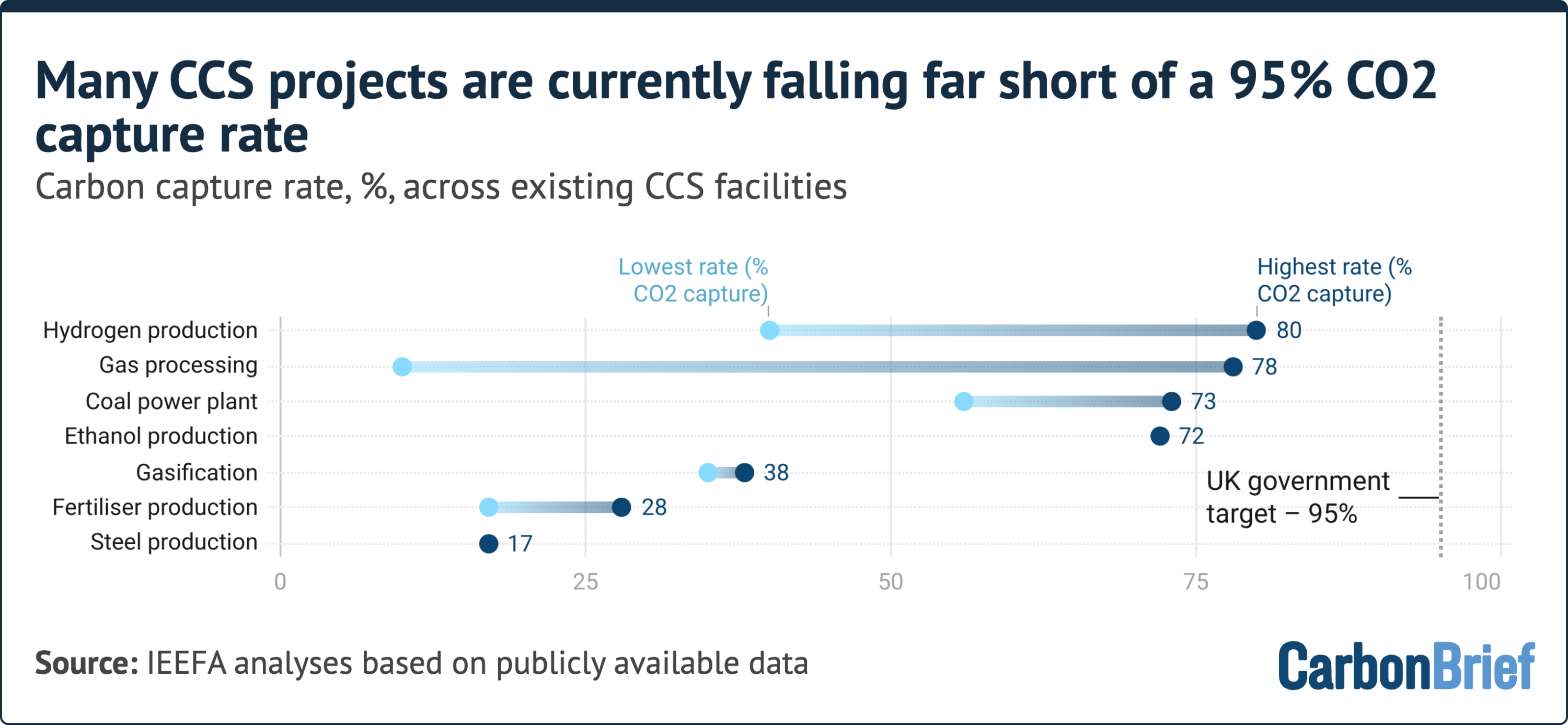
There is a widespread view that CCS projects should aim to capture at least 90% of the CO2 being emitted. UK guidelines are among those targeting a higher capture rate of 95%.
The Institute for Energy Economics and Financial Analysis (IEEFA) has assessed the performance of existing projects. Its 2023 analysis is shown in the chart below.
The thinktank concluded that, in reality, most existing CCS projects are far below such capture rates, meaning they continue to emit significant amounts of CO2. (Capture is the most expensive part of the CCS process.)
Once the CO2 is captured, it must be stored. The IPCC says there is ample global geological storage available for CO2. It also says that, as long as sites are “appropriately selected and managed”, CO2 “can be permanently isolated from the atmosphere”.
Nevertheless, critics have noted that even relatively low rates of leakage along the transportation and storage chain could have a big climate impact when deployed at scale.
The continued use of gas in gas-CCS or blue hydrogen projects also brings risks of upstream emissions more broadly, such as methane leaks. (See: What are the UK’s plans for scaling up CCS?)
Considering these factors, in 2023 Climate Analytics assessed a “high CCS pathway” from the IPCC database. It concluded that if CO2 was captured at rates seen in existing facilities – around 50% – and upstream emissions remain high, CCS use could see an extra 86GtCO2e emitted by 2050.
The report found that even the IEA’s net-zero scenario, which relies on “more limited fossil CCS use”, could result in an additional 16GtCO2e due to “underperforming fossil CCS”.
All of this calls into question many uses of CCS, according to Andrew Reid, energy finance analyst at IEEFA: “Is there really any point in trying to decarbonise fossil fuels, which comes with significant technical, timing and additional cost risk?” Reid tells Carbon Brief:
“As for cement and chemicals, again, there are alternatives, but these are nascent and expensive. CCS may be a solution here and if investment is going to be made in any area, it most likely should be these.”
On the other hand, CCS advocates argue that gas, for example, is likely to be an important, “dispatchable” part of many electricity systems as nations transition to clean energy.
Prof Stuart Haszeldine, a CCS researcher at the University of Edinburgh, explains this position to Carbon Brief:
“If we’re going to burn gas, then we should be fitting CCS on that…Otherwise we’re just going to say it’s OK for us to burn lots of gas and carry on emitting.”
There is also a line of argument referred to – sometimes pejoratively – as “techno-optimism”, which often stresses CCS as a core climate solution. This was exemplified by a controversial report on climate action in 2025 by the Tony Blair Institute for Global Change (TBI), in which the former UK prime minister wrote that CCS should be “at the centre of the battle”.
This diverges from the IPCC’s conclusion that, while CCS will likely have a role in achieving net-zero emissions, its contribution will be dwarfed by that of renewables.
CCS also attracts criticism due to its connection to the fossil-fuel industry. Dr Jen Roberts at the UKCCSRC tells Carbon Brief that she agrees these links make for complicated messaging:
“CCS is critical for net-zero, but is intrinsically tied with an industry sector that is climate polluting and historically anti-climate lobbying.”
Roberts says careful policymaking, including the development of business models and standards, can support CCS in hard-to-abate sectors where it is most needed.
Some experts suggest that governments should require companies to capture and store their emissions under the “polluter pays” principle.
Roberts also notes that fossil-fuel companies have the experience and the workforce needed to scale up CCS. “Oil and gas companies can evidence a track record in multi-million or billion-dollar subsurface engineering projects,” Roberts adds.
Despite the fossil-fuel industry’s apparent support for CCS, one 2021 study co-authored by Haszeldine noted that they had, in fact, invested relatively small amounts in the technology, compared to renewables and nature-based solutions.
Lina Lefstad at Lund University questions whether the fossil-fuel industry stands to benefit financially through the deployment of CCS as much as some critics imply:
“People seem really worried that the fossil-fuel industry is going to come out the winner again, but if that was the case I think we would have large-scale CCS by now.”
What are the UK’s plans for scaling up CCS?
The UK government has committed “up to” £21.7bn of funding over 25 years to support the nation’s first five CCS projects and to make the nation an “early leader” in the sector.
This package, supported by both the former Conservative and current Labour governments, is intended to help create “clusters” of connected facilities across industrial areas of the UK.
Some have suggested that this represents a large pot of government spending, which could be raided to support more pressing priorities. Indeed, media coverage often points to CCS funding as a potential target for government cuts, or as a way to boost, say, military spending.
This is in spite of the fact that three quarters of the funding is expected to come from levies on consumers, rather than government budgets.
The first two CCS clusters, which are currently set to be deployed in the late-2020s, are the East Coast Cluster in north-east England and HyNet in north-west England and north Wales. The second two, scheduled for around 2030, are Acorn in north-east Scotland and Viking in the Humber.
The projects are expected to include blue-hydrogen production, gas power with CCS and industrial uses. The CO2 captured would be pumped into offshore saline aquifers and depleted gas fields.
Former UK energy secretary Ed Miliband has stated that CCS will “unlock” hard-to-abate sectors and play an “important role” in achieving clean power by 2030.
This position is supported by the UK government’s climate advisors at the Climate Change Committee (CCC), who have consistently stressed that CCS is “essential” for net-zero.
In the CCC’s most recent net-zero pathway, released as part of its seventh carbon budget advice, CCS contributes 2% of emissions cuts in 2030 and 8% in 2050, as shown in the chart below. (If CO2 removals using BECCS are included, this increases to 15% in 2050.)
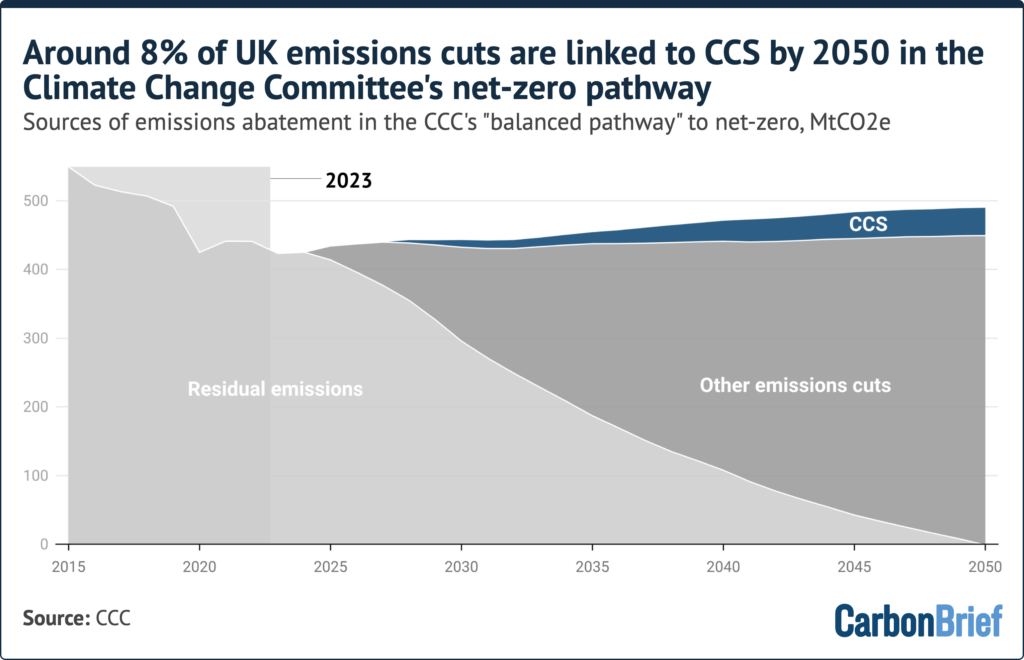
The CCC maintains that it “cannot see a route to net-zero that does not include CCS”. Nevertheless, the committee has downgraded its expectations for CCS in recent years.
Between the CCC’s sixth and seventh carbon budget advice, its recommendations for power and industry CCS capacity dropped from 46MtCO2 to 41MtCO2.
Dr Jamie Tarlton, the committee’s CCS lead, addressed this at a conference in March 2025, stating that it was “partly because we see more opportunities for decarbonising the other sectors and reducing those residual emissions than we saw five years ago”.
More recently, the UK government also scaled back its expectations for industrial CCS in its latest carbon budget delivery plan for 2035, bringing it more in line with the CCC’s net-zero pathway. It still describes CCS as “part of the most cost-effective route to net-zero”.
The UK’s CCS plans have drawn criticism. A September 2024 letter to Miliband signed by 22 scientists and activists expressed concern about “locking the UK into a fossil-fuel based pathway”.
They note that the gas-CCS power plants and blue hydrogen facilities initially backed by the government would leave the UK reliant on gas imports, as North Sea production declines. This could be expensive and result in “upstream” emissions due to methane leaks.
(At the end of 2025, BP withdrew its involvement in one of the blue hydrogen facilities at the Teesside site. A data centre is planned for the site instead.)
Net Zero Teesside, a gas-CCS power plant in the East Coast Cluster run by BP and Equinor, has been unsuccessfully challenged in court over its emissions savings. The challenge was based on the idea that potential upstream emissions could significantly exceed any emissions cuts from CCS use.
According to a report by Carbon Tracker, the lifecycle emissions of Net Zero Teesside gas-CCS power plant would depend heavily on where it sources its fuel.
The project could cut emissions by around three-quarters, relative to an unabated gas plant, says the report. But it adds that if the plant relies on imported gas with high upstream emissions, then it might only cut emissions by a quarter.
(Most of the upstream emissions from imported gas would be released overseas, meaning they would not be counted in the UK’s official emissions inventory.)
Besides driving “gas dependence” in the UK, the government’s approach has drawn criticism for failing to ensure that CCS is prioritised in the industries that are hardest to decarbonise.
A report by the Public Accounts Committee in early 2025 took aim at the government’s cluster-based approach. It said this “does not ensure that financial support for CCUS is directed at the sectors which will need it most” – highlighting cement production.
(Of the CO2 captured in the CCC’s net-zero pathway in 2050, around 40% is in the industrial and waste sectors, while the remaining 60% is from gas power plants and the production of fuels such as hydrogen.)
Dr Andrew Boswell, the energy analyst who challenged Net Zero Teesside in court, says he is “more nuanced” when it comes to applications of CCS that do not involve gas. “There may be a case for cement, lime and waste…However, the case is unproven,” he tells Carbon Brief.
The Public Accounts Committee report also criticised the “high-risk” approach of using public funds for CCS projects, as well as slow progress in developing the technology.
Enrique Cornejo, head of energy policy at fossil-fuel trade body Offshore Energies UK, tells Carbon Brief that the UK needs to maintain momentum and deploy CCS in order to “achieve economies of scale” and to reduce the cost of the technology more broadly:
“It is indeed necessary to streamline the cluster sequencing process to ensure that emitters in sectors such as cement have a clear route to the CCS market.”
related

Q&A: What do China’s provincial five-year plans say about climate and energy?
Analysis: China’s CO2 climbs 2% in early 2026 due to ‘wasted’ wind and solar

Q&A: What does India’s new Paris Agreement pledge mean for climate action?
Analysis: India’s CO2 emissions in 2025 grew at slowest rate in two decades
The post Q&A: Does the world need ‘carbon capture and storage’ to reach net-zero? appeared first on Carbon Brief.
Source: Q&A: Does the world need ‘carbon capture and storage’ to reach net-zero?