AI Insight
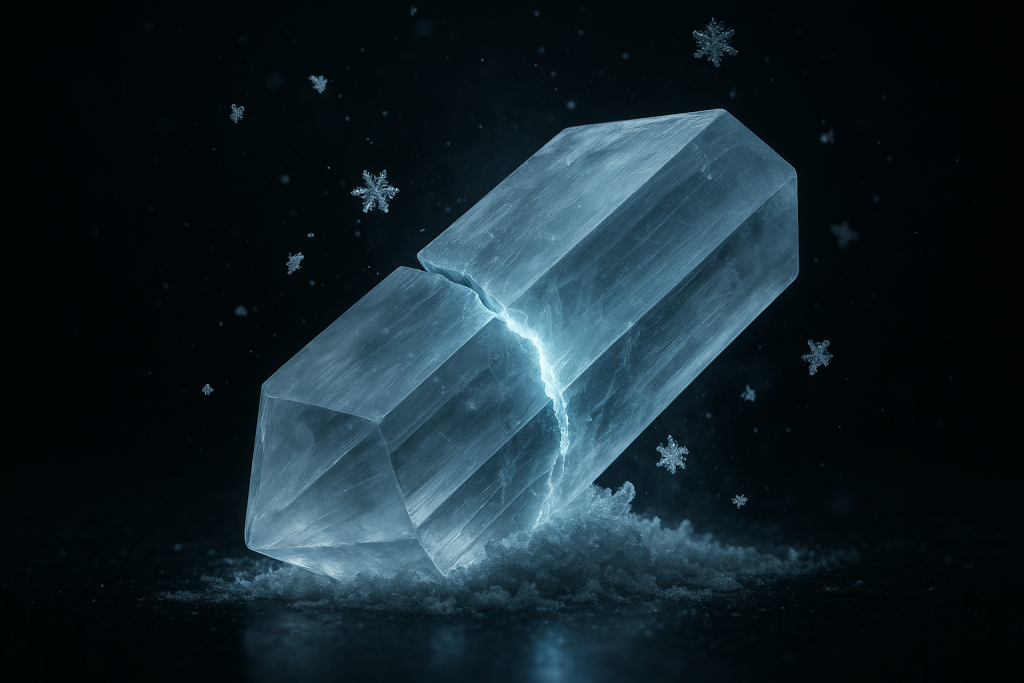
Researchers have developed an organic molecular crystal that can autonomously self-heal at cryogenic temperatures, specifically at 77 K (liquid nitrogen temperature). This is achieved through strong dipole-dipole interactions between aligned molecular layers, which provide sufficient driving force for recovery even when conventional molecular diffusion is severely restricted by cold conditions. The finding challenges the prevailing assumption that self-healing in molecular systems requires thermal energy to enable atomic or molecular mobility.
Why it matters
Self-healing materials that function at cryogenic temperatures could have significant applications in aerospace, quantum computing hardware, and space exploration, where components are routinely exposed to extreme cold and repair or replacement is difficult or impossible. This work also opens new research directions for designing materials that exploit non-diffusive interaction mechanisms rather than relying on thermal activation.
Understand the Science
Nature Materials, Published online: 05 December 2025; doi:10.1038/s41563-025-02411-7
Cryogenic conditions limit molecular diffusion, inhibiting self-healing in most molecular systems. Here the authors present an organic molecular crystal capable of autonomous recovery at 77 K due to strong dipole–dipole interactions between aligned molecular layers.