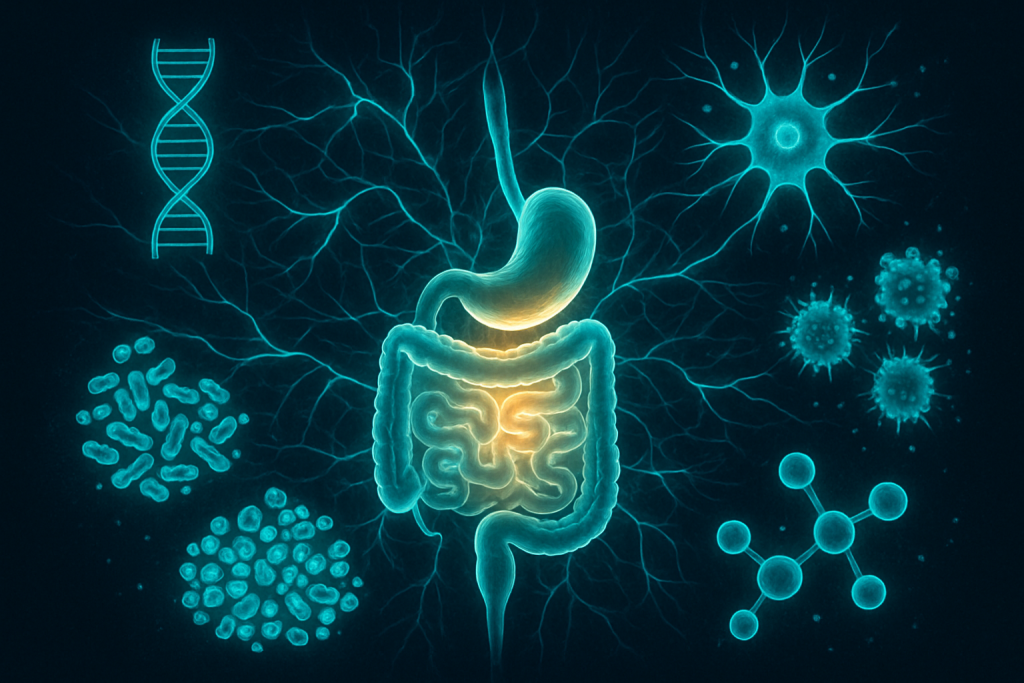
Image generated by AI
AI Insight
The microbiome—the collection of bacteria, viruses, and fungi living in and on the human body—represents a complex ecosystem that requires integrated study across multiple scientific disciplines including molecular biology, biochemistry, physics, immunology, and neuroscience. Research shows that microbial metabolites produced by gut bacteria can cross into the bloodstream and influence diverse physiological processes, from immune function to neural activity through the gut-brain axis. Understanding these intricate microbial communities demands collaboration among scientists using DNA sequencing, chemical analysis, computational modeling, and immunological research.
Why it matters
Microbiome research is revealing that diseases previously attributed solely to genetics or psychology—including obesity, inflammatory bowel disease, and mental health conditions—have significant microbial components, opening new therapeutic approaches. This interdisciplinary framework is reshaping personalized medicine by requiring physicians to consider patients' microbiome profiles as complex ecosystems rather than simply targeting individual pathogens.
Understand the Science
Your body hosts trillions of microorganisms that influence everything from your digestion to your mood. The microbiome—the collection of bacteria, viruses, and fungi living within us—has emerged as one of science’s most fascinating bridges, demanding insights from biology, chemistry, physics, medicine, and even psychology. Understanding these microbial communities requires scientists to abandon traditional disciplinary boundaries and collaborate in unprecedented ways.
Across the Sciences
Microbiome research exemplifies true interdisciplinary science. Molecular biologists sequence DNA to identify which organisms live in our gut, while biochemists study the metabolites these microbes produce—chemical compounds that directly affect our health. Physicists contribute computational models to predict how these complex microbial ecosystems behave, while immunologists investigate how our immune system distinguishes helpful bacteria from harmful pathogens. Even neuroscientists now study the “gut-brain axis,” exploring how microbial byproducts influence neural function and potentially affect conditions like depression and autism. This convergence reveals that the microbiome cannot be understood through any single lens; it requires a genuinely integrated approach where each discipline adds essential perspective.
Why This Matters for the Future
The microbiome’s cross-disciplinary nature has profound implications for medicine and human health. Diseases once thought purely genetic or psychological—obesity, inflammatory bowel disease, mental illness—now appear deeply connected to microbial composition, opening entirely new treatment avenues. Personalized medicine increasingly relies on understanding individual microbiome profiles, requiring doctors to think like ecologists managing complex systems rather than simply eliminating pathogens. As climate change and antimicrobial resistance reshape microbial communities globally, we’ll need integrated expertise to predict consequences and develop solutions. The microbiome also demonstrates how breaking down scientific silos can accelerate discovery, a lesson applicable to other complex health challenges like cancer and aging.
Key Takeaways
- The microbiome bridges molecular biology, biochemistry, physics, immunology, and neuroscience—no single discipline can fully explain it.
- Understanding microbial ecosystems within our bodies requires combining DNA sequencing, chemical analysis, computational modeling, and immune research.
- Microbiome science is reshaping medicine by revealing how microbial communities influence diseases previously attributed to genetics or psychology alone.
Explore TED Talks on Health and Medicine:
TED content is used under CC BY-NC-ND 4.0. © TED Conferences, LLC.
Frequently Asked Questions
How do microbiome metabolites affect our health at the molecular level?
Metabolites are chemical compounds produced by gut microbes that can cross the intestinal barrier and enter the bloodstream, where they influence various physiological processes including immune regulation, energy metabolism, and neurotransmitter production. These microbial byproducts can either promote health or contribute to disease depending on which microorganisms are present and what compounds they produce.
What is the gut-brain axis and how does it work scientifically?
The gut-brain axis is a bidirectional communication system between the gastrointestinal tract and the central nervous system, mediated by microbial metabolites, immune signals, and neural pathways. Specific bacterial metabolites, such as short-chain fatty acids, can influence neurotransmitter levels and neuroinflammation, potentially affecting conditions like depression and autism spectrum disorder.
Why is computational modeling necessary for understanding microbiome ecosystems?
The human microbiome contains trillions of microorganisms with complex interactions that are impossible to predict through observation alone, making mathematical and computational models essential to forecast how changes in one microbial population affect others and overall ecosystem stability. Physicists use these models to simulate scenarios and identify which microbial configurations promote health or disease.
How does the immune system distinguish between beneficial and harmful bacteria in the microbiome?
The immune system uses pattern recognition receptors to identify bacterial surface molecules and metabolites, distinguishing pathogenic bacteria from commensal organisms through both innate immune responses and adaptive immune memory developed over time. Beneficial bacteria often produce anti-inflammatory metabolites and compete with pathogens for resources, reinforcing immune tolerance toward them.