
AI Insight
NASA's Curiosity rover (Sol 4893-4899) successfully prepared a new drill target on Mars called "Campo Marte," a block within the layered sulfate unit above the boxwork structures, after an earlier drilling attempt on the "Atacama" block encountered complications. Pre-drilling analysis was conducted using ChemCam LIBS, APXS, and MAHLI instruments to characterize the block's geochemical composition, while nearby features including veins and nodules were also documented. Simultaneously, Curiosity supported the Psyche spacecraft's Mars flyby — a gravitational assist maneuver en route to asteroid 16 Psyche — by conducting coordinated atmospheric observations including a Navcam zenith cloud movie and a Mastcam solar opacity measurement to assist in Psyche's instrument calibration and validation.
Why it matters
Understanding the geochemistry of Mars' layered sulfate units provides critical insights into the planet's ancient aqueous history and habitability potential. The coordinated multi-mission observation effort also demonstrates the scientific value of using existing planetary assets to validate instruments on spacecraft bound for less-explored destinations like metallic asteroids.
Understand the Science
3 min read
Curiosity Blog, Sols 4893-4899: Drilling at Campo Marte and a Visit From the Psyche Spacecraft
Written by Lucy Lim, Planetary Scientist at NASA Goddard Space Flight Center
Earth planning date: Friday, May 15, 2026
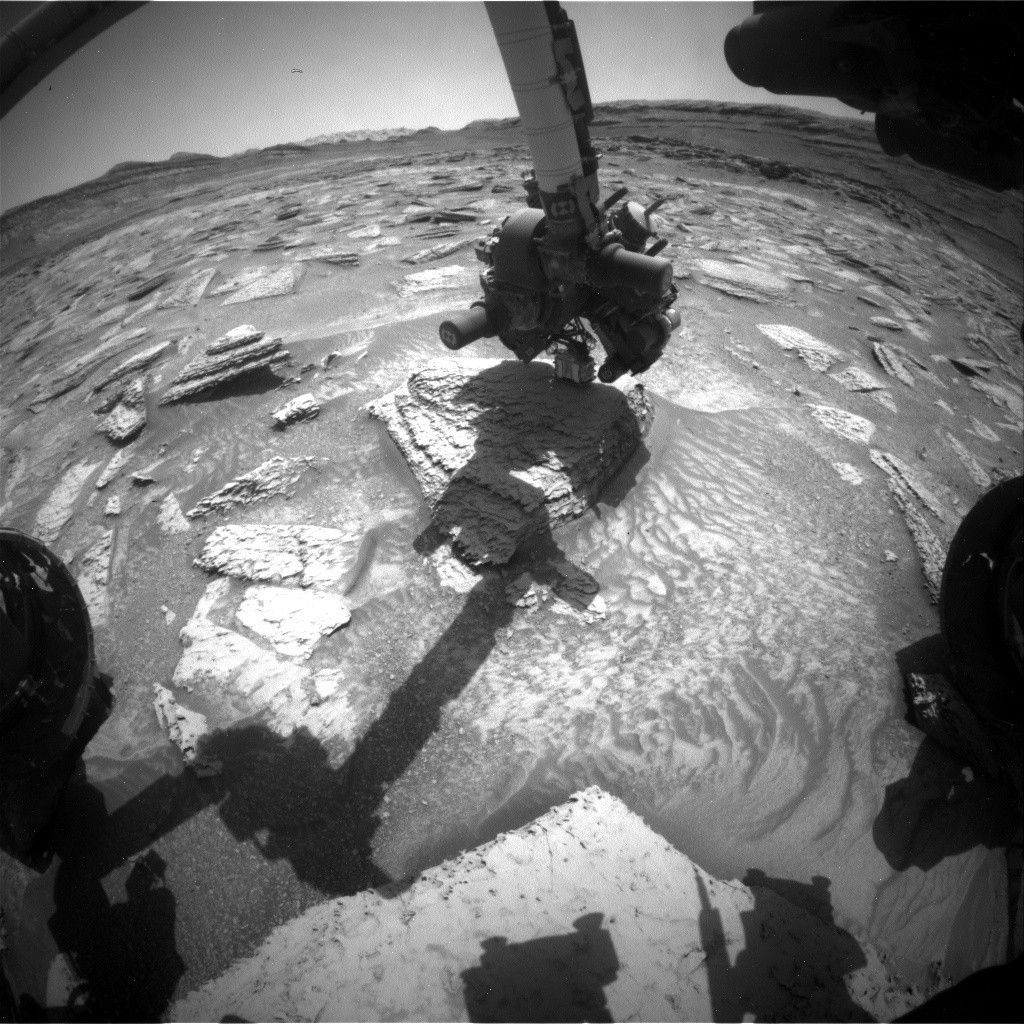
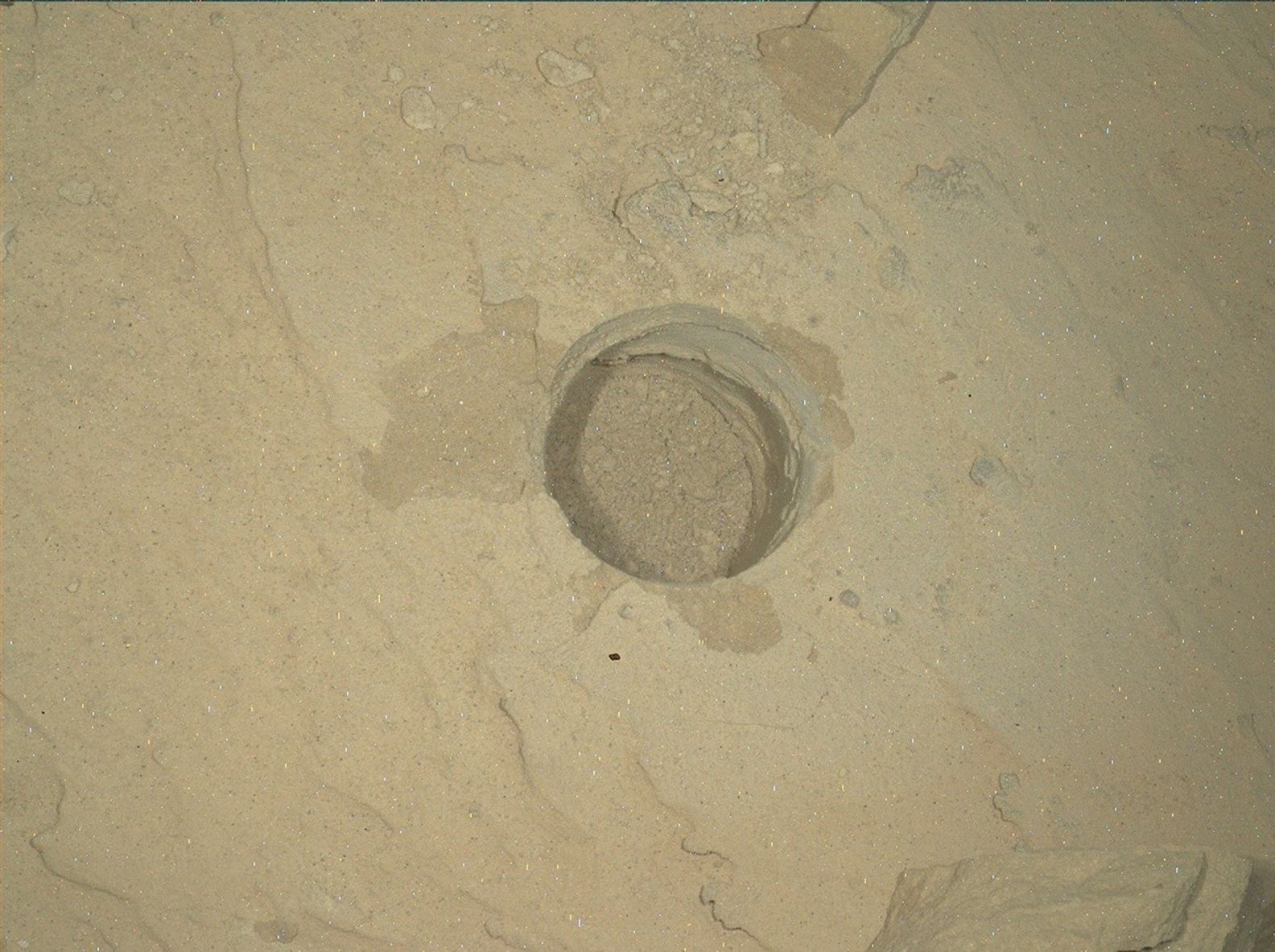
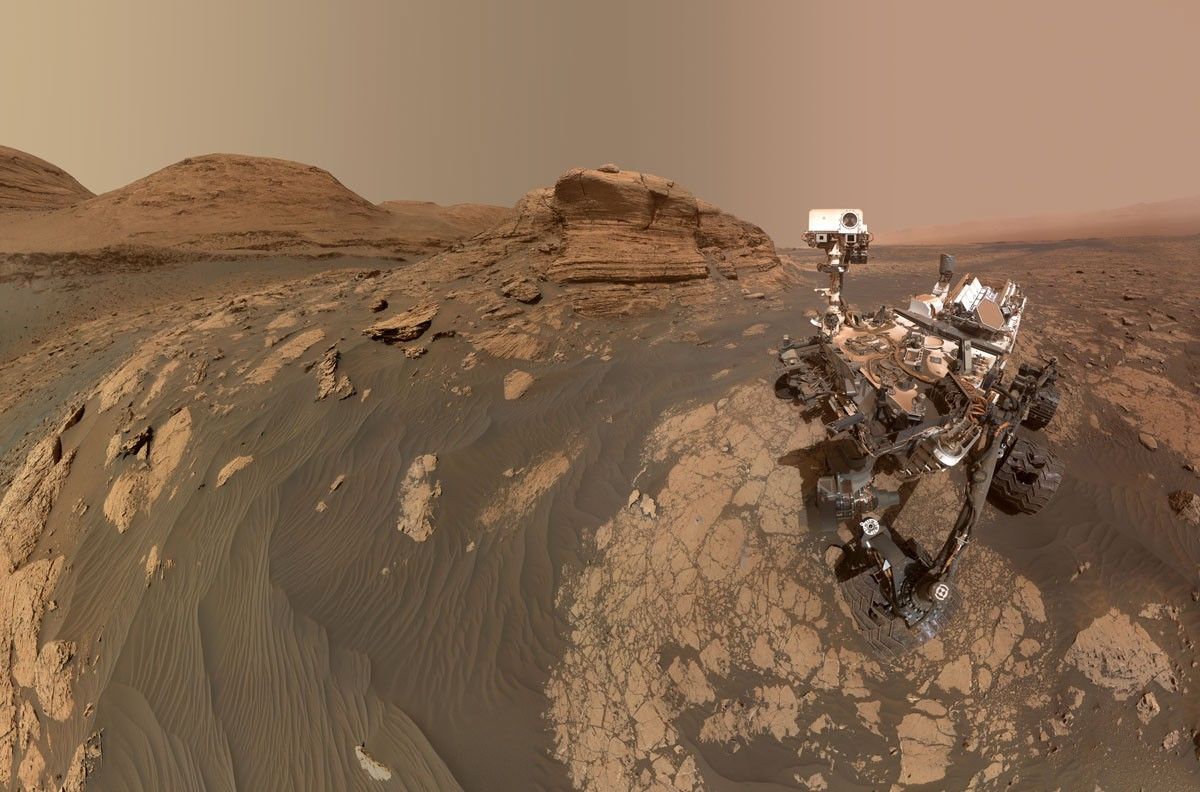
After freeing the rover’s arm from the “Atacama” block, we are ready to drill again! The new drill target will represent the same geologic stratum as Atacama, which is the layered sulfate unit above the boxwork structures. We’ve named the new block “Campo Marte” after a natural red sandstone feature in Bolivia, following the theme of choosing target names in this Martian quadrangle from locations near the Uyuni region in South America. The name can be literally translated from Spanish as “Field of Mars” or “Mars Field,” appropriate for a target on Mars. In preparation for drilling, we measured the composition of Campo Marte with the ChemCam LIBS and the APXS as well as obtaining close-up imaging with MAHLI. Additional LIBS rasters provided geochemical data on nearby blocks, including a couple of vein and nodule-like features. As we’ve seen in several rover stops in this unit, the “Paso Malo” block and several others are covered in a prominent polygonal texture.
We’ve also imaged the Campo Marte block from several angles and determined that it’s substantially thicker than the Atacama block, so we’re hoping that its greater mass will keep it on the ground after drilling so that we can withdraw the drill bit normally this time. The team did get some interesting data on the volume and density of the Atacama block from our little adventure but we don’t feel the need to repeat that particular experiment.
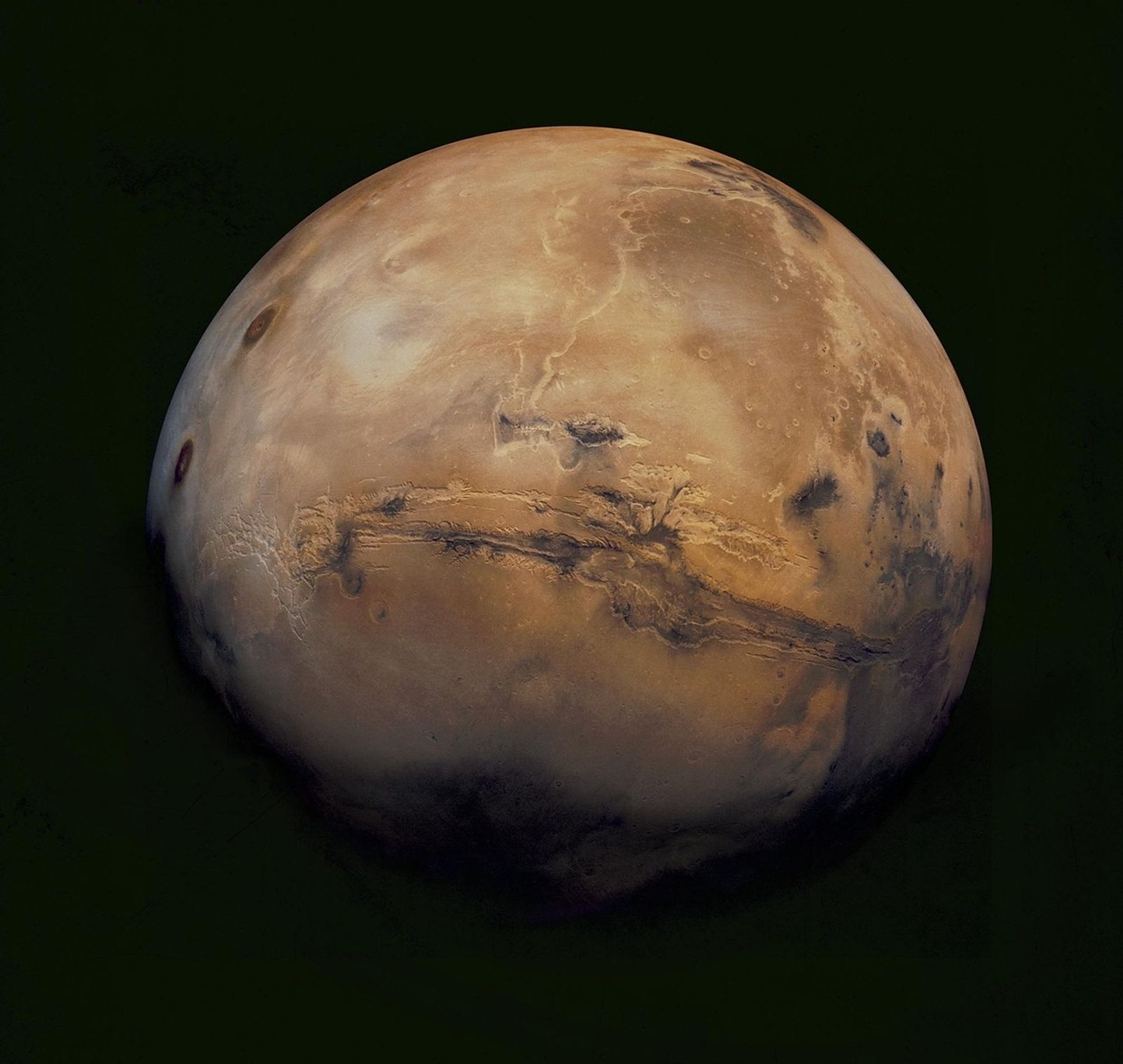
In the meantime, we had a chance to support another solar system exploration mission as the Psyche spacecraft flew close by Mars in order to pick up a gravitational boost on its way to the main asteroid belt.
The Psyche spacecraft’s eventual destination is the asteroid 16 Psyche, one of the largest members of an unusual spectral category of asteroids that hasn’t yet been visited by a spacecraft. Although 16 Psyche is expected to be quite different from Mars as a science target (for example, it is too small to maintain a Mars-like atmosphere) this flyby was still a valuable opportunity to exercise the spacecraft’s instruments and data analysis pipelines, and validate their calibration. Because of this the Curiosity team planned an extra set of atmospheric observations timed to coordinate with the Psyche flyby: a zenith movie with Navcam to document clouds and a Mastcam solar observation to measure atmospheric opacity. The Mastcam was also supported by a fresh set of calibration data. Together with other coordinated observations from the Mars orbiters and Perseverance rover, these are intended to contribute to the Psyche instrument validation effort.
Share
Details
Related Terms
Explore More


Source: Curiosity Blog, Sols 4893-4899: Drilling at Campo Marte and a Visit From the Psyche Spacecraft