AI Insight
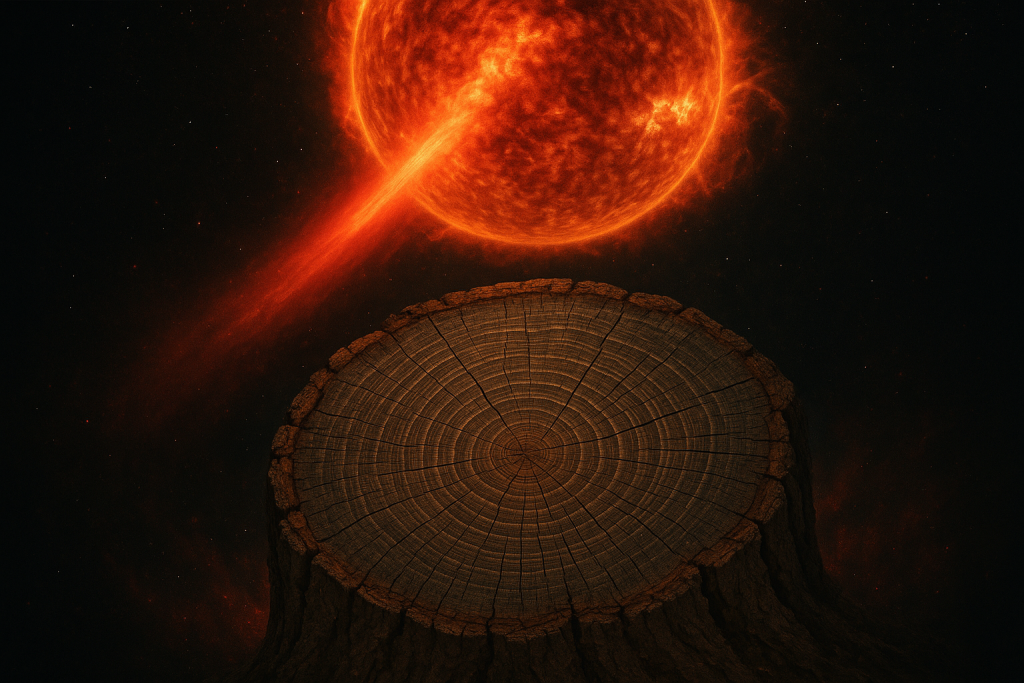
Japanese researchers identified a significant solar radiation event around 1200 CE by cross-referencing historical accounts of unusual red auroras with elevated carbon-14 concentrations found in ancient tree ring samples. The spike in carbon-14, a radioactive isotope produced when high-energy solar particles interact with Earth's atmosphere, serves as a chemical fingerprint of intense solar activity. The study also indicates that the Sun exhibited unusually short solar cycles during this period, suggesting heightened solar activity compared to modern baselines.
Why it matters
Understanding the frequency and intensity of historical extreme solar events is critical for assessing the risk such storms pose to modern infrastructure, including satellites, power grids, and communication systems. Establishing a more complete record of past solar extremes helps scientists refine models used to predict and prepare for future high-energy solar events.
Understand the Science
Researchers in Japan traced a hidden medieval solar storm using ancient tree rings and centuries-old sky observations. The team linked reports of eerie red auroras with spikes of carbon-14 trapped in buried wood, revealing a powerful solar radiation event around 1200 CE. The findings suggest the Sun was far more active at the time, with unusually short solar cycles.
Source: Deadly “red sky” solar storm from 800 years ago discovered in ancient trees