AI Insight
NASA's Astrobee program consists of cube-shaped, free-flying robotic assistants aboard the International Space Station that help astronauts with daily tasks and technology testing in microgravity. Three robots named Bumble, Honey, and Queen have been operating on the station since 2019, autonomously navigating the spacecraft to assist crew members and provide observation capabilities for mission control on Earth. The toaster-sized robots represent an ongoing effort to integrate autonomous robotic assistance into long-duration space missions.
Why it matters
The success of compact, autonomous robots like Astrobee demonstrates the viability of robotic assistants for future space exploration missions, potentially including lunar bases and deep space travel. This technology could reduce astronaut workload and enable more efficient operations in microgravity environments where human mobility is limited.
Understand the Science
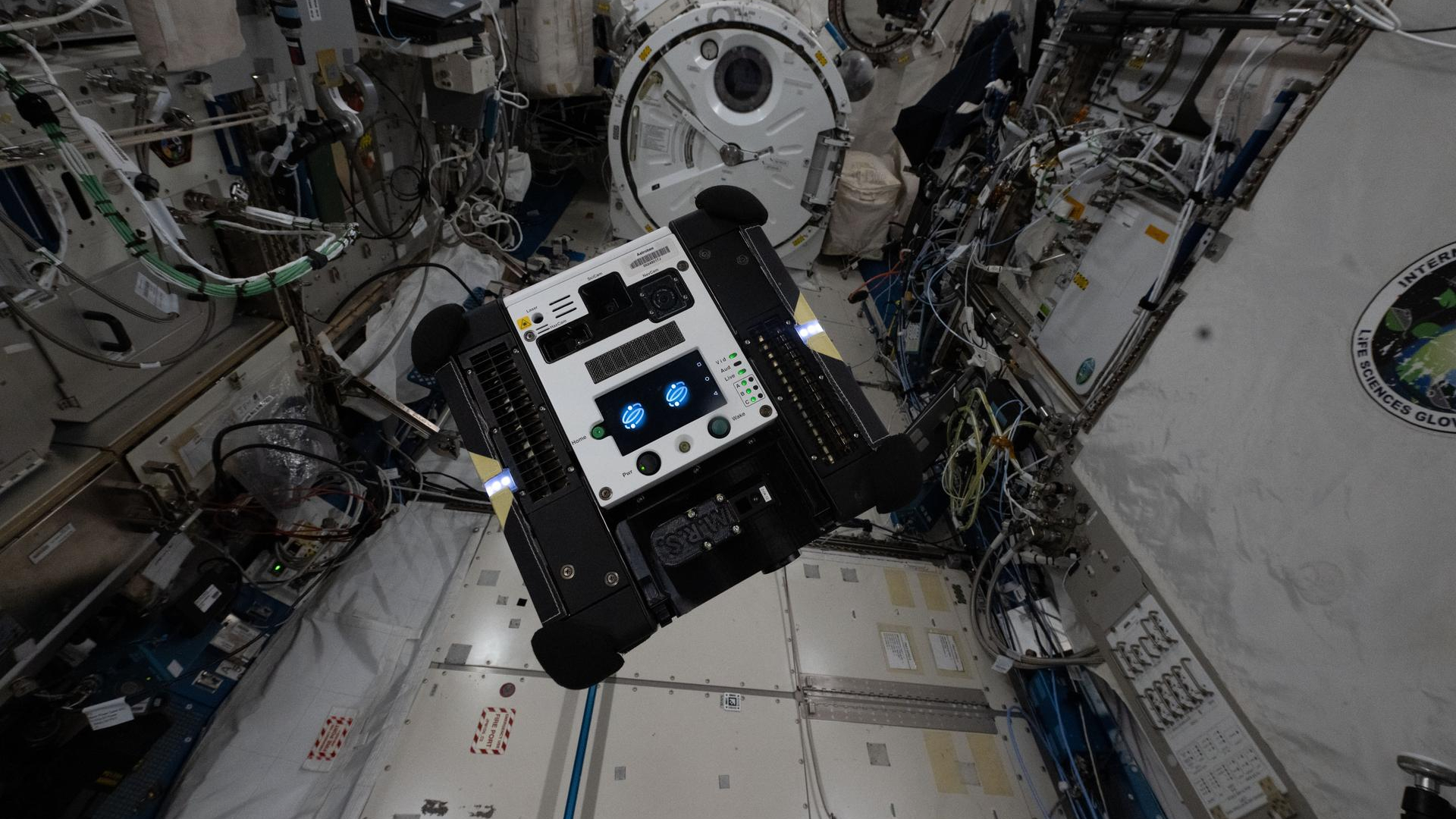
A tiny robot cube is zipping around the International Space Station, trying to help astronauts with the endless challenging tasks onboard.
What is it?
Reminiscent of Rocky rolling around the lab helping out Dr. Ryland Grace in Project Hail Mary, the Astrobee robot is a helpful assistant for astronauts aboard the space station.
A metal cube about the size of a toaster, the Astrobees are free-flying robotic assistants that NASA developed to help out astronauts. The first two Astrobee robots (named Bumble and Honey) were sent to the station in 2019. The third Astrobee robot, named Queen, joined later that year, and 7 years later, the program is still going strong.
So what can a free-floating cube help with? The robots are designed to assist the astronauts onboard with testing new technologies in microgravity and helping mission team members back on Earth to better observe inside the station. The little robot cubes can even help astronauts with everyday chores in space.
In this image, snapped by NASA astronaut and Crew-13 commander Jessica Watkins, we can see one of the Astrobee robots helping out in the station’s Kibo laboratory.
Why is it incredible?
The idea of a robot assistant helping out with chores and technology development aboard an orbiting space laboratory sounds positively science fiction.
While Astrobee is certainly not the first robot in space or aboard the space station, its compact shape and ability to fly autonomously gives it a unique quality. It really looks like a companion aboard the space station.
While the robotic space helpers of today might be cute little cubes, the success of the Astrobee program begs the question of how robots in space might continue to evolve. Will astronauts on the moon have robotic companions autonomously exploring and helping out? What will they look like?
Source: Robot cube explores the International Space Station | Space photo of the day for Nov. 3, 2026