AI Insight
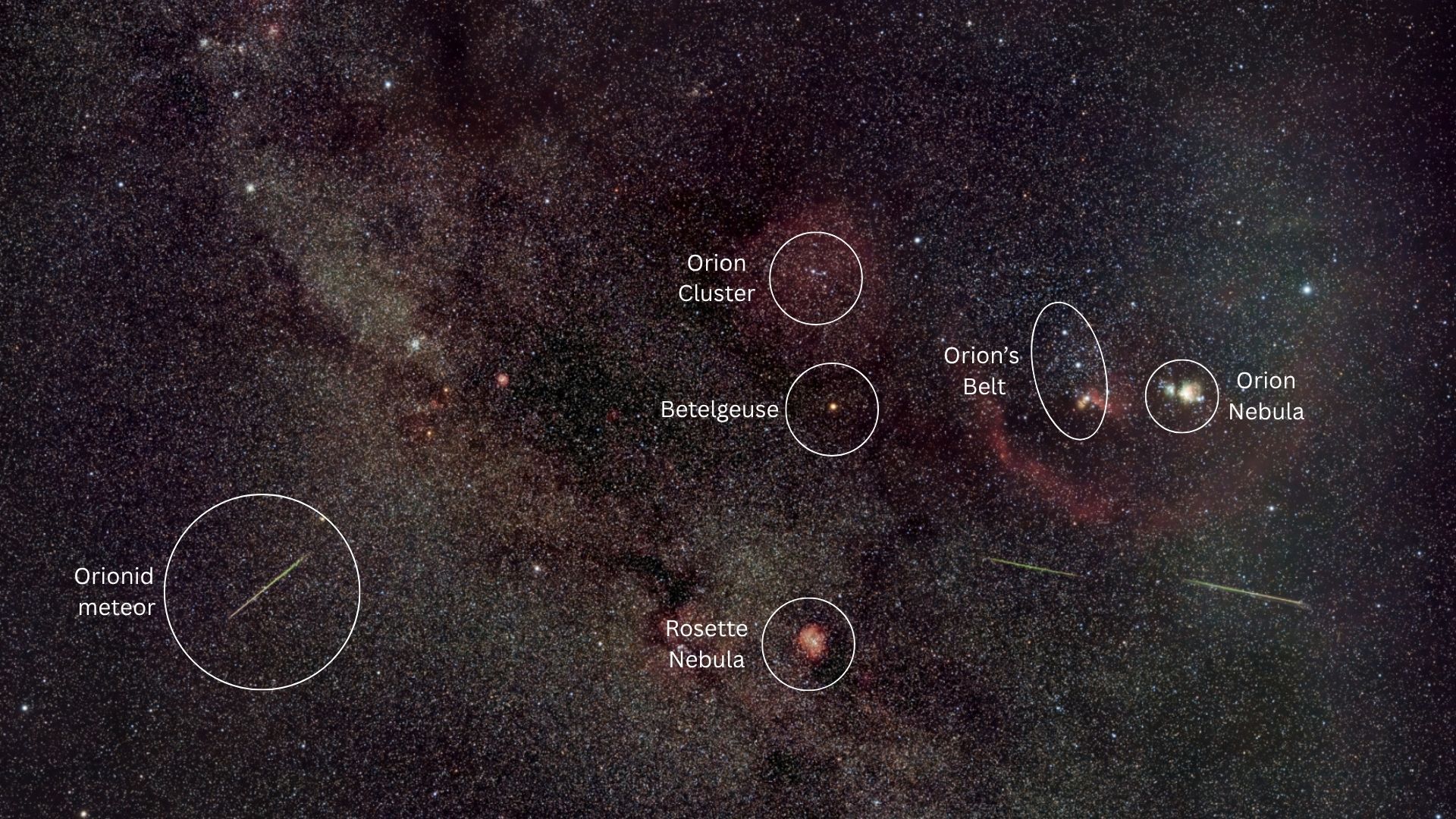
Astrophotographer Tim McCollum captured a composite image of three Orionid meteors streaking across the night sky on October 21 near Toccoa, Georgia. The Orionid meteor shower, which peaks in late October and remains active until November 7, consists of debris particles from Comet 1P/Halley burning up in Earth's atmosphere. The photograph also features prominent celestial objects including the Orion Nebula, Rosette Nebula, Betelgeuse, and Orion's Belt, all captured using multiple 30-second exposures combined with specialized astrophotography equipment and software.
Why it matters
This demonstrates advanced techniques for capturing transient astronomical events and showcases the visual spectacle of annual meteor showers. The image serves as both an educational tool for understanding meteor shower radiant points and an example of how amateur astrophotographers can document celestial phenomena using accessible camera technology and processing methods.
Understand the Science
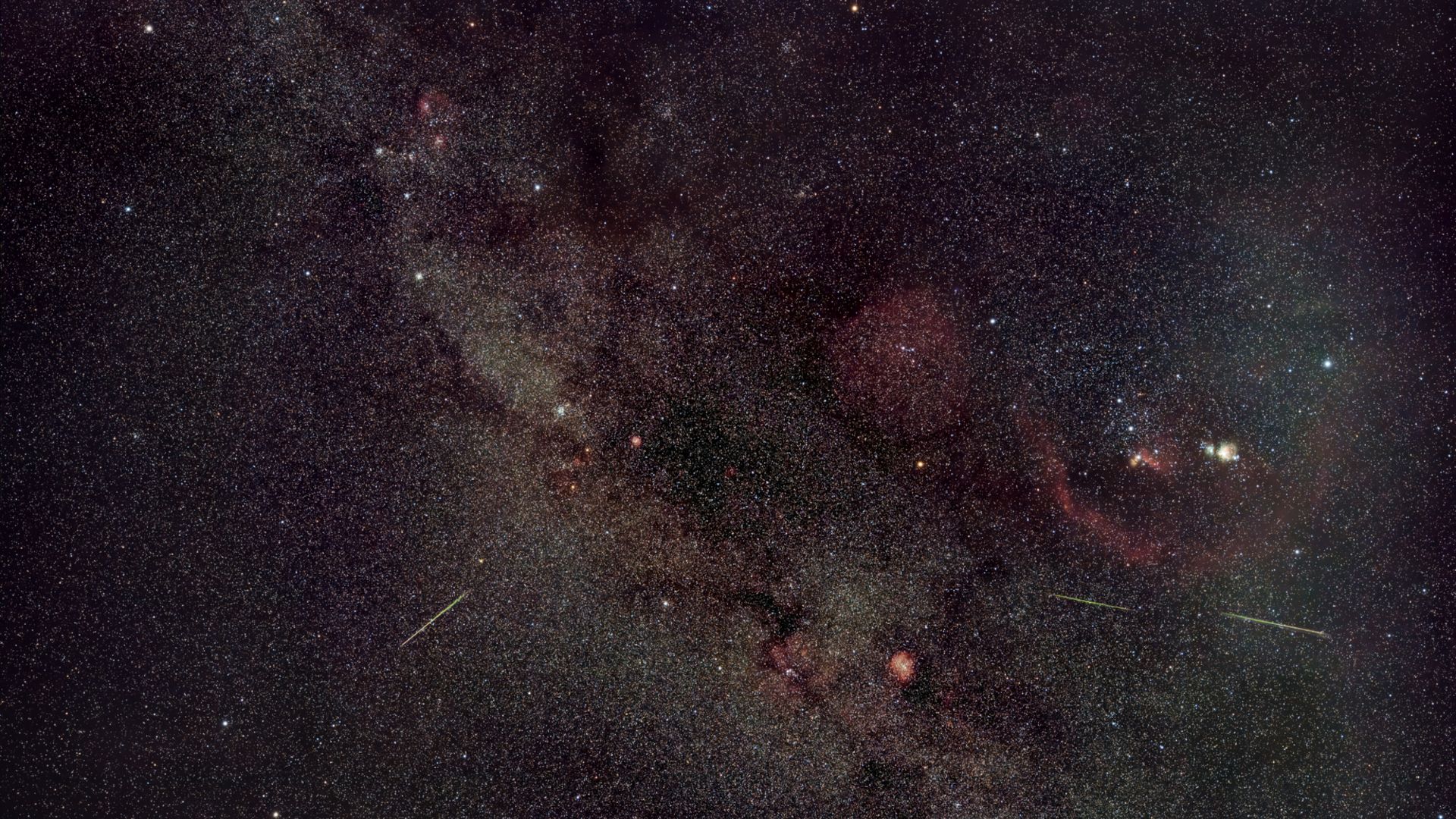
Astrophotographer Tim McCollum captured a spectacular view of Orionid meteors sharing the night sky with a host of deep sky wonders on Oct. 21, as the annual shooting star display ramped up to peak activity.
Comet 1P/Halley may be over 3 billion miles (4.8 kilometers) from Earth, but that didn’t stop it from putting on a breathtaking display earlier this week, as particles cast off by the ancient wanderer carved a fiery path through the autumn sky.
McCollum was able to capture a trio of vivid Orionid meteors as they streaked through the night sky above the city of Toccoa, Georgia, between 3-4 a.m. on Oct. 21. Each of the shooting stars can be seen racing away from the shower’s apparent point of origin — or radiant — which is located close to the red giant star Betelgeuse in the constellation Orion.
Successfully imaging a shooting star takes a combination of skill, luck and patience. McCollum photographed the meteors over the course of multiple 30-second exposures taken with a Canon EOS Ra camera and RF 28-70 f2.0 lens, which was fixed unerringly on the radiant with the aid of a star tracker. The individual exposures were then combined into a single composite image using the astrophoto software PixInsight.
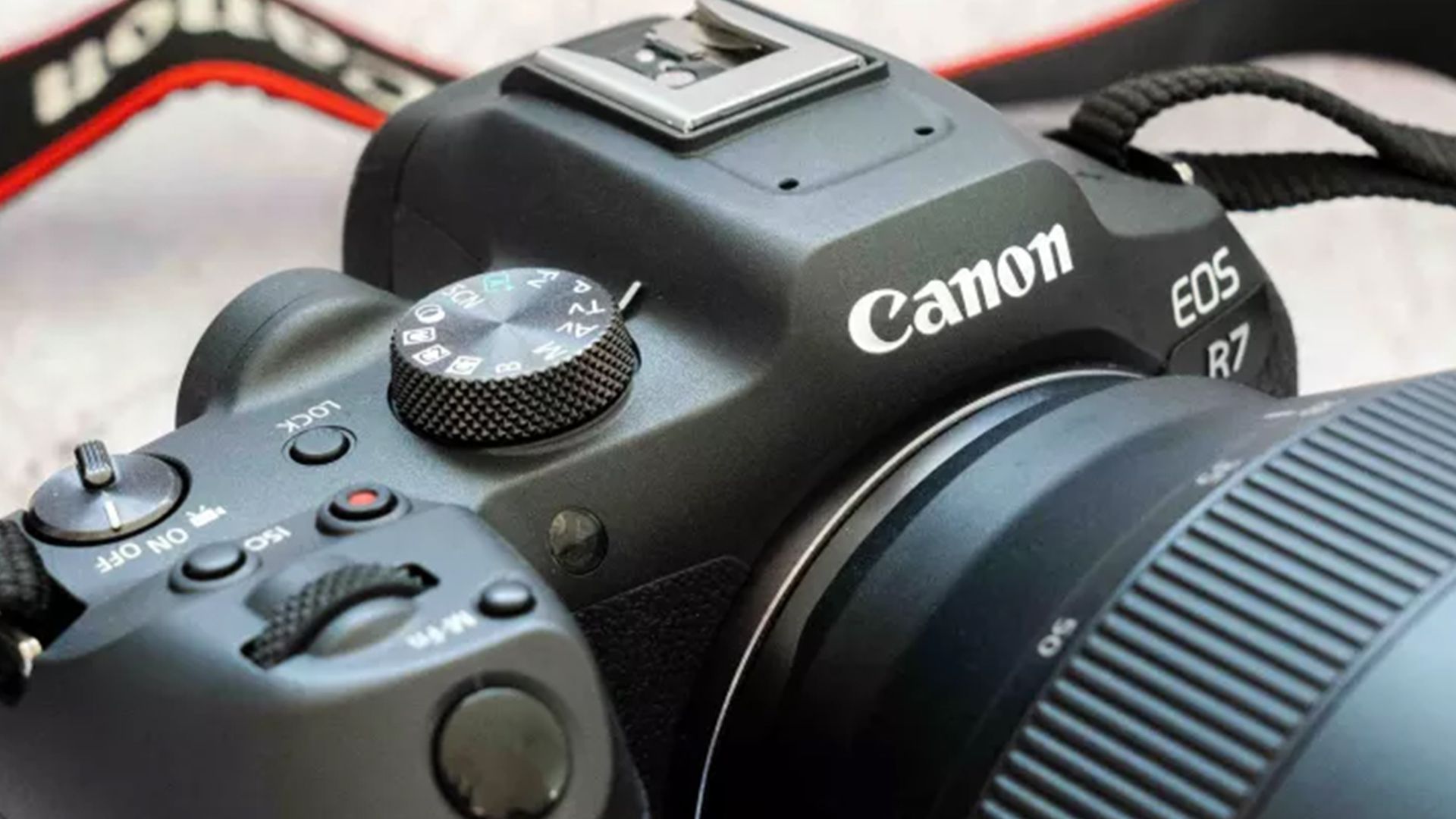
The Canon EOS R7 is the best camera for beginners. Despite its crop sensor, the EOS R7 can rival most full-frame cameras. It features a 34.4MP sensor, ISO range up to 32,000 and a video capability of 4K UHD 60p. It has the best tools to help a beginner master photography. Read our full Canon EOS R7 review.
The familiar stars of Orion’s Belt glisten to the right of McCollum’s image, close to the glow of the Orion Nebula — one of the nearest major star forming regions to Earth. The Rosette Nebula (Caldwell 49) can also be spotted embedded in the dense starfield and dust lanes of the Milky Way’s galactic plane, which runs diagonally through the composite image, as can numerous star clusters.
The Orionid meteor shower is active until Nov. 7, so be sure to head outside over the next few nights for a chance to spot one of Comet 1P/Halley’s dazzling shooting stars. If you’re lucky, you may even spot a Halloween Fireball belonging to the Taurid meteor shower, as Earth passes through the debris streams cast off by Comet 2P/Encke!
Why not read our handy guide to photographing shooting stars? You can also take a look at our picks of the best lenses and cameras for astrophotography available in 2026, including the Canon EOS R8, which delivers the essential interval shooting functionality you need to capture meteors without bursting the bank.
Editor’s Note: If you would like to share your astrophotography with Space.com’s readers, then please send your photo(s), comments, and your name and location to spacephotos@space.com.
Source: Halley's Comet dazzles from afar in spectacular astrophoto of Orionid meteor shower