AI Insight
The Griffin-1 lunar lander, developed by Voyager Technologies, has successfully completed environmental testing at NASA's Jet Propulsion Laboratory in Southern California. The spacecraft underwent rigorous simulations of extreme temperatures, vibrations, and acoustic conditions it will encounter from launch through lunar landing. The testing was conducted in JPL's 25-foot-wide space simulator, with the lander passing all assessments in preparation for its planned launch later in 2026.
Why it matters
Griffin-1 will carry over 1,100 pounds of scientific equipment and technology to the lunar south pole as part of NASA's Commercial Lunar Payload Services initiative, including the FLIP rover with an onboard supercomputer. This mission will advance lunar science and help establish infrastructure for NASA's planned crewed moon base near the south pole within the next five years.
Understand the Science
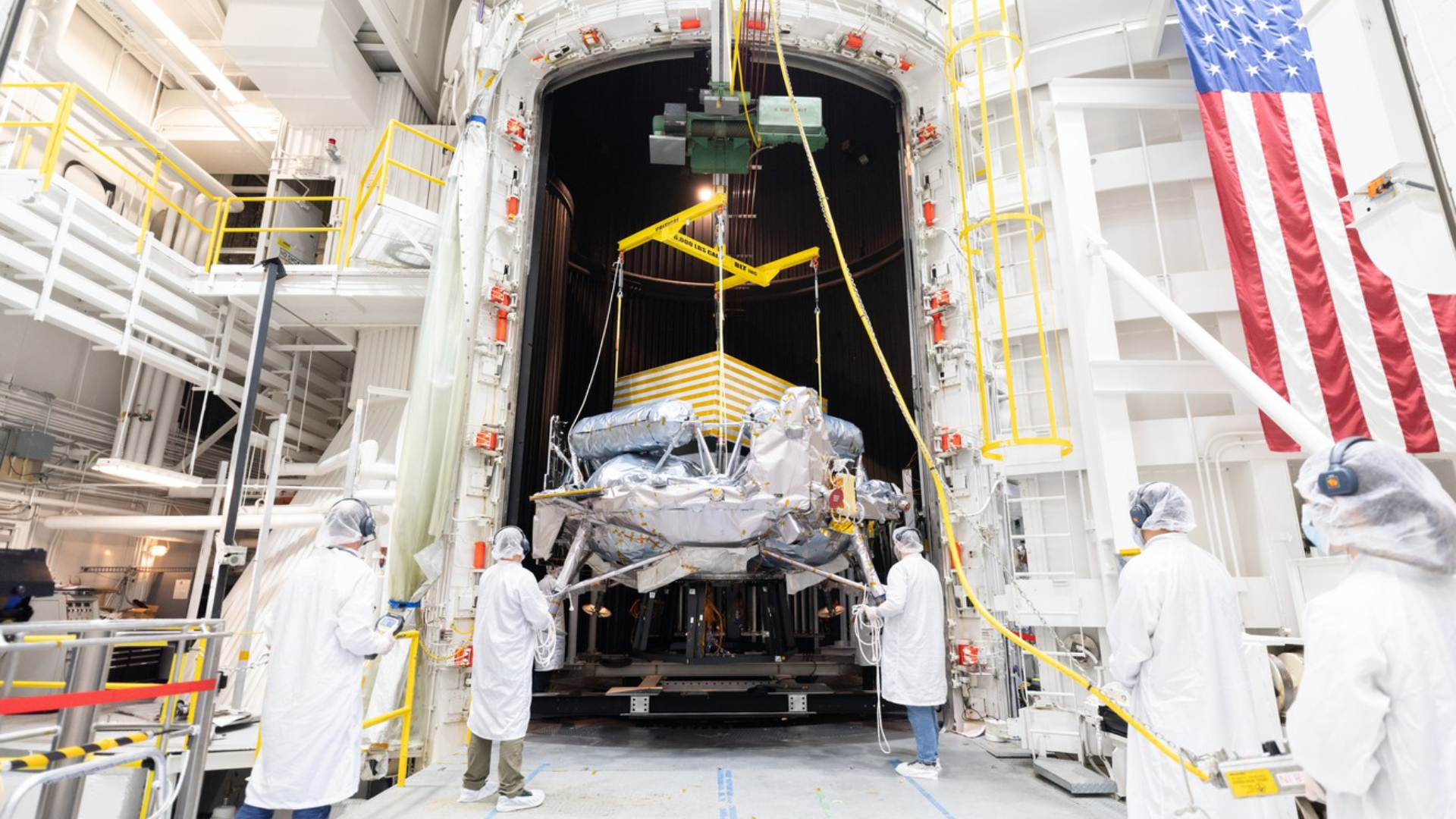
The robotic Griffin lunar lander has passed a host of critical tests ahead of its first-ever moon mission, which is scheduled to launch later this year.
What is it?
At NASA’s Jet Propulsion Laboratory (JPL) in Southern California, Voyager Technologies’ Griffin Mission One (or Griffin-1) lunar lander has gone through an absolute gauntlet of tests. The spacecraft was put through environmental testing that explored how the vehicle will fare in the extreme conditions it will experience on its ride to the surface of the moon.
This testing simulated the extreme temperatures, shaking and even the sounds that the spacecraft will experience from launch to landing. And, as JPL announced recently, the lander passed this series of tests with flying colors, as we can see in this image snapped Aug. 31 of the lander inside the 25-foot-wide (7.6 meters) space simulator at JPL.
“NASA JPL’s Environmental Test Laboratory has been putting robotic explorers to the test since the Ranger program gave us NASA’s first up-close views of the moon’s surface in the mid-1960s. We’re proud to provide our expertise and facilities to support this new phase of commercial lunar exploration,” Charles Whetsel, manager for the Exploration Systems Development Office at JPL, said in a statement.
Why is it incredible?
Griffin-1 is expected to launch to the moon later this year as part of NASA’s CLPS (Commercial Lunar Payload Services) initiative. The spacecraft will carry over 1,100 pounds (455 kilograms) of cargo to its landing site near the lunar south pole.
In this cargo will be science experiments and new technologies that will be tested on the moon’s surface, including Astrolab’s FLIP rover, which will explore the lunar surface with a history-making supercomputer onboard.
This suite of experimental hardware won’t just expand our understanding of the moon up close. Griffin-1’s exploration will also help set the stage for a future, crewed moon base, which NASA aims to build near the south pole over the next half-decade or so.
Source: Private Griffin moon lander gets put to the test | Space photo of the day for Oct. 23, 2026