AI Insight
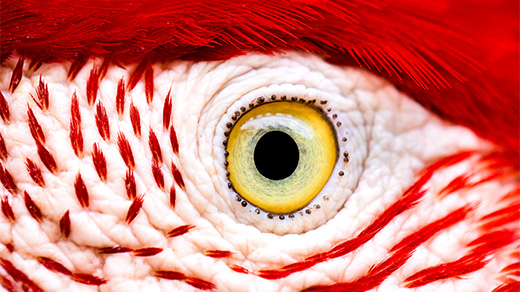
The article explores how bird eyes have undergone extreme evolutionary adaptations compared to human eyes, with a particular focus on how the retina is supplied with oxygen and nutrients. In humans, blood vessels lie on top of the retina and cast shadows on photoreceptors, partially obstructing vision. Birds have evolved a specialized structure called the pecten oculi, which supplies the retina from within the eye cavity, allowing for a vessel-free retina and potentially sharper, unobstructed vision.
Why it matters
Understanding how birds achieved a vessel-free retina could inspire biomedical research into retinal diseases, including conditions like diabetic retinopathy where abnormal blood vessel growth impairs human vision. These findings may also inform the design of optical systems and artificial retinas.
Understand the Science
When an optometrist shines a bright light into your eyes, a vast, branching tree sprouts in your field of vision. This is the shadow of blood vessels. Though we normally can’t perceive them, these vessels always occlude a portion of what we see, and for an important reason. They power the retina, a thin layer of nerve tissue in the back of the eye that communicates light signals to the brain.
Source: How the Bird Eye Was Pushed to an Evolutionary Extreme