AI Insight
NASA's Hubble Space Telescope has captured an image of Messier 3, one of the Milky Way's most massive globular clusters containing densely packed, gravitationally bound stars. The cluster consists of ancient stars that formed simultaneously from the same gas cloud approximately the same time in the early universe, and may have originated from a merger between globular clusters. Approximately 150 known globular clusters exist in the outer regions of the Milky Way galaxy.
Why it matters
Studying globular clusters like M3 helps astronomers understand stellar evolution and the early formation history of our galaxy, as these ancient star systems preserve information about conditions in the early universe. The potential merger origin of this cluster provides insights into how such massive stellar structures evolved over cosmic time.
Understand the Science
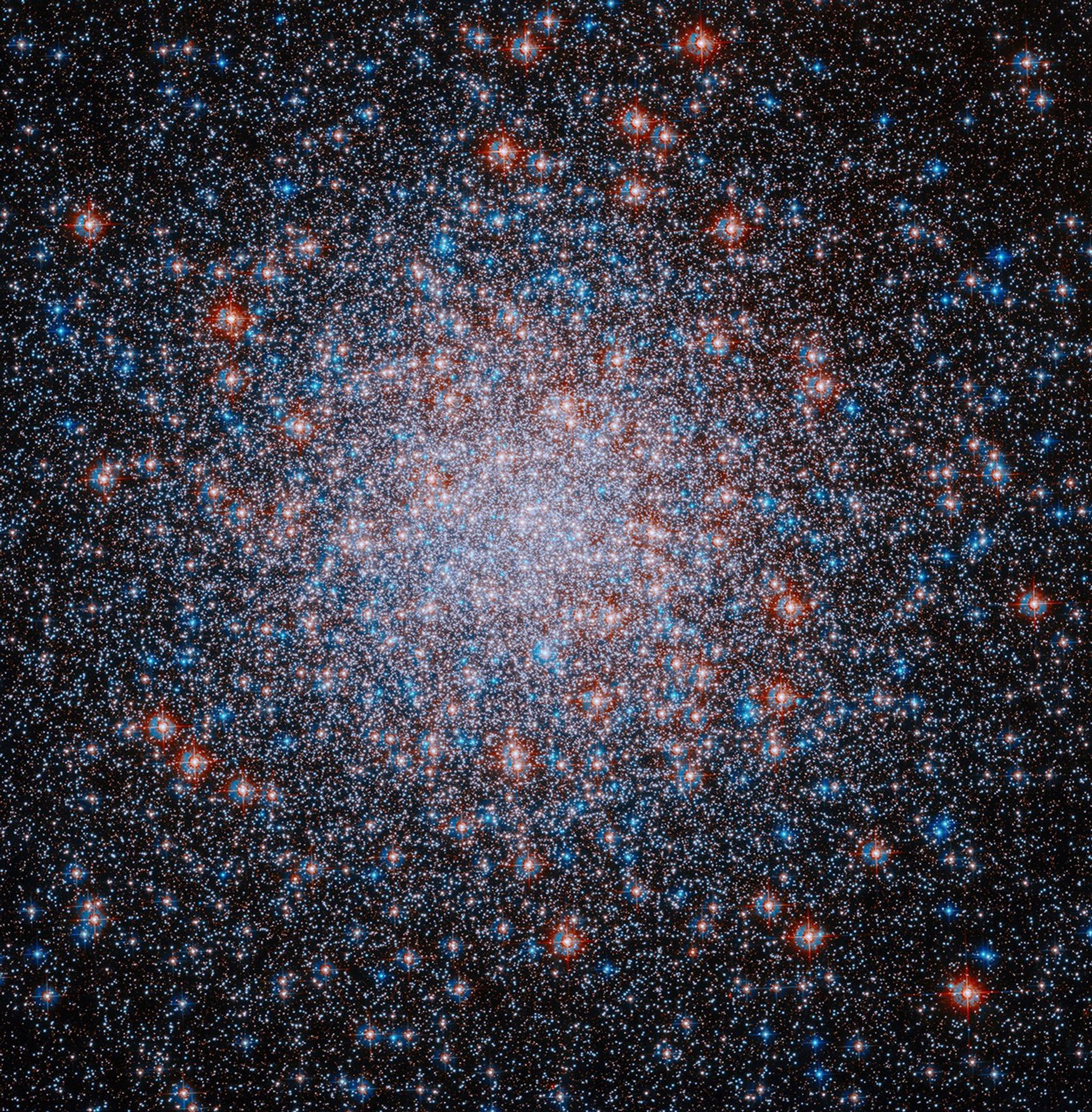
This image from NASA’s Hubble Space Telescope showcases Messier 3 (M3), one of the Milky Way galaxy’s most massive globular clusters, or spherical collections of gravitationally bound stars. Globular clusters are made up of ancient stars that formed at roughly the same time from the same cloud of gas, giving those stars similar ages. Around 150 known globular clusters are sprinkled around the outer regions of the Milky Way.
Image credit: NASA, ESA, and A. Sarajedini (Florida Atlantic University); Processing: Gladys Kober (NASA/Catholic University of America)