AI Insight
The Hubble Space Telescope has captured an image of Messier 88 (M88), an active spiral galaxy located approximately 63 million light-years away in the constellation Coma Berenices. M88 contains a supermassive black hole at its center, estimated to be about 100 million times the mass of our Sun, which is actively consuming gas and dust and generating outflows of material from the galaxy's core. The galaxy is on a journey through the Virgo Cluster that will span hundreds of millions of years.
Why it matters
This observation helps astronomers understand how supermassive black holes influence their host galaxies through active feeding processes and the resulting gas outflows. Studying galaxies like M88 provides insights into galaxy evolution and the role of black holes in shaping galactic structures over cosmic timescales.
Understand the Science
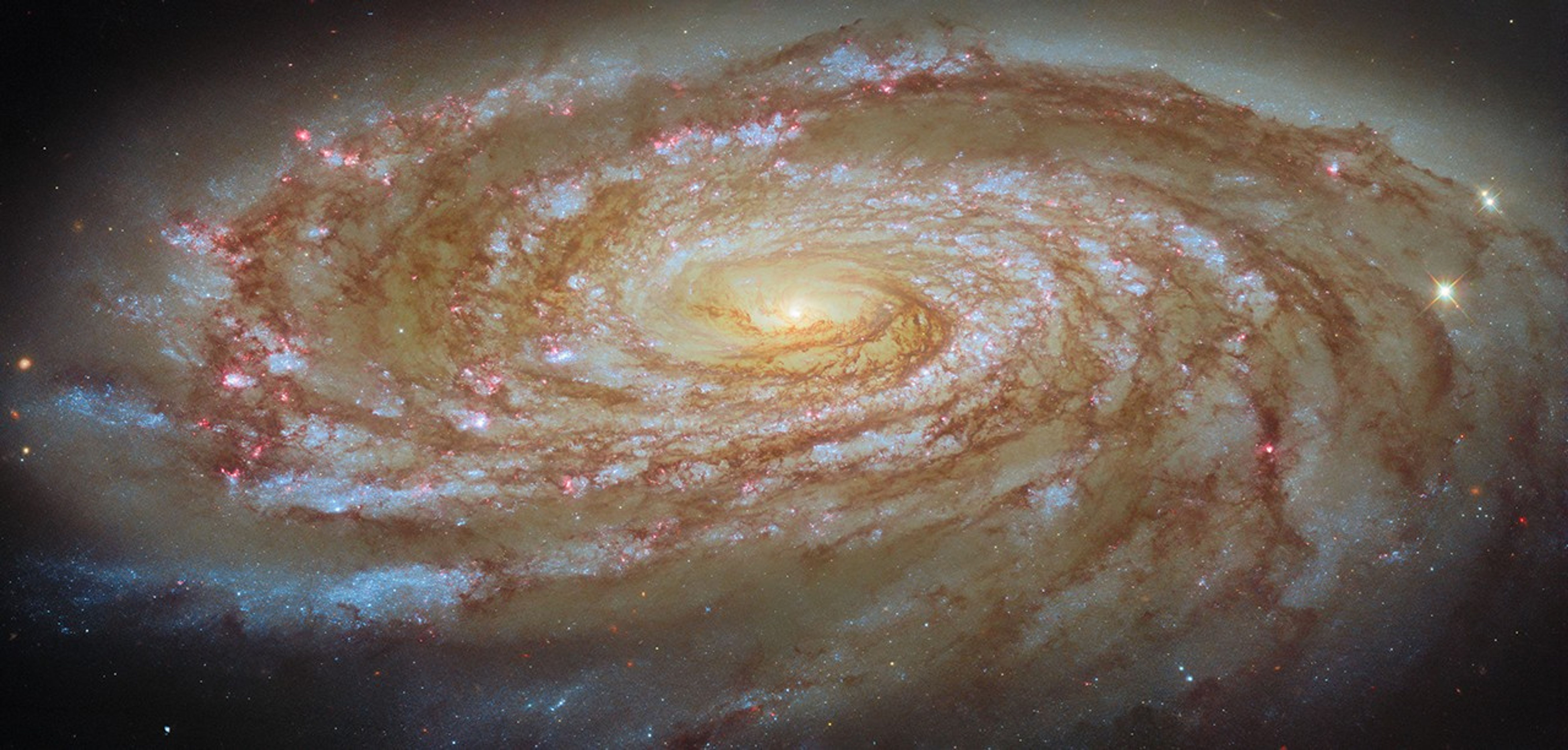
The focus of this NASA/ESA Hubble Space Telescope image released on May 29, 2026, is an active spiral galaxy on a journey lasting hundreds of millions of years. The galaxy Messier 88 (M88), also known as NGC 4501, is located about 63 million light-years away in the constellation Coma Berenices (Berenice’s Hair).
M88 is an active galaxy, which means that its center harbors a supermassive black hole that is snacking on gas and dust. Astronomers estimate the black hole is around 100 million times as massive as the Sun, and it appears to be powering outflows of gas from the galaxy’s center.
Image credit: ESA/Hubble & NASA, D. Thilker